Halal Food Near Me
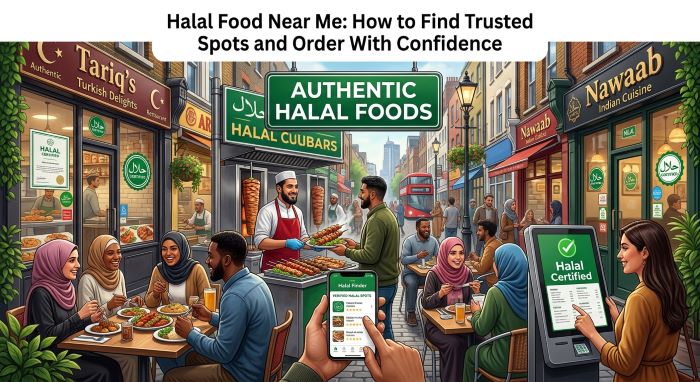
You’re hungry, you’re out in a part of town you don’t know well, and you want a meal you can eat without second-guessing. So you type “halal food near me” into your phone and get forty results. Some say halal in the name. Some list a single halal chicken dish on a menu full of pork. A few have no info at all.
That’s where most people get stuck. The search itself is easy. Sorting out which places you can trust takes a bit more work.
This guide walks you through how halal works in a restaurant setting, where to look, what to ask, and which cuisines tend to give you the most options. By the end, you’ll be able to scan your local results and spot the reliable places in a few minutes.
What “Halal” Means When You Eat Out
Halal is an Arabic word that means “permitted.” In food, it refers to what Muslims can eat under Islamic dietary law. For a restaurant, the key points look like this:
- Meat source: Beef, lamb, goat, and poultry must come from animals slaughtered according to Islamic guidelines (often called zabiha). This includes saying the name of God at the time of slaughter and draining the blood.
- No pork: Pork and pork products are off limits, including lard, gelatin from pigs, and bacon bits.
- No alcohol in food: Wine reductions, beer batters, and some vanilla extracts can be an issue.
- No cross contamination: Halal meat cooked on the same grill as pork, or fried in the same oil, loses its halal status for many diners.
Seafood and plant foods are halal by default for most Muslims, though some schools of thought differ on certain shellfish. Cheese can also raise questions because of animal rennet.
So when you look for halal food near me, you’re not only looking for a menu without pork. You’re looking for a kitchen that handles sourcing and prep the right way.
Why “Halal” on a Sign Isn’t Always Enough
There’s no single global authority that controls the word “halal” on a storefront. In many countries, any business can put it on a sign or menu. Most owners are honest, but standards vary.
Here are the common gray areas:
- Partial halal menus. A burger chain might offer halal chicken but cook it next to pork sausage.
- Halal meat, non-halal prep. The beef is certified, but it shares fryer oil with non-halal items.
- Hand slaughtered vs. machine slaughtered. Some diners accept machine slaughter with a blessing. Others only eat hand slaughtered meat.
- Stunning. Some certifiers allow stunning before slaughter. Others reject it.
- Outdated claims. A restaurant may have switched suppliers but kept the old “100% halal” sign.
None of this means you need to interrogate every server. It means you should know what you personally accept and check that the restaurant matches it.
Where to Search for Halal Food Near Me
Google Maps is the starting point for most people, and it works fine if you know how to read it. But a few other tools give you better filters and more honest reviews.
Google Maps and Search
Type halal food near me, then open each listing and check three things:
- Photos of the menu or storefront. Look for a certificate in the window or a printed halal logo.
- Reviews that mention “halal.” Use the search bar inside the reviews section. Muslim diners often call out problems or confirm the source of the meat.
- The business description. Some owners state “fully halal” or “halal chicken only” right in the listing.
Halal Focused Apps and Directories
Apps built for Muslim diners tend to carry more detail. Zabihah is one of the oldest directories and lets users rate how strict a place is. Other apps and local Muslim community groups on Facebook or WhatsApp often keep updated lists for their city.
These sources are useful because the reviewers care about the same things you do. A general review site might praise the fries. A halal directory will tell you whether those fries share oil with bacon.
Delivery Apps
Uber Eats, DoorDash, Deliveroo, and similar platforms often let you search “halal” as a keyword. Results depend on how each restaurant tags itself, so treat the label as a starting point, not proof.
Your Local Mosque or Community
People overlook this one. Mosque bulletin boards, imams, and community members know which butchers supply which restaurants. If you’re new to an area, asking at Friday prayer can save you hours of research.
How to Verify a Restaurant Before You Order
Once you have a shortlist, take a minute to confirm. This step matters most when you search halal food near me in an area with few Muslim owned businesses.
Look for a Certificate
Many halal restaurants display a certificate from a recognized body. In the US, you might see HFSAA, IFANCA, or regional councils. In the UK, HMC and HFA are common. Check that the certificate has a current date and the restaurant’s actual name and address.
Ask Simple, Direct Questions
You don’t need to make it awkward. A short call or a quick question at the counter works:
- “Is all your meat halal, or only some items?”
- “Who is your meat supplier?”
- “Do you cook pork or alcohol in the same kitchen?”
- “Do the halal items share a grill or fryer with anything else?”
A confident owner will answer right away. Hesitation or vague replies are worth noting.
Read Between the Lines on the Menu
If the menu lists bacon, ham, or wine based sauces, the kitchen handles non-halal items. That doesn’t rule it out, but you’ll want to ask about separation. A menu with no pork and no alcohol at all is a good sign.
Quick Comparison: Types of Halal Restaurants
Not every place labeled halal works the same way. This table helps you sort halal food near me results fast.
| Restaurant Type | Meat Halal? | Pork or Alcohol on Site? | Cross Contamination Risk | Best For |
|---|---|---|---|---|
| Fully halal, Muslim owned | Yes, all items | No | Low | Strict diners, families |
| Certified halal chain location | Yes, per certificate | Usually no | Low to medium | Fast meals, consistency |
| Mixed menu with halal options | Some items | Often yes | Medium to high | Flexible diners who ask first |
| Vegetarian or seafood restaurant | No meat served | Sometimes alcohol | Low for meat, check sauces | Backup when no halal spot is close |
Cuisines That Make Finding Halal Easier
Some cuisines lean halal by default because of where they come from or who tends to run them. When you search for halal food near me and the results look thin, try searching by cuisine instead.
Middle Eastern and Turkish
Think shawarma, doner, kebabs, falafel, and grilled meats with rice. Most Lebanese, Syrian, Turkish, and Palestinian restaurants serve halal meat, though you should still confirm for places that also serve alcohol.
Pakistani, Indian, and Bangladeshi
South Asian restaurants offer some of the widest halal menus out there. Biryani, nihari, karahi, haleem, and tikka are staples. Pakistani spots in particular tend to be fully halal. If you love minced meat patties, this guide to the Best Pakistani Shami Kebab Near Me can point you toward places worth trying.
Keep in mind that many Indian restaurants are Hindu owned and may not serve halal meat, even if they skip beef. Ask before assuming.
Malaysian, Indonesian, and Uyghur
Malaysian and Indonesian food comes from Muslim majority countries, so halal is often standard. Uyghur restaurants, which serve Central Asian dishes like hand pulled noodles and lamb skewers, are almost always halal too.
Chinese Muslim (Hui) cuisine deserves a mention here. Lanzhou style hand pulled noodles in a clear broth are a classic halal comfort meal. If that sounds good, you can find more on Beef Noodle Soup Near Me and how to pick the right spot.
North and West African
Moroccan tagines, Somali rice and goat, Senegalese thieboudienne, and Ethiopian dishes from Muslim owned kitchens often fit halal standards. These spots tend to be small and family run, so a quick conversation goes a long way.
Halal Burgers, Pizza, and Fried Chicken
Halal versions of Western fast food have grown fast in big cities. Halal burger joints, pizza shops with halal pepperoni, and fried chicken places run by Muslim owners give you familiar food without the worry. They’re great for kids and groups with mixed tastes.
What to Do When There’s No Halal Spot Close By
Sometimes you search halal food near me and the nearest certified place is 30 minutes away. You still have choices.
- Go seafood. Fish tacos, sushi without mirin or sake glazes, grilled fish, and fish and chips (ask about the fryer oil) can work.
- Go vegetarian. Indian vegetarian, Mediterranean mezze, and vegan cafés offer full meals with no meat concerns. Check for wine or beer in sauces.
- Order ahead from farther away. Many halal restaurants deliver within a wide radius, or you can pick up on your way.
- Buy from a halal butcher or grocery. Many halal markets sell ready meals, kebabs, or rotisserie chicken.
Tips for Travelers
Travel makes halal eating harder, mostly because you don’t know the local landscape. A few habits help:
- Download a halal directory app before you land.
- Search in the local language. In France, try “viande halal.” In Germany, “halal essen.” In Japan, look for “halal certified” in English, since many places targeting Muslim tourists use English signs.
- Look near mosques. Halal restaurants and butchers tend to cluster nearby.
- Save a short card or note on your phone in the local language that explains what you can’t eat. Show it to staff.
- Pack snacks for long travel days so you’re not stuck with a gas station sandwich.
How to Judge Quality Once You Find a Place
Halal tells you a restaurant follows a set of rules. It doesn’t tell you the food is good. Once you’ve confirmed the halal status, judge it like any other restaurant.
- Busy at peak hours. A full dining room or a steady stream of takeout orders usually means locals trust it.
- Fresh bread and rice. Places that bake naan or pita in house and cook rice to order tend to care about the rest of the menu too.
- Clean grill area. You can often see the kitchen at kebab and shawarma spots. Clean equals careful.
- Regulars from the community. If you see Muslim families eating there, that’s strong social proof.
The best way to use halal food near me results is to treat them as a first filter, then let reviews, word of mouth, and your own visit decide which spots earn a place on your regular list.
Key Takeaways
- Halal in a restaurant means more than “no pork.” It covers how the meat was slaughtered, whether alcohol is used, and whether halal food shares grills, fryers, or oil with non-halal items.
- A “halal” sign doesn’t guarantee standards. Many places serve partial halal menus or have changed suppliers, so confirm before you eat.
- Use more than one source to search. Google Maps reviews, halal directories like Zabihah, delivery app filters, and your local mosque all add different pieces of the picture.
- Look for a current halal certificate with the restaurant’s real name and address, and ask direct questions about the supplier and kitchen setup.
- Fully halal, Muslim owned restaurants carry the lowest risk. Mixed menus with halal options carry the highest cross contamination risk.
- Pakistani, Turkish, Middle Eastern, Malaysian, Uyghur, and Chinese Muslim restaurants tend to offer the most halal choices. Don’t assume Indian restaurants are halal, since many are not.
- When no halal spot is nearby, seafood, vegetarian food, halal grocery ready meals, and longer distance delivery are solid backups.
- Halal status and food quality are separate. After you confirm a place is halal, judge it on freshness, cleanliness, and how many locals eat there.