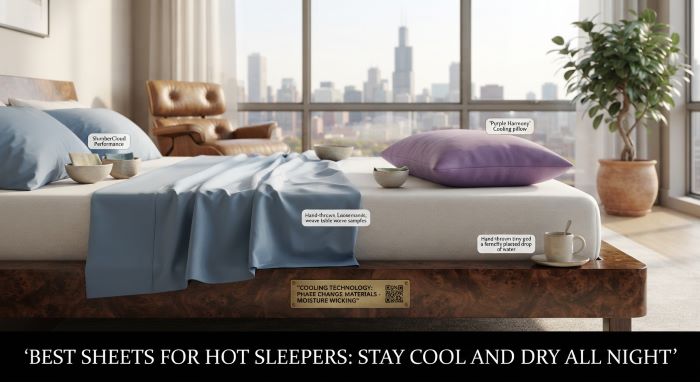
Best Sheets for Hot Sleepers: Stay Cool and Dry All Night
Waking up in a damp, tangled mess of sheets is a miserable way to start the day. If you run hot at night, you already know that the wrong bedding traps heat and holds moisture, turning your bed into a sweat lodge. The good news is that the right sheets can make a real difference, pulling heat and moisture away so you sleep cool and dry. It comes down to fabric, weave, and a few smart choices. This guide breaks down the best sheets for hot sleepers and how to pick a set that actually keeps you comfortable.
Why some sheets trap heat
Not all bedding breathes the same way. Some fabrics trap body heat and hold onto sweat, while others let air flow and wick moisture away from your skin. When you sleep hot, the problem is usually a combination of a dense fabric and poor airflow, which creates a warm, humid microclimate right against your body.
The best sheets for hot sleepers do two jobs at once: they let heat escape and they move moisture away so it can evaporate. Breathability and moisture-wicking are the two qualities that matter most. Get those right and you address the root of the problem instead of just flipping to the cool side of the pillow all night.
Fabric is the most important factor
The material your sheets are made from matters more than almost anything else. Here are the top fabrics to look for when choosing a cooling set, along with how each one performs.
- Cotton (especially percale weave): Breathable, crisp, and cool. Long-staple cottons like Egyptian or Pima are durable and airy. Percale, a specific weave, feels cool and light.
- Linen: Made from flax, linen is highly breathable and excellent at wicking moisture. It has a relaxed, textured feel and gets softer with washing. One of the best choices for hot sleepers.
- Bamboo (viscose or lyocell): Silky, soft, and naturally moisture-wicking with good breathability. A favorite for those who sleep hot and want a smooth feel.
- Tencel (lyocell): Made from wood pulp, Tencel is smooth, breathable, and great at managing moisture. It feels cool to the touch.
- Eucalyptus: Similar to Tencel, soft and cooling, with strong moisture control.
Fabrics to avoid include most polyester and microfiber, which tend to trap heat and hold moisture, and heavy flannel or sateen weaves that feel warm. When hunting for the best sheets for hot sleepers, stick with natural, breathable fibers and cooling weaves.
Understanding weave and thread count
Beyond the fiber itself, how the fabric is woven affects how cool it feels. This is where a lot of shoppers get confused, so let me clear it up.
Percale is a plain, tight weave that feels crisp and breathable, ideal for hot sleepers. Sateen, by contrast, has a smoother, heavier feel that traps more warmth. So between two cotton sheet sets, the percale one will usually sleep cooler. For the best sheets for hot sleepers, percale and other open, breathable weaves win.
Thread count is widely misunderstood. Higher is not always better. A very high thread count can actually make sheets denser and warmer, since more threads are packed into the same space. For cooling, a moderate thread count, roughly 200 to 400 for cotton, often breathes better than an ultra-high count. Do not let a big number on the package fool you into thinking it means quality or coolness.
Quick fabric comparison
Here is a snapshot to help you compare the top options for the best sheets for hot sleepers.
| Fabric | Coolness | Feel | Notes |
|---|---|---|---|
| Linen | Excellent | Textured, relaxed | Best breathability, softens over time |
| Percale cotton | Excellent | Crisp, light | Classic cool and breathable |
| Tencel or eucalyptus | Very good | Smooth, silky | Great moisture control |
| Bamboo | Very good | Silky, soft | Soft with good wicking |
| Sateen cotton | Fair | Smooth, warm | Cozier, less cooling |
| Polyester or microfiber | Poor | Varies | Traps heat, avoid |
Features that help you sleep cooler
Beyond fabric and weave, a few extra features improve your comfort. Look for these when choosing the best sheets for hot sleepers:
- Moisture-wicking labels: Some sheets are specifically marketed for temperature regulation, which is a good sign.
- A lighter weight: Thinner, lighter sheets breathe better than heavy ones.
- Light colors: While minor, lighter shades can feel a touch cooler.
- A good fit: Deep-pocket sheets that fit your mattress snugly prevent bunching, which keeps airflow even.
- OEKO-TEX certification: This signals fewer chemical treatments that can affect breathability.
None of these matter more than the fabric itself, but together they round out a genuinely cooling set.
Caring for your cooling sheets
Even the best sheets for hot sleepers lose some performance if you do not care for them properly. To keep yours cool and fresh:
- Wash them regularly, since body oils and buildup can reduce breathability
- Avoid heavy fabric softeners, which can coat fibers and trap heat
- Skip high-heat drying, which wears out natural fibers faster
- Follow the care label, especially for linen and bamboo, which can be delicate
- Rotate between two sets so each lasts longer
Good care keeps the fabric performing the way it did when new, so you get cool nights for years. It also protects your investment, since quality natural-fiber sheets are not cheap and deserve to last. A gentle wash cycle, a cool dry, and a break from harsh chemicals go a long way toward keeping your sheets breathable and comfortable season after season.
Cooling is a whole-bed effort
Sheets are a huge piece of the puzzle, but staying cool involves your whole sleep setup. Your pillow and mattress also affect how hot you get, since foam materials in particular can trap heat. If neck or shoulder comfort is part of your sleep struggle, it is worth looking at the rest of your bedding too. This guide to the Best Pillow for Neck Pain pairs well with cooling sheets, and side sleepers can benefit from matching the Best Pillow for Side Sleepers with the right foundation. In fact, choosing the Best Mattress for Side Sleepers with cooling features can make your new sheets work even better, since a breathable mattress and breathable sheets reinforce each other.
When your sheets, pillow, and mattress all breathe well, heat has multiple ways to escape, and you stay comfortable through the night.
Common myths about cooling sheets
There is a lot of misinformation out there, and believing it can lead you to the wrong purchase. Let me clear up a few of the most common myths.
The first myth is that a higher thread count always means better, cooler sheets. As covered above, the opposite is often true, since a very high count packs more threads together and traps heat. The second myth is that silk is the coolest fabric. Silk feels cool to the touch initially, but it does not breathe or wick moisture as well as linen or cotton over a full night. A third myth is that all “cooling” marketing claims are equal. Some sheets earn the label with genuinely breathable fabric, while others slap it on polyester blends that trap heat. Always check the actual fiber content rather than trusting the buzzword on the front of the package.
Finally, many people believe expensive automatically means cooler. Price often reflects brand and finish rather than breathability. A moderately priced linen or percale set frequently outperforms a pricey sateen one for hot sleepers. Judge by fabric and weave, not the price tag.
How to test sheets before you commit
You cannot always feel sheets before buying online, but there are ways to judge quality. When you can touch them, hold the fabric up to the light. A more open, breathable weave lets a little more light through, which usually means better airflow. Crisp, light fabrics like percale and linen tend to sleep cooler than smooth, heavy ones.
If you are buying online, read the fiber content carefully and look for reviews specifically from other hot sleepers, since their experience is the most relevant to you. Many quality brands offer a trial period, which is the best way to truly test how sheets perform over several nights in your own bedroom. Give any new set at least a week, since it takes a few washes for some natural fibers to reach their softest, most breathable state.
Signs your current sheets run hot
Not sure if your sheets are the problem? A few clues point to bedding that traps heat. If you wake up sweaty even in a cool room, frequently flip to the cool side of the bed, or find your sheets feel damp by morning, the fabric is likely holding heat and moisture. Sheets that feel slick, heavy, or warm to the touch, or that are made from polyester or microfiber, are common culprits.
If several of these sound familiar, upgrading to breathable, moisture-wicking sheets could transform your sleep. The change is often more noticeable than people expect, since your bedding sits directly against your skin for hours every night.
Extra tips for hot sleepers
The best sheets for hot sleepers do most of the work, but a few habits help even more:
- Keep your bedroom cool, ideally around 65 degrees Fahrenheit
- Use a lighter blanket or duvet in summer, or none at all
- Wear breathable, moisture-wicking sleepwear or sleep light
- Use a fan for airflow across the bed
- Stay hydrated, since it helps your body regulate temperature
Combine cooling sheets with a cool room and light sleepwear and you attack the heat from every angle.
Do cooling sheets work year-round?
One question many people ask is whether breathable sheets leave you cold in winter. The good news is that natural, breathable fabrics regulate temperature in both directions. Linen and cotton keep you cool in summer by letting heat escape, but they also trap a comfortable layer of warmth in winter without making you sweat. That makes them a smart year-round investment rather than a summer-only purchase.
If you run especially hot, you can adjust the rest of your bedding by season, using a lighter duvet in summer and a warmer one in winter, while keeping the same breathable sheets underneath. This gives you flexibility without buying multiple sheet sets. Breathable bedding is about balance, not just cold, and that balance is exactly what a hot sleeper needs across every season of the year.
The bottom line
If you sleep hot, your sheets are the first thing to fix. The best sheets for hot sleepers are made from breathable, moisture-wicking natural fibers like linen, percale cotton, Tencel, or bamboo, woven in an open, cooling weave. Skip polyester, microfiber, and heavy sateen, and do not chase ultra-high thread counts, which can trap heat. Care for your sheets well, pair them with a cool room and breathable bedding, and you will finally trade sweaty, restless nights for cool, dry, restful sleep. A small change in your bedding can make a surprisingly big difference in how well you rest.
Key Takeaways
- The best sheets for hot sleepers prioritize breathability and moisture-wicking, letting heat escape and pulling sweat away from your skin.
- Top cooling fabrics include linen, percale cotton, Tencel, eucalyptus, and bamboo, all natural and breathable.
- Avoid polyester, microfiber, and heavy sateen weaves, which trap heat and hold moisture.
- Choose a crisp percale weave over sateen, and do not assume a higher thread count is cooler, since dense sheets sleep warmer.
- Look for moisture-wicking labels, lighter weights, a snug fit, and OEKO-TEX certification for the coolest set.
- Care for cooling sheets by washing regularly, skipping heavy softeners, and avoiding high-heat drying.
- Pair your sheets with a breathable pillow and mattress, a cool room, and light sleepwear for the best whole-bed cooling.