I Have Sensitive Skin: How Gentle Are Nivea’s Creams Compared to Aveeno?
Choosing between Nivea and Aveeno when you have sensitive skin comes down to understanding each brand’s core formulation philosophy and ingredient approach, since both brands market broadly toward gentle, skin-friendly positioning but actually take somewhat different routes to get there. Understanding these differences helps you make a more informed choice based on your specific sensitivity triggers rather than relying purely on general brand reputation or marketing claims.
Nivea’s Approach to Sensitive Skin Formulation
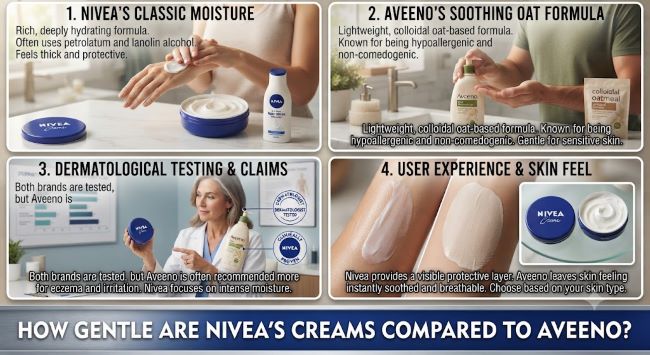
Nivea, a long-established German skincare brand, has built much of its core product line around a foundation of simple, time-tested moisturizing ingredients, most notably their classic Nivea Creme formula built around a combination of mineral oil, glycerin, and other emollient ingredients designed to create a protective, hydrating barrier on the skin’s surface.
Nivea’s broader sensitive skin lines, including products specifically labeled for sensitive skin within their various product categories (body lotion, facial moisturizer, and similar categories), generally focus on fragrance-free or reduced-fragrance formulations, removal of common known irritant ingredients, and a relatively straightforward ingredient list compared to some of their more cosmetically elaborate product lines.
Strengths for sensitive skin specifically: Nivea’s classic formulations have a long track record of use, are widely available and generally affordable, and the brand’s dedicated sensitive skin product lines do specifically address common formulation concerns like fragrance and certain preservative types that frequently trigger sensitivity reactions in susceptible individuals.
Potential considerations: some of Nivea’s classic, non-sensitive-specific formulations do include mineral oil and fragrance as standard ingredients, meaning checking the specific product line and reading the actual ingredient list matters considerably more than assuming the entire Nivea brand is universally formulated for sensitive skin, since this varies meaningfully across their broad product range.
Aveeno’s Approach to Sensitive Skin Formulation
Aveeno has built its core brand identity specifically around oat-based formulations, most notably their signature colloidal oatmeal ingredient, which has genuine dermatological research support specifically for its skin-soothing and barrier-supporting properties, making this ingredient choice a meaningfully central, differentiated aspect of the brand’s overall positioning rather than simply a marketing claim layered onto a generic formulation.
Aveeno’s broader product positioning leans more consistently toward dermatologist-recommended, sensitive-skin-focused formulation across a larger proportion of their overall product line compared to Nivea’s broader, more general-purpose skincare positioning, with Aveeno specifically building much of their brand reputation around addressing eczema, generally sensitive skin, and similar dermatological concerns as a core focus rather than as a secondary product line within a broader catalog.
Strengths for sensitive skin specifically: the colloidal oatmeal formulation has genuine research backing for skin barrier support and irritation reduction, and Aveeno’s overall brand positioning consistently emphasizes dermatologist testing and recommendation across a larger share of their product range, making their sensitive-skin-appropriate formulation somewhat more consistently the default across the brand rather than requiring you to specifically seek out a dedicated sensitive-skin sub-line within a broader, more variable product catalog.
Potential considerations: Aveeno products, while generally well-regarded for sensitive skin, aren’t universally hypoallergenic or appropriate for every individual sensitivity trigger, and individual reactions to specific ingredients (including oat-derived compounds themselves, in the rare case of oat sensitivity specifically) can still occur, meaning even a generally well-regarded sensitive-skin brand doesn’t guarantee compatibility with every individual’s specific sensitivity profile.
Direct Comparison for Sensitive Skin Use
Ingredient philosophy: Nivea generally relies on more traditional emollient and humectant ingredients (glycerin, various oils) across a broad general-purpose product catalog, with sensitive-specific formulations available within that broader range, while Aveeno centers much of its core positioning specifically around colloidal oatmeal with genuine dermatological research support, applied somewhat more consistently across a larger proportion of their overall product line.
Price point: Nivea generally sits at a slightly more accessible price point across much of its product range compared to Aveeno, though both brands remain in the broadly accessible drugstore/mass-market skincare category rather than premium or prestige skincare pricing.
Availability: both brands are widely available at drugstores, mass retailers, and online, making either a practical, easily accessible choice without needing to seek out specialty retailers.
Dermatologist positioning: Aveeno has built a somewhat stronger and more consistent dermatologist-recommendation positioning specifically around sensitive and problem-prone skin across its core brand identity, while Nivea’s broader catalog spans general skincare more broadly with sensitive-specific options available as part of that wider range rather than as the brand’s singular core focus.
How to Actually Determine Which Works Better for Your Specific Skin
Patch test any new product before broader use, applying a small amount to a discreet area (inner forearm is commonly recommended) and waiting 24-48 hours to check for any reaction before applying to your face or more sensitive areas, regardless of which brand or specific product you’re considering.
Read the full ingredient list for your specific known triggers, since sensitive skin reactions are often triggered by specific individual ingredients (certain fragrance compounds, specific preservatives, particular oils) rather than by a brand as a whole, meaning your actual best choice depends considerably on your own specific sensitivity profile rather than which brand has a stronger general sensitive-skin reputation.
Consider starting with each brand’s specifically labeled sensitive-skin or fragrance-free product lines rather than their general, broader product catalog entries, since this comparison is most fair and meaningful when comparing each brand’s actual sensitive-skin-targeted formulations against each other rather than comparing a general Nivea product against a specifically sensitive-targeted Aveeno product or vice versa.
Consult a dermatologist if you have a diagnosed skin condition (eczema, rosacea, or similarly diagnosed sensitive skin conditions) specifically, since a dermatologist can provide guidance tailored to your exact diagnosed condition that goes beyond general brand comparison and addresses your specific clinical situation more precisely.
For a related comparison covering how Nivea positions itself against another popular accessible skincare brand specifically for those newer to building a skincare routine, I’m a skincare beginner, is Nivea a good starting brand compared to Garnier covers a complementary comparison worth reading alongside this Aveeno-focused comparison if you’re still narrowing down your options among accessible mass-market skincare brands.
Key Takeaways
- Nivea relies on traditional emollient and humectant ingredients across a broad general-purpose product catalog, with sensitive-specific formulations available within that wider range, while Aveeno centers much of its core identity around colloidal oatmeal with genuine dermatological research support applied more consistently across its product line
- Both brands offer genuinely gentle, accessible options for sensitive skin, but checking the specific product line and ingredient list matters more than relying on overall brand reputation alone
- Aveeno has built a somewhat stronger and more consistent dermatologist-recommendation positioning specifically around sensitive and problem-prone skin compared to Nivea’s broader general skincare catalog
- Patch test any new product on a discreet area before broader application, regardless of brand, since individual sensitivity reactions are often triggered by specific ingredients rather than by a brand as a whole
- Compare each brand’s specifically labeled sensitive-skin or fragrance-free product lines against each other for the most meaningful comparison, rather than comparing general products against targeted sensitive-skin formulations
- Consult a dermatologist for guidance tailored to your exact situation if you have a diagnosed skin condition like eczema or rosacea, since general brand comparison has genuine limits for addressing specific clinical needs