How to Do a Pullup: Complete Step-by-Step Guide for Beginners
The pullup is widely regarded as one of the most effective upper body strength exercises available, but it’s also one of the most genuinely difficult bodyweight movements for beginners to achieve their first complete repetition, since it requires pulling your entire body weight against gravity using primarily your back, shoulder, and arm muscles. Understanding proper form, realistic progression strategies if you can’t yet do a full pullup, and common mistakes helps you build toward this genuinely impressive strength milestone effectively and safely.
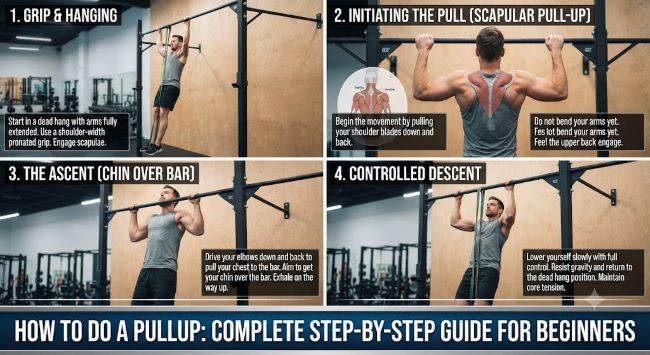
Proper Pullup Form
Step 1: Grip the bar with hands slightly wider than shoulder-width apart, using an overhand grip (palms facing away from you), which is the standard grip for a traditional pullup, as distinct from a chin-up, which uses an underhand grip and engages the muscles somewhat differently.
Step 2: Hang from the bar with arms fully extended, engaging your core and avoiding excessive swinging or momentum before initiating the actual pulling movement, since starting from a controlled, stable hanging position is important for proper form and injury prevention throughout the exercise.
Step 3: Initiate the pull by engaging your back muscles first, specifically thinking about pulling your shoulder blades down and together before your arms do significant work, since this back-engagement-first approach is one of the most commonly cited form cues that genuinely helps people perform pullups more effectively using the correct primary muscle groups rather than relying excessively on arm strength alone.
Step 4: Pull your body upward until your chin clears the bar, maintaining a controlled, smooth movement throughout rather than using jerky, momentum-driven motion (often called “kipping” in certain training contexts, which is a legitimate technique in some specific training systems but generally not what beginners should be practicing while learning fundamental strict pullup form).
Step 5: Lower yourself back down with control, resisting the urge to simply drop or let gravity do the work on the way down, since the controlled lowering phase (the eccentric portion of the movement) provides genuine strength-building value and helps maintain proper form and joint safety throughout the full repetition.
If You Can’t Yet Do a Full Pullup: Progression Exercises
Most beginners genuinely cannot perform a single full pullup when they first start training toward this goal, and that’s a completely normal starting point rather than something to be discouraged by. Several progression exercises help build the specific strength needed:
Dead hangs. Simply hanging from the bar with arms fully extended for as long as you can maintain proper grip and form builds foundational grip strength and shoulder stability, an important foundational element often overlooked in favor of jumping straight to more advanced progressions.
Negative pullups (eccentric pullups). Using a box, bench, or jump to get your chin above the bar, then lowering yourself down as slowly and controlled as possible, builds the specific strength needed for the lowering phase while also developing meaningful strength toward the full movement, since the eccentric (lowering) phase of an exercise is generally easier to control with significant load compared to the concentric (lifting) phase.
Assisted pullups using a resistance band. Looping a resistance band around the pullup bar and placing your foot or knee in the loop provides assistance that reduces the effective weight you’re pulling, allowing you to practice the full range of motion with proper form while building toward unassisted strength, with the option to use progressively lighter resistance bands as you genuinely get stronger over time.
Assisted pullup machines, available at many gyms, function similarly to resistance bands but use a counterweight system that you can precisely adjust, providing very controlled, incrementally adjustable assistance as you build strength toward unassisted pullups.
Lat pulldown machine exercises, while not identical to a true pullup given the different body positioning and stabilization requirements, build genuinely relevant strength in the same primary muscle groups (latissimus dorsi, biceps, and supporting back muscles) and can be a useful complementary exercise in a broader pullup training program.
Common Mistakes to Avoid
Using excessive momentum or swinging (kipping) before you’ve developed strict pullup strength. While kipping pullups are a legitimate technique in certain training contexts (particularly CrossFit-style training), beginners specifically working toward their first strict pullup should focus on controlled, momentum-free repetitions, since relying on momentum can mask genuine strength deficits and doesn’t build the same foundational strength as proper strict form.
Not engaging the back muscles first. Many beginners default to pulling primarily with their arms and shoulders, neglecting the back muscle engagement that should initiate and drive much of the pulling movement, a common technical error that both limits effectiveness and can contribute to shoulder strain over time.
Partial range of motion. Not pulling high enough (chin clearing the bar) or not fully extending the arms at the bottom of each repetition reduces the exercise’s effectiveness and can develop into a habitual pattern that limits your eventual strength and mobility development if not corrected early in your training.
Training too frequently without adequate recovery. Pullups, like most challenging strength exercises, require adequate recovery time between training sessions for the relevant muscle groups to genuinely adapt and strengthen, and training this specific movement pattern too frequently without sufficient rest can actually slow your progress rather than accelerating it.
Expecting too-rapid progress. Building toward a first unassisted pullup, or building meaningful additional reps once you can do one, genuinely takes consistent training over weeks to months for most people, and setting realistic expectations about this timeline helps maintain motivation through what’s typically a gradual, incremental strength-building process rather than a quick achievement.
Building a Consistent Training Routine
For beginners working toward their first pullup specifically, training the relevant progression exercises 2-3 times per week, with adequate rest days between sessions, generally produces steady, sustainable progress over a period of weeks to a few months depending on your starting strength level and consistency. Gradually reducing assistance (whether from a resistance band or assisted machine) as you genuinely get stronger, rather than rushing to remove assistance before you’re ready, tends to produce more reliable, lasting strength development than attempting to force unassisted reps before you’ve built adequate underlying strength.
Key Takeaways
- Proper pullup form involves a shoulder-width-plus overhand grip, initiating the pull by engaging your back muscles first, pulling until your chin clears the bar, and lowering with control rather than dropping
- If you can’t yet do a full pullup, progression exercises including dead hangs, negative (eccentric) pullups, resistance band-assisted pullups, and assisted pullup machines all build the specific strength needed toward your first unassisted repetition
- Avoid common mistakes including excessive momentum or swinging before developing strict strength, failing to engage back muscles first, partial range of motion, and training too frequently without adequate recovery
- Lat pulldown machine exercises, while not identical to a true pullup, build relevant complementary strength in the same primary muscle groups
- Building toward a first unassisted pullup typically takes consistent training over weeks to months, and setting realistic expectations about this gradual timeline helps maintain motivation throughout the process
- Train relevant progression exercises 2-3 times weekly with adequate rest between sessions, gradually reducing assistance as genuine strength develops rather than rushing to remove support before you’re ready