Spaghetti Squash: How to Cook It, Use It, and Why It’s Worth Trying
Spaghetti squash has earned its place as one of the more genuinely useful low-carb pasta alternatives precisely because, unlike many vegetable-based substitutes that only loosely resemble what they’re replacing, its naturally stringy flesh genuinely produces strands that mimic pasta’s texture in a satisfying way once properly cooked. Understanding how to select a good one, the best cooking methods, and what to actually do with it once it’s cooked helps you get the most out of this distinctive winter squash.
What Spaghetti Squash Is
Spaghetti squash is a winter squash variety with a distinctive characteristic: when cooked, its flesh naturally separates into long, thin strands resembling spaghetti noodles, a result of the squash’s unique fiber structure rather than any special preparation technique beyond proper cooking. It has a mild, slightly sweet flavor that takes well to a wide range of sauces and seasonings, functioning as a genuinely versatile base for many dishes that might traditionally use pasta.
How to Select a Good Spaghetti Squash
Look for a squash that feels heavy for its size, with firm, unblemished skin free of soft spots, cracks, or significant bruising. The skin color should be a consistent pale yellow to golden yellow — squash with green patches is generally underripe and won’t have developed the full sweetness and proper strand texture of a fully mature squash. Size doesn’t significantly affect quality, though larger squash will obviously yield more cooked flesh and may take somewhat longer to cook through completely.
How to Cook Spaghetti Squash
Oven Roasting (Most Common Method)
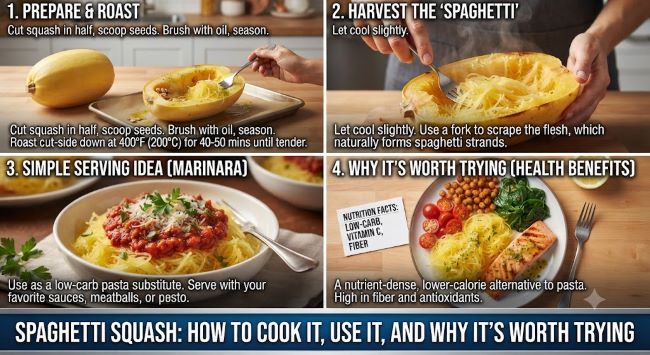
Step 1: Preheat your oven to 400°F.
Step 2: Carefully cut the squash in half lengthwise. This can require some genuine effort given the squash’s tough exterior — using a sharp, sturdy chef’s knife and applying steady pressure, sometimes starting with a small stabilizing cut before working through the full length, makes this safer and more manageable.
Step 3: Scoop out the seeds and stringy pulp from the center using a spoon, similar to preparing a pumpkin, discarding this portion (or saving the seeds separately if you want to roast them, similar to pumpkin seeds).
Step 4: Drizzle the cut sides with olive oil and season with salt and pepper, then place cut-side down on a baking sheet.
Step 5: Roast for 35-45 minutes depending on the squash’s size, until the flesh is tender when pierced with a fork and the skin gives slightly under gentle pressure.
Step 6: Let the squash cool for a few minutes until comfortable to handle, then use a fork to scrape the flesh lengthwise, which naturally separates it into the characteristic spaghetti-like strands.
Microwave Method (Fastest)
Step 1: Cut the squash in half and remove seeds as described above.
Step 2: Place cut-side down in a microwave-safe dish with about a half inch of water.
Step 3: Microwave on high for 10-12 minutes depending on squash size, checking for doneness by piercing with a fork.
Step 4: Let cool slightly, then scrape into strands as described above.
This method is significantly faster than oven roasting, though some find the flavor and texture slightly less developed compared to roasting, which allows some caramelization and moisture evaporation that contributes to flavor depth.
Instant Pot / Pressure Cooker Method
Cut the squash in half, remove seeds, add about a cup of water to the pot, place the squash halves on a trivet or directly in the water, and cook on high pressure for 7-8 minutes with a quick release. This method offers a useful middle ground between the speed of microwaving and some of the flavor benefits closer to roasting.
How to Use Cooked Spaghetti Squash
As a pasta substitute with traditional sauces. Marinara, alfredo, pesto, or any pasta sauce you’d typically serve over noodles works well over spaghetti squash strands, providing a genuinely satisfying lower-carbohydrate alternative for anyone managing carb intake or simply looking to incorporate more vegetables into meals that would traditionally be pasta-based.
In baked casserole-style dishes. Spaghetti squash works well as a base for baked dishes incorporating cheese, ground meat, and sauce, similar to a baked ziti or pasta bake but using the squash strands as the structural base instead of traditional pasta.
As a stir-fry base. The mild flavor and noodle-like texture make spaghetti squash a reasonable base for Asian-inspired stir-fry preparations, taking on soy-based or other Asian-style sauces reasonably well despite not being a traditional ingredient in those cuisines.
Simply seasoned as a side dish. Spaghetti squash strands tossed simply with butter or olive oil, garlic, and parmesan cheese make a satisfying side dish on their own, without needing to function specifically as a pasta replacement in every application.
In soups. Adding cooked spaghetti squash strands to soups provides a noodle-like textural element, useful particularly for anyone avoiding traditional wheat-based noodles for dietary reasons.
Nutritional Benefits
Spaghetti squash is notably lower in calories and carbohydrates compared to traditional wheat pasta, making it a popular choice for people managing carbohydrate intake, following lower-carb or ketogenic dietary approaches, or simply looking to increase vegetable intake within meals that might otherwise be more starch-heavy. It also provides a meaningful source of fiber, vitamin C, and several B vitamins, offering genuine nutritional value beyond just serving as a lower-calorie pasta substitute.
Common Mistakes to Avoid
Overcooking, which produces mushy rather than properly separated strands. Check doneness starting at the lower end of the recommended cooking time range and add additional time incrementally if needed, rather than defaulting to the longest suggested cooking time and risking an overcooked, watery result.
Not draining excess moisture before serving. Cooked spaghetti squash releases some moisture as it cools, and letting the scraped strands sit briefly in a colander or on a paper towel-lined plate before adding sauce helps prevent a watery final dish, particularly important if you’re aiming for a result that more closely resembles traditional pasta’s texture.
Cutting the raw squash incorrectly or unsafely. The tough exterior of an uncut spaghetti squash genuinely requires care and a proper sharp knife — some cooks find piercing the squash a few times and microwaving it briefly (just 3-4 minutes) before cutting makes the initial cut meaningfully easier and safer.
For more food and dining inspiration, including how to find good restaurant meals built around dishes like this when you’d rather not cook at home, places to eat near me: the ultimate guide to finding great food nearby covers comprehensive strategies for discovering quality dining options in your area beyond just home cooking projects.
Key Takeaways
- Spaghetti squash naturally separates into long, pasta-like strands when properly cooked, making it a genuinely satisfying lower-carbohydrate alternative to traditional wheat pasta
- Select a squash that feels heavy for its size with firm, unblemished, consistently golden-yellow skin, avoiding green patches that indicate underripeness
- Oven roasting at 400°F for 35-45 minutes produces the best flavor development, while microwaving (10-12 minutes) offers a significantly faster alternative with slightly less flavor depth
- Use cooked spaghetti squash with traditional pasta sauces, in baked casserole dishes, as a stir-fry base, simply seasoned as a side dish, or added to soups for textural variety
- It’s notably lower in calories and carbohydrates than wheat pasta while providing meaningful fiber, vitamin C, and B vitamin content
- Avoid overcooking, which produces mushy rather than properly separated strands, and drain excess moisture from the cooked strands before adding sauce for the best final texture
- Piercing and briefly microwaving the raw squash for 3-4 minutes before cutting can make the initial preparation safer and easier given the squash’s notably tough uncooked exterior