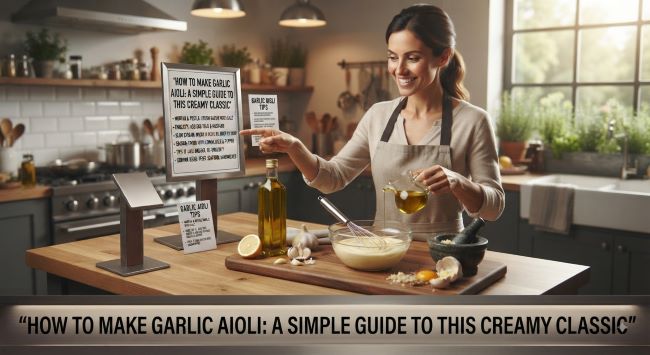
How to Make Garlic Aioli: A Simple Guide to This Creamy Classic
That luxurious, garlicky, creamy sauce served alongside fries, spread on sandwiches, and dolloped over roasted vegetables is easier to make at home than you might think. Garlic aioli transforms simple ingredients into something that elevates almost any dish, and once you can make it yourself, you will reach for it constantly. While traditional aioli and quick shortcut versions differ, both deliver that rich, garlic-forward flavor everyone loves. Here is how to make garlic aioli, with everything you need to whip up this creamy classic in your own kitchen.
What Is Garlic Aioli?
Before diving in, it helps to know what it is. Aioli is a creamy, emulsified sauce built around garlic. Traditional aioli, originating in the Mediterranean, is essentially an emulsion of garlic and olive oil, sometimes with egg, whisked into a thick, rich, garlicky sauce. Modern versions often resemble a garlic-flavored mayonnaise, which is quicker and more approachable.
The heart of any garlic aioli is:
- Garlic, the defining flavor, providing that signature pungent, savory punch.
- A creamy, emulsified base, whether built from oil and egg or from mayonnaise.
- Acidity, usually lemon juice, brightening the sauce.
- Seasoning, salt and sometimes other flavors.
Whether traditional or shortcut, learning how to make garlic aioli means creating a rich, creamy, garlic-forward sauce that enhances countless dishes.
The Quick Method: Shortcut Aioli
The easiest approach is the shortcut method, which uses mayonnaise as the base. It is fast, foolproof, and delicious:
- Gather ingredients. You need good-quality mayonnaise, fresh garlic, lemon juice, salt, and optionally olive oil for richness.
- Prepare the garlic. Mince or crush the garlic very finely, or grate it, so it distributes evenly. For a milder flavor, you can use less or lightly cook the garlic first.
- Combine. Mix the mayonnaise with the minced garlic, a squeeze of lemon juice, and salt to taste.
- Adjust. Taste and adjust the garlic, lemon, and salt to your preference. Add a drizzle of olive oil for extra richness if desired.
- Rest. Let it sit for a little while, ideally, so the garlic flavor infuses the sauce.
This shortcut approach takes just minutes and produces a wonderful result, making it the go-to method for most home cooks.
The Traditional Method: From Scratch
For those wanting the authentic experience, how to make garlic aioli the traditional way involves emulsifying oil into garlic and egg. This takes more effort but yields a genuinely made-from-scratch sauce:
- Make a garlic paste. Crush fresh garlic with a little salt into a smooth paste, traditionally using a mortar and pestle.
- Add egg yolk. Whisk in an egg yolk (some traditional versions use only garlic and oil, but egg yolk helps the emulsion).
- Slowly add oil. This is the crucial step: drizzle in oil very slowly while whisking constantly, allowing it to emulsify into a thick, creamy sauce. Adding oil too fast will break the emulsion.
- Add acidity and seasoning. Whisk in lemon juice and salt to taste.
- Adjust consistency. Continue until you reach a thick, luscious sauce.
The traditional method for how to make garlic aioli rewards patience with an incredibly rich, authentic result, though the shortcut version is perfectly delicious for everyday use.
Tips for Success
A few tips make any attempt at how to make garlic aioli turn out well:
- Use fresh garlic, since it provides the best, most vibrant flavor.
- Mince garlic finely so it distributes evenly and does not leave harsh chunks.
- Add oil slowly in the traditional method, to keep the emulsion from breaking.
- Balance the flavors, tasting and adjusting garlic, lemon, and salt.
- Let it rest, so the garlic flavor melds into the sauce.
- Control garlic intensity by using more or less, or by mellowing raw garlic slightly if you find it too sharp.
The most common issues are a broken emulsion (from adding oil too fast) or overpowering raw garlic, both easily managed with these tips.
Ways to Use Garlic Aioli
Once you know how to make garlic aioli, you will find endless uses for it:
- As a dip for fries, potato wedges, and vegetables.
- As a sandwich or burger spread, adding creamy, garlicky richness.
- With seafood, a classic pairing, especially fried or grilled fish and shrimp.
- Over roasted vegetables, elevating them instantly.
- As a sauce for meats, grilled chicken, steak, and more.
- With eggs or brunch dishes, adding flavor.
Its versatility is a big part of the appeal, since a single batch of garlic aioli enhances so many different foods.
Aioli in Mediterranean Cuisine
Learning how to make garlic aioli connects you to a rich tradition of Mediterranean and Spanish cooking, where garlic-based sauces and bold flavors feature prominently alongside iconic dishes. Aioli is a natural companion to many of these, especially seafood and rice dishes. A dish like Best Arroz Negro Near Me shows the striking squid-ink black rice of Spanish cuisine, which is traditionally served with a dollop of aioli, making it a perfect example of how this creamy garlic sauce complements the bold seafood and rice dishes of the Mediterranean, and understanding these pairings deepens the appreciation for both the sauce and the dishes it accompanies.
The bottom line on how to make garlic aioli is that this creamy, garlicky classic is genuinely easy to make at home, whether you take the quick mayonnaise-based shortcut (fast and foolproof) or the traditional emulsified-from-scratch route (more effort, more authentic). Use fresh garlic, balance it with lemon and salt, add oil slowly if going traditional, and let it rest. Then enjoy your homemade aioli as a dip, spread, or sauce that elevates fries, seafood, sandwiches, vegetables, and so much more.
Key Takeaways
- Garlic aioli is a creamy, emulsified, garlic-forward sauce, traditionally made from garlic and olive oil, often with egg.
- The quick shortcut method uses mayonnaise as the base mixed with fresh garlic, lemon juice, and salt, and is fast and foolproof.
- The traditional method emulsifies oil slowly into garlic and egg yolk for a rich, authentic, from-scratch sauce.
- Use fresh, finely minced garlic, and in the traditional method add oil slowly to avoid breaking the emulsion.
- Balance the flavors with lemon and salt, and let the aioli rest so the garlic flavor melds in.
- Control garlic intensity by using more or less, or mellowing raw garlic if it is too sharp.
- Use garlic aioli as a dip, sandwich spread, seafood accompaniment, vegetable topping, or meat sauce.
- It connects to Mediterranean cuisine, where it traditionally accompanies seafood and rice dishes.