Mini Goldendoodle: A Complete Guide to This Popular Breed
The Mini Goldendoodle has become one of the most sought-after designer dog breeds in recent years, combining the friendly, people-oriented temperament of the Golden Retriever with the lower-shedding coat and smaller size of a Miniature or Toy Poodle. Understanding what you’re actually getting with this specific cross, beyond just the appealing combination of traits the name suggests, helps you decide whether this breed genuinely fits your lifestyle and what to expect across the dog’s lifetime.
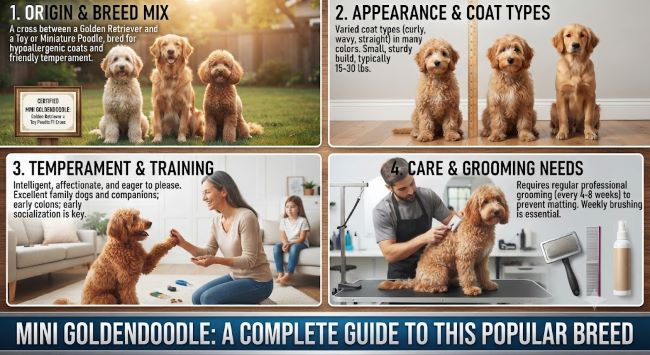
What a Mini Goldendoodle Actually Is
A Mini Goldendoodle is a crossbreed between a Golden Retriever and a Miniature or Toy Poodle, bred specifically to combine desirable characteristics from both parent breeds: the Golden Retriever’s famously friendly, eager-to-please temperament and the Poodle’s intelligence and lower-shedding coat type. Because it’s a crossbreed rather than a purebred recognized by major kennel clubs, individual puppies can show meaningful variation in size, coat type, and temperament even within the same litter, depending on the specific genetic mix inherited from each parent.
F1, F1B, and multi-generation distinctions matter for predictability. An F1 Goldendoodle is a first-generation cross (one Golden Retriever parent, one Poodle parent), generally showing the most variation in coat type and shedding tendency. An F1B is a backcross (an F1 Goldendoodle bred back to a Poodle), typically producing more consistently low-shedding, curlier coats due to the higher proportion of Poodle genetics. Multi-generation doodles (F2, F3, and beyond) involve breeding doodles to other doodles across multiple generations, with breeders working to stabilize specific traits more predictably over successive generations. If a specific coat type or shedding level matters significantly to your situation, asking a breeder specifically about the generation type, rather than just “Mini Goldendoodle” as a general label, produces more useful information.
Size Expectations
Mini Goldendoodles typically range from 15-35 pounds and stand approximately 13-20 inches at the shoulder, though this range itself reflects genuine variation depending on the specific Poodle parent’s size (Miniature versus Toy) and the overall genetic mix involved. For the most size-predictable result, working with an established, reputable breeder who can provide accurate information about the specific parent dogs’ sizes gives you a more reliable size expectation than relying on general breed averages alone, given the inherent variability in crossbred dogs.
Temperament
Mini Goldendoodles are widely regarded as friendly, affectionate, and highly trainable, drawing on the best people-oriented characteristics from both parent breeds. They generally do well with children and other pets when properly socialized from a young age, and their intelligence (inherited substantially from the Poodle side of their lineage) makes them genuinely responsive to training, often picking up commands and house training relatively quickly compared to some other breeds.
This same intelligence and people-orientation, however, means Mini Goldendoodles generally need meaningful mental stimulation and social interaction to thrive — they’re not well suited to being left alone for extended periods regularly, and insufficient engagement can lead to anxiety-related behaviors or destructive habits in dogs of this temperament type.
Grooming Needs
This is one of the most important practical considerations for prospective owners, since Mini Goldendoodle coats require genuinely significant maintenance regardless of the specific generation or coat type.
Regular brushing (typically several times per week at minimum, sometimes daily depending on coat curliness) is necessary to prevent matting, particularly in dogs with curlier, more Poodle-dominant coats.
Professional grooming every 6-8 weeks is standard for most Mini Goldendoodle owners, covering trimming, sanitary area maintenance, and overall coat management that becomes genuinely difficult to keep up with through home grooming alone for most owners, particularly as the dog ages and coat texture potentially changes.
Lower-shedding rather than fully non-shedding. It’s worth correcting a common misconception: Mini Goldendoodles are generally lower-shedding than a purebred Golden Retriever, but they’re not guaranteed to be fully hypoallergenic or completely non-shedding, particularly in F1 generation dogs with more variable coat genetics. Families specifically seeking a dog for allergy management reasons should research this distinction carefully and, ideally, spend time with the specific puppy or an adult dog with a similar genetic background before committing, since allergy reactions can vary significantly between individual dogs even within the same general breed type.
Health Considerations
Like most crossbred dogs, Mini Goldendoodles can potentially benefit from hybrid vigor (a reduction in some breed-specific genetic health issues common to purebred lines), but they remain susceptible to health conditions that affect either parent breed, including hip dysplasia, certain eye conditions, and some heart conditions documented in both Golden Retrievers and Poodles specifically.
Reputable breeders should provide health clearances for both parent dogs covering relevant genetic conditions, and asking directly about this documentation before purchasing a puppy is a reasonable and important step in the buying process, regardless of how appealing a specific litter or breeder’s marketing presentation might be.
Exercise Needs
Mini Goldendoodles generally need moderate daily exercise — a combination of walks and active play, with their exact needs varying based on individual energy level and the specific traits inherited from their parent lines. They’re generally well suited to apartment or smaller home living specifically because of their moderate size, provided their exercise and mental stimulation needs are genuinely met consistently rather than assuming smaller size alone equals lower activity requirements.
Finding a Reputable Breeder
Given the high demand and correspondingly high price point for Mini Goldendoodles in recent years, the breed has unfortunately attracted a meaningful number of less scrupulous breeding operations prioritizing volume and profit over genuine health and temperament considerations. Look specifically for breeders who provide health clearance documentation for parent dogs, allow you to meet the puppy’s parents (at least the mother, since the father is sometimes from a different breeding location), and who ask you thoughtful questions about your lifestyle and home situation as part of their own screening process, rather than simply taking payment and handing over a puppy with minimal vetting of the buyer.
For other research worth doing before committing to a specific breed, including how this particular cross compares to other popular options in terms of trainability and overall intelligence, top 6 smartest dog breeds that will impress you covers a broader look at breed intelligence rankings that provides useful context for understanding where the Poodle lineage specifically (a consistently high-ranking breed for trainability) contributes to the Mini Goldendoodle’s well-regarded responsiveness to training.
Key Takeaways
- A Mini Goldendoodle is a crossbreed between a Golden Retriever and a Miniature or Toy Poodle, with meaningful variation possible in size, coat type, and temperament depending on the specific generation (F1, F1B, or multi-generation) and individual genetics involved
- Expect a size range of roughly 15-35 pounds and 13-20 inches at the shoulder, though working with a reputable breeder who knows the specific parent dogs provides a more reliable individual size expectation
- The breed is widely regarded as friendly, intelligent, and highly trainable, but needs genuine regular mental stimulation and social interaction, making it poorly suited to being left alone for extended periods
- Grooming needs are significant regardless of generation: regular brushing multiple times weekly and professional grooming every 6-8 weeks is standard for most owners
- Mini Goldendoodles are generally lower-shedding than purebred Golden Retrievers but are not guaranteed to be fully hypoallergenic, an important distinction for families specifically seeking a dog for allergy management
- Health clearances for both parent dogs should be requested and reviewed before purchasing, since the breed remains susceptible to conditions documented in both Golden Retrievers and Poodles despite potential hybrid vigor benefits
- High demand has attracted some less scrupulous breeding operations: look for breeders providing health documentation, allowing you to meet at least the mother dog, and asking thoughtful questions about your own home situation as part of their buyer screening process