American Staffordshire Terrier: Breed Guide for Owners
Few breeds carry as much misunderstanding as the American Staffordshire Terrier. The name confuses people, the appearance triggers assumptions, and decades of media coverage have obscured what the dogs are actually like: confident, affectionate, deeply people-oriented, and famously good with their families. AmStaffs are also powerful, strong-willed, and genuinely demanding of training and exercise, which makes them wonderful dogs for the right owner and a poor match for the wrong one. Here is the honest guide.
Breed Background and the Name Confusion
The American Staffordshire Terrier descends from bull-and-terrier crosses brought to America in the 19th century, developed into a larger, heavier dog than its British cousin. The American Kennel Club recognized the breed in 1936.
The naming picture is genuinely confusing, so plainly:
- American Staffordshire Terrier (AmStaff): AKC-recognized breed, typically 40 to 70 pounds.
- Staffordshire Bull Terrier (Staffy): the smaller British breed, typically 24 to 38 pounds. A separate breed.
- American Pit Bull Terrier: a UKC-recognized breed sharing ancestry with the AmStaff. Some dogs are dual-registered as both.
- “Pit bull”: not a breed at all, but a loose umbrella term covering several breeds and mixes, which is where most public confusion originates.
An AmStaff is a specific, registered breed with a documented standard, not a generic category.
Appearance and Build
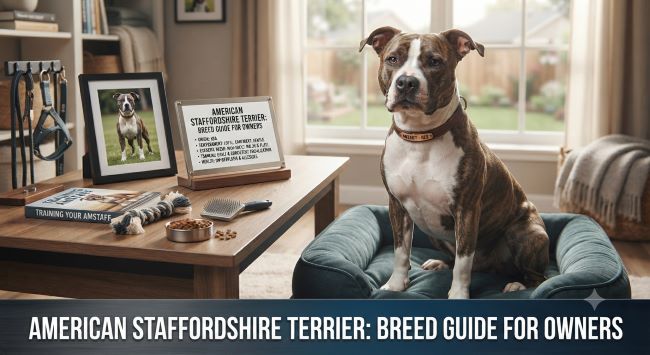
AmStaffs are medium-sized, densely muscled dogs standing 17 to 19 inches at the shoulder and weighing 40 to 70 pounds. The build is stocky and athletic, with a broad head, pronounced cheek muscles, and a short, glossy coat that comes in nearly every color and pattern.
The coat is one of the breed’s practical advantages: short, stiff, and requiring minimal grooming.
Temperament: What the Breed Is Actually Like
The American Staffordshire Terrier breed standard emphasizes confidence and good nature, and well-socialized dogs deliver exactly that:
- Devoted to their people. This is the defining trait. AmStaffs bond intensely with their families and want to be involved in everything.
- Famously good with children. The breed’s historical nickname as a “nanny dog” is overstated folklore, but the affection for family kids is genuine and well documented in the breed’s temperament reputation.
- Confident and courageous without being naturally aggressive toward people.
- Playful and goofy well into adulthood, with a clownish streak owners love.
- Highly trainable and eager to please, which is why the breed excels at obedience, agility, weight pull, and therapy work.
- Strong-willed. They need consistent leadership, not harsh correction, and they respond poorly to inconsistency.
The honest caveat: some AmStaffs show dog-directed reactivity, particularly with same-sex dogs, which is a legacy of the breed’s history rather than a reflection of aggression toward people. Early, extensive socialization matters enormously, and multi-dog households need careful management and honest assessment.
Exercise and Training Requirements
This is where the American Staffordshire Terrier makes demands most casual owners underestimate:
Exercise. Plan on 60 to 90 minutes of real activity daily. Walks alone do not satisfy an AmStaff. They need running, fetch, tug, hiking, swimming, or structured dog sports. An under-exercised AmStaff becomes destructive, and their strength means destruction is thorough.
Mental work. Puzzle feeders, training sessions, scent work, and trick training. This breed is smart and gets bored fast.
Training approach. Positive reinforcement works extremely well; harsh methods damage the relationship and produce worse outcomes. Start puppy classes early, prioritize leash manners before the dog outweighs your ability to manage it, and maintain training throughout life.
Socialization. Extensive exposure to people, environments, sounds, and (carefully managed) other dogs during the critical puppy window pays dividends for the dog’s entire life.
Health and Lifespan
The American Staffordshire Terrier typically lives 12 to 16 years, excellent for a dog of this size. Health concerns to monitor with veterinary guidance:
- Hip dysplasia, common in muscular medium-large breeds
- Cerebellar ataxia (NCL-A), a hereditary neurological condition with a genetic test available; responsible breeders screen for it
- Skin allergies and atopy, relatively common in the breed
- Heart conditions, including some congenital issues
- Cruciate ligament injuries, given the athletic build and activity level
Buy from breeders who health-test parents, or adopt through breed-specific rescues, which are numerous and full of excellent dogs.
Feeding and Nutrition
AmStaffs are muscular, active dogs with real caloric needs during their prime years, and weight management matters since excess weight stresses joints in a heavily-built breed. Feed a quality diet appropriate for their life stage and activity level, measure portions rather than free-feeding, and adjust as the dog ages and activity declines.
Treats deserve mention because AmStaffs are food-motivated, which makes training easy and overfeeding easier. Low-calorie fruit and vegetable treats work well for high-volume training sessions, though every fruit needs checking first, since some are safe and some are genuinely dangerous. Owners commonly ask whether Can Dogs Have Blueberries and whether Can Dogs Have Strawberries, and both are worth reading before building a fruit-based treat routine.
Legal and Practical Considerations
Honest practical realities anyone considering the breed should know:
- Breed-specific legislation. Some cities and countries restrict or ban AmStaffs and similar breeds. Check local ordinances before acquiring one.
- Housing restrictions. Many landlords and HOAs prohibit the breed, which is a genuine obstacle for renters.
- Insurance. Some homeowner and renter policies exclude certain breeds; confirm with your insurer.
- Public perception. You will field assumptions. A well-trained, well-mannered AmStaff in public is the most effective response, and many owners find breed ambassadorship becomes part of ownership.
Who Should Own One
The American Staffordshire Terrier suits active owners who genuinely enjoy training, can commit to substantial daily exercise, have researched local legal restrictions, and want a dog that is intensely bonded to its people. It suits first-time owners poorly unless they are committed to professional training help, and it suits sedentary households not at all.
For the right owner, though, few breeds return the investment like this one: an athletic, hilarious, deeply loyal dog that wants nothing more than to be wherever you are, doing whatever you are doing.
Key Takeaways
- The American Staffordshire Terrier is an AKC-recognized breed (since 1936) weighing 40-70 pounds, distinct from the smaller Staffordshire Bull Terrier and from the umbrella term “pit bull.”
- Temperament is confident, devoted, playful, highly trainable, and famously affectionate with family children.
- Some individuals show dog-directed reactivity, making early extensive socialization and honest multi-dog assessment essential.
- Plan on 60-90 minutes of real daily exercise plus mental enrichment; walks alone are insufficient.
- Positive reinforcement training works far better than harsh correction, and leash manners should be established before the dog reaches full strength.
- Lifespan runs 12-16 years; screen for hip dysplasia, cerebellar ataxia (genetic test available), skin allergies, and heart conditions.
- Manage weight carefully and verify any fruit or human food is safe before using it as a training treat.
- Check breed-specific legislation, housing rules, and insurance restrictions before acquiring one.