Mermaid Man and Barnacle Boy: SpongeBob’s Retired Superheroes Explained
Mermaid Man and Barnacle Boy are SpongeBob’s favorite superheroes, a pair of elderly retired crime-fighters living in Bikini Bottom. This guide covers their characters, best episodes, voice actors, powers, and why they work so well as a parody.
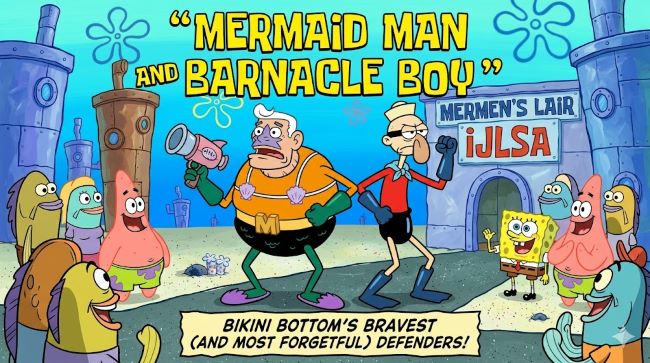
Within the larger world of spongebob characters, mermaid man and barnacle boy occupy a specific and beloved space. They are SpongeBob’s childhood heroes, Aquaman-style crime-fighters who once protected the seas from evil and now spend their retirement at Shady Shoals Rest Home watching television and arguing over food portions. The joke is clear: superhero worship combined with the unglamorous reality of aging. But the reason these two characters have endured across the show’s entire run goes deeper than the basic premise.
The episodes built around mermaid man and barnacle boy are consistently among the most layered in the series, and the voice casting behind them added a layer of real-world resonance that most viewers felt without necessarily knowing why. This guide covers everything about the duo: who they are, what their episodes are actually about, the voice actors behind them, and why the spongebob superhero parody works so well.
Who Are Mermaid Man and Barnacle Boy?
Mermaid Man is the senior of the pair, a retired aquatic superhero who has lived in Shady Shoals Rest Home for years by the time SpongeBob meets him. He wears a starfish-shaped mask, a superhero costume that has seen better decades, and operates with a level of cognitive decline that means he is never quite sure what year it is or who he is talking to. His catchphrase is “EVIL!” shouted at the slightest provocation, which works as a joke because the threats he perceives are almost never real.
Barnacle Boy is his longtime sidekick, younger in the duo’s dynamic but still firmly elderly. He wears a black and white costume and a sailor’s hat, and his primary character trait is exasperation at Mermaid Man’s behavior and at still being called “boy” after decades of heroics alongside his partner. An entire episode, “Mermaid Man and Barnacle Boy IV,” is built around his demand to be treated as an equal rather than a sidekick.
Together they function as a parody of the classic superhero duo format, specifically the kind of comic book and television hero pairings from the 1950s and 1960s that were built on a mentor-protégé model. The show’s writers gave them a full mythology: a rogues gallery of villains, past adventures, gadgets, a superhero team called the International Justice League of Super Acquaintances (IJLSA), and an “Invisible Boat Mobile” that functions as their version of a Batmobile.
SpongeBob and Patrick are obsessed with them, which gives the show a mechanism to treat these elderly, barely-functional characters as genuine legends while also showing how far they have fallen from their prime.
The Voice Actors: Why the Casting Mattered
The voice casting for mermaid man and barnacle boy was not standard animation hiring. Ernest Borgnine voiced Mermaid Man and Tim Conway voiced Barnacle Boy throughout the characters’ run in the original series.
Ernest Borgnine won the Academy Award for Best Actor in 1956 for his role in Marty. He appeared in dozens of major films across six decades, including The Dirty Dozen, The Wild Bunch, and McHale’s Navy. Casting him as a faded, confused superhero was a specific creative choice that added a layer of genuine pathos to the comedy: here was a real Hollywood legend voicing a character who used to be great but has become a gentle shadow of himself.
Tim Conway was a beloved American comedian and actor, best known for his work on The Carol Burnett Show, where his improvisational skills frequently broke his co-stars on live television. He is one of the most decorated performers in American variety television history. Casting him as Barnacle Boy’s long-suffering, perpetually frustrated sidekick was equally deliberate.
The spongebob voice actor credits for these two characters brought genuine industry history to a children’s cartoon, and older viewers watching alongside their kids often recognized the names and felt the joke operating on a different level than the one intended for children.
Ernest Borgnine passed away in 2012 and Tim Conway in 2019. Both characters were retired from active appearances in the main series following the deaths of their voice actors, which the show handled with genuine respect.
Best Mermaid Man and Barnacle Boy Episodes
The duo appeared across multiple seasons in their own dedicated episodes, each one building out the character mythology while using the superhero parody format in different ways.
“Mermaid Man and Barnacle Boy” (Season 1): The introduction. SpongeBob and Patrick discover that their heroes live in Shady Shoals and will not leave the retirement home. SpongeBob’s plan to lure them back into action by staging a fake threat goes predictably wrong. The episode establishes the basic dynamic and the key joke: two people who were once genuinely impressive and are now not.
“Mermaid Man and Barnacle Boy II” (Season 2): SpongeBob wins a conch signal that summons Mermaid Man, and uses it constantly for trivial things. The episode is a study in SpongeBob’s inability to understand the difference between genuine emergencies and minor inconveniences.
“Mermaid Man and Barnacle Boy III” (Season 2): SpongeBob accidentally releases Man Ray, one of the duo’s greatest villains, from a tartar sauce prison in Mermaid Man’s trident. Man Ray goes through a rehabilitation arc that is both funnier and more thoughtful than it has any right to be.
“Mermaid Man and Barnacle Boy IV” (Season 3): Barnacle Boy defects to the villain side after Mermaid Man orders him a children’s meal at the Krusty Krab and refers to him as a boy one too many times. He joins the villains as “Man Ray’s Sidekick” in protest. The episode treats his grievance seriously before resolving it with a compromise, which is a more nuanced structure than most superhero parody stories use.
“Mermaid Man and Barnacle Boy V” (Season 3): SpongeBob forms the IJLSA, recruiting other Bikini Bottom residents as superheroes to fight a newly formed villain team. This episode expands the mythology the furthest, introducing the full roster of superheroes and villains and using the ensemble format to generate a larger-scale parody of team superhero stories.
The Mermaid Man Mythology: Powers, Gadgets, and Villains
The show built a genuine internal history for the duo. Their mythology includes:
Powers:
- Mermaid Man can talk to sea creatures (though this rarely comes up)
- Barnacle Boy has the “sulfur vision” (similar to heat vision) which he almost never gets to use because Mermaid Man takes the spotlight
- Both have enhanced strength, though it is inconsistently shown depending on what the episode needs
Gadgets:
- The Invisible Boat Mobile: their primary mode of transport, invisible and therefore consistently a source of confusion
- The Mermalair: their base of operations, accessible through Shady Shoals
- The conch signal: summons Mermaid Man, used in Episode II
Villains:
- Man Ray: the primary antagonist, a blue-clad villain in a pointed helmet who gets more character development than most SpongeBob villains
- The Dirty Bubble: a giant bubble with a face, voiced by Charles Nelson Reilly, one of the more visually absurd villain concepts in the show
- The Atomic Flounder: mentioned more than shown, a radioactive flounder from the duo’s past
The roster of enemies was broad enough to fill multiple episodes of the IJLSA format. The show treated the mythology with the same internal consistency it applied to the Krabby Patty formula or Squidward’s thwarted ambitions.
Mermaid Man and SpongeBob: The Fan Relationship That Drives the Episodes
SpongeBob’s obsession with mermaid man and barnacle boy is the engine of every episode featuring them. His fandom is childlike, unconditional, and completely blind to the reality of who they have become. He treats them as legends while they sit in front of a television eating dinner at 4pm.
This dynamic generates the spongebob scared, spongebob laugh, and spongebob crying reaction moments that run through these episodes. SpongeBob is scared when Man Ray threatens him. He laughs when his favorite heroes do anything at all. He cries when they refuse to come out of retirement. The full range of spongebob expressions is present across the Mermaid Man episodes because SpongeBob’s emotional investment in them is so complete.
The cute spongebob quality of his fandom, the genuinely childlike devotion, is what stops the episodes from being cynical about the idea of aging heroes. SpongeBob is not making fun of them. He means it. That sincerity keeps the parody from being mean-spirited.
Why the Parody Works
Superhero parody is a crowded genre. What makes the mermaid man and barnacle boy version work is the specificity of the target: not superheroes in general, but the specific type of campy, earnest, slightly absurd superhero media of mid-20th century American television. The costumes, the catchphrases, the rogues gallery, the sidekick dynamic, the secret base, the Invisible Boat Mobile, all of it tracks exactly to that specific era of superhero storytelling.
The added layer of casting real legends from that same era, Borgnine and Conway, made the parody resonate beyond children watching for the first time. It was a tribute as much as a joke.
In a show full of memorable spongebob characters, mermaid man and barnacle boy stand apart because they carry genuine emotional weight. They were great once. The show lets you feel that even while laughing at what they have become.
The visual design of these two characters, specifically how their faded costumes communicate their past glory, demonstrates principles that apply to character design in animation more broadly. Their color schemes and costume details tell you their entire story before either of them speaks. The ability of color and visual detail to communicate character history connects to how color functions as a design language. And for fans interested in the full SpongeBob character universe and its design legacy, how meaningful logo and character design creates lasting recognition is directly relevant to why these two characters are still instantly recognizable decades after their introduction.
Key Takeaways
- Mermaid Man and Barnacle Boy are SpongeBob’s retired superhero idols, a parody of the campy aquatic superhero format from mid-20th century American television, living at Shady Shoals Rest Home in Bikini Bottom.
- Mermaid Man is the senior partner: forgetful, easily startled, and prone to shouting “EVIL!” at minor irritations. Barnacle Boy is his long-suffering sidekick who resents still being called “boy.”
- The spongebob voice actor credits for the duo are exceptional: Ernest Borgnine (Academy Award winner) voiced Mermaid Man and Tim Conway (Carol Burnett Show legend) voiced Barnacle Boy. Both have since passed away and the characters have been retired from active use.
- The five main mermaid man and barnacle boy episodes across Seasons 1-3 are among the most consistently praised in the show’s run, building a full mythology with villains, gadgets, a superhero team (IJLSA), and internal continuity.
- Man Ray and the Dirty Bubble are the duo’s primary villains. Man Ray received enough character development across his appearances to function as a genuine recurring character rather than a one-joke concept.
- SpongeBob’s unconditional fandom for the duo drives every episode featuring them. His sincerity prevents the parody from becoming mean-spirited toward the idea of aging heroes.
- Among all spongebob characters, Mermaid Man and Barnacle Boy carry the most genuine emotional weight because the show lets you feel what they used to be while laughing at who they are now.