Midjourney Alternatives in 2026
Midjourney is still the AI image generator most creators reach for first, but “first” is doing a lot of work in that sentence. The space has fragmented into specialists. Other tools now beat Midjourney decisively at character consistency, fast iteration, video integration, or specific aesthetic categories, even though none has displaced it as the all-purpose image generator. Knowing what each one is actually good at saves time, saves money, and produces better results for the work that matters.
Twelve alternatives worth knowing in 2026, organized loosely from “general-purpose” to “specialist tools that do something Midjourney doesn’t.”
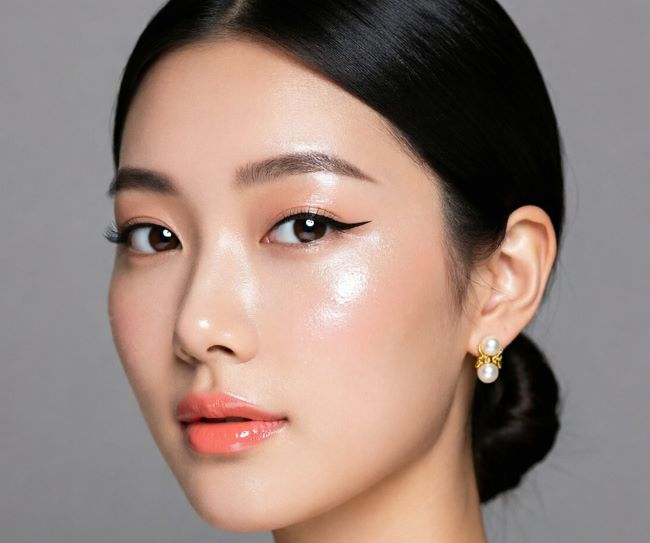
An example of consistent-character output, the use case where many of the alternatives below outperform Midjourney.
1. Flux 2 (Black Forest Labs)
The most direct quality competitor to Midjourney. Flux 2 produces stronger character consistency across multiple generations, handles complex prompts more literally, and runs at a lower cost per image. The aesthetic defaults are slightly more photorealistic and less “Midjourney-styled” than the alternatives below.
Best for: anyone who wants Midjourney quality with better prompt adherence.
2. QWEN Image 2 Pro (Alibaba)
QWEN has become the standout for character locking and reference-based generation. The workflow lets you commit a character once, then generate dozens of new poses, environments, and outfits while the face stays recognizable. For creators building serial content with the same character, this is now the leading workflow.
Best for: creator workflows that need consistent characters across many shots.
3. Nano Banana 2 (Google)
Nano Banana is the dark horse of 2026. The output quality is in Midjourney’s tier, the inference speed is much faster, and the editing tools (regional prompts, inpainting, character preserve) are the best in market for iterating on near-finished images.
Best for: fast iteration, image editing, creators who don’t want to wait 30 seconds per generation.
4. Seedream 5 (ByteDance)
Seedream’s strength is high-volume creator workflows. The pricing tilts dramatically more favorable than Midjourney at scale, and the quality on stylized aesthetics (anime, illustrated, stylized portraits) is competitive.
Best for: high-volume image production, stylized aesthetics, creators producing for short-form video platforms.
5. Ideogram
Ideogram solves one problem Midjourney still doesn’t solve well: rendering text inside images correctly. For posters, marketing collateral, social media graphics with captions baked in, or any image where the words have to be readable, Ideogram is the right pick.
Best for: images with text, marketing graphics, social media posts.
6. Leonardo.ai
Leonardo’s strength is its model variety and fine-tuning. Multiple base models with different aesthetic specialties, and a workflow for training custom models on your own image set. For brands or creators who want a consistent house style across hundreds of images, Leonardo’s custom-model workflow is more accessible than the alternatives.
Best for: brand-specific aesthetics, creators building a recognizable visual style.
7. Krea AI
Krea has the best real-time generation experience in 2026. You sketch, it generates. You adjust the sketch, the image updates within seconds. For ideation and concept exploration where the workflow value is in iteration speed rather than final-image quality, nothing else compares.
Best for: ideation, concept exploration, designers who think with their hands.
8. Higgsfield
Higgsfield made its name on cinematic camera-motion video and has expanded into image generation that pairs well with that motion. The image style leans cinematic, with strong atmosphere and lighting.
Best for: cinematic-style content, video creators who want stills that match.
9. Freepik AI
Freepik bundled its own AI image generator with its existing stock-asset library. The output quality is mid-tier, but the integration with Freepik’s licensed photo and illustration catalog means creators producing marketing material can mix AI-generated and licensed assets in one workflow. For commercial use where licensing certainty matters, the bundling is structurally important.
Best for: marketing creators who need licensing certainty, mixed AI-and-stock workflows.
10. ImagineArt
ImagineArt is the cheapest serious option. Output quality varies more than the leaders, but for creators who are just starting, who are producing personal content, or who don’t need every image to be portfolio-grade, the price point opens AI image generation to a much wider audience.
Best for: new creators, personal projects, hobbyists.
11. Stable Diffusion (self-hosted)
The open-source option still matters for anyone who needs to run image generation on their own infrastructure. Self-hosted SD with a tuned ComfyUI workflow can produce output competitive with the closed models, at zero per-image cost after the hardware investment. The tradeoff is operational complexity. You’re now running a small ML stack.
Best for: privacy-focused workflows, high-volume production, anyone who refuses to send creative work through third-party APIs.
12. All-in-one creator studios
A category that didn’t really exist two years ago. These platforms bundle 30+ image and video models under one subscription, with character locking, asset stacking, and workflow integration. The pitch is that no single model wins every shot, so a Midjourney Alternative that gives you Flux for one shot, Kling for the video version, and Nano Banana for the edit pass produces better serial content than any single-model workflow.
Best for: creators producing multimodal content where character continuity matters more than picking a best-of-breed for each shot.
How to pick
The shortest version of the buying advice:
- General-purpose image generation, no specific workflow constraint? Stay on Midjourney or try Flux 2.
- Character consistency across many shots? QWEN Image 2 Pro or an all-in-one studio.
- Fast iteration and editing? Nano Banana 2 or Krea.
- Text in images? Ideogram.
- High-volume production at lower cost? Seedream 5 or self-hosted Stable Diffusion.
- Cinematic still-and-video pairing? Higgsfield.
- Marketing with mixed AI and stock? Freepik AI.
The shift from “one image generator to rule them all” to “the right tool for each shot, with character consistency across them” is the real story of AI image generation in 2026. Midjourney is still excellent. It just isn’t the right answer for as many problems as it used to be.