Modern Mullet
The mullet has made one of the biggest comebacks in hair history. Once a punchline, the “business in the front, party in the back” cut is now everywhere, from barbershops and red carpets to hockey rinks and music festivals. Today’s version is softer, more textured, and far more wearable than the stiff styles of the 1980s.
This guide covers what the modern mullet haircut is, how it differs from the old version, the most popular variations, how fades change the look, which styles suit your hair type and face shape, what to tell your barber, and how to style and maintain it at home.
What Is a Modern Mullet?
A modern mullet is a haircut that keeps the hair shorter on the front and sides and longer at the back, but with a smoother, more blended transition than the classic version. Instead of a harsh line between short and long, today’s cut uses layers, texture, and often a fade to create a natural flow.
The shape is the same basic idea that made the original famous. The difference is in the details: softer edges, more movement on top, and a back length that looks intentional rather than overgrown.
Key Features
| Feature | What it looks like |
|---|---|
| Front and top | Textured, often with a fringe or messy layers |
| Sides | Short, tapered, faded, or lightly trimmed |
| Back | Noticeably longer, usually reaching the nape or collar |
| Transition | Gradual and blended, not a sharp step |
| Overall feel | Relaxed, edgy, and fashion forward |
A Quick Look at the History
Versions of the short front, long back shape have appeared in many cultures over centuries. The style hit its peak in the 1980s, when rock stars, athletes, and country singers wore it proudly. The word “mullet” itself is widely credited to the Beastie Boys’ 1994 song “Mullet Head.” By the late 1990s, the look had become a joke. Around the early 2020s, a new generation brought it back with a cleaner, more creative twist.
How Is It Different From a Traditional Mullet?
The traditional mullet and today’s version share the same shape, but the execution is very different.
| Feature | Traditional mullet | Today’s version |
|---|---|---|
| Sides | Short and often blunt | Faded, tapered, or textured |
| Top | Flat, short, or spiky | Textured, layered, or curly |
| Back | Long, thin, and straight | Fuller, layered, and shaped |
| Transition | Sharp, obvious step | Smooth and blended |
| Styling | Often stiff with gel or hairspray | Matte, natural, and messy |
| Vibe | Retro, sometimes ironic | Stylish and intentional |
Today’s mullet haircut is also more flexible. You can make it subtle enough for the office or bold enough for a concert. That range is a big reason it has lasted longer than many people expected.
Why Is the Style So Popular?
Several trends have pushed this cut back into the spotlight.
- Nostalgia: Fashion loves to revisit the 1980s and 1990s, and hair is no exception.
- Celebrity influence: Actors, musicians, and athletes have worn versions on red carpets and at games.
- Sports culture: Long “flow” at the back has deep roots in hockey, and the look has spread to soccer, football, and baseball.
- Social media: TikTok and Instagram make it easy to share barber transformations and styling tips.
- Versatility: It works on straight, wavy, curly, thick, and fine hair.
- Gender neutral appeal: Men, women, and nonbinary people all wear it.
- Low daily effort: Many versions look best slightly messy.
Is the Modern Mullet Still in Style in 2026?
Yes. Barber and stylist publications describe mullet inspired cuts as one of the defining men’s looks of 2026, with the trend spreading through athletes, musicians, and hockey hair culture. The style keeps evolving, with softer shapes, low tapers, and shaggy textures leading the way.
Different Types of Mullet Haircuts
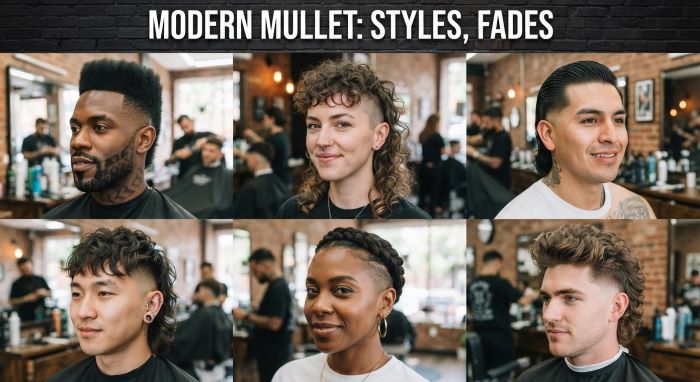
There’s no single way to wear this cut. Here are the most popular variations.
Classic Modern Mullet
This version keeps the traditional shape but softens it. The sides are trimmed short, the top has light texture, and the back flows past the collar. It’s a good starting point if you want the recognizable look without going extreme.
Textured Mullet
A textured mullet uses choppy layers and point cutting to create a messy, piece-y finish. It’s ideal for a lived in look and works well with sea salt spray or matte paste.
Curly Mullet
A curly mullet lets natural curls do the work. The barber removes bulk on the sides and shapes curls on top and at the back. The result is full, bouncy, and full of personality.
Shaggy Mullet
The shaggy mullet blends the mullet with a 1970s shag. Layers run throughout the head, and the back is long and loose. It’s softer and more rock and roll than other versions.
Tapered Mullet
A tapered mullet gradually shortens the hair around the ears and neckline without going down to the skin. It’s clean and subtle, making it a good choice for work or school.
Burst Fade Mullet
A burst fade curves around the ear in a half circle, leaving the back long. It creates a bold contrast and is one of the most eye catching options.
Wolf Cut Mullet
This hybrid mixes the heavy layers of a wolf cut with the long back of a mullet. It’s shaggy and voluminous, with less contrast between the sides and back.
Short Mullet With Fringe
A short mullet with fringe keeps the back only slightly longer than the rest, while bangs or a fringe fall across the forehead. It’s a beginner friendly way to try the trend.
Layered Mullet
Layers add movement and remove weight, especially in thick hair. This version looks soft and flowing and works well for medium to long lengths.
Korean Inspired Mullet
Popular in K pop and Korean fashion, this version is soft and airy with a fringe, light layers, and a gentle back length. The overall look is neat and youthful rather than rugged.
| Style | Edge level | Maintenance | Best for |
|---|---|---|---|
| Classic | Medium | Medium | First timers |
| Textured | Medium | Low | Messy, casual looks |
| Curly | Medium | Medium | Natural curls |
| Shaggy | High | Low | Thick or wavy hair |
| Tapered | Low | Medium | Office friendly styles |
| Burst fade | High | High | Bold statements |
| Wolf cut hybrid | High | Medium | Volume lovers |
| Short with fringe | Low | Medium | Beginners |
| Layered | Medium | Medium | Thick hair |
| Korean inspired | Low | Medium | Soft, neat looks |
Fades and Undercuts: How They Change the Look
Adding a fade or undercut is one of the most popular ways to update the cut. It creates contrast between the short sides and the long back.
What Is a Modern Mullet Fade?
A modern mullet fade blends the hair on the sides from very short, or even skin, up to longer hair on top. The back stays long. The fade makes the cut look sharp and clean while keeping the mullet’s flow.
Popular fade options include:
| Fade type | Where it sits | Look |
|---|---|---|
| Low fade | Just above the ears and neckline | Subtle and versatile |
| Mid fade | Around the temples | Balanced contrast |
| High fade | Near the top of the head | Bold and dramatic |
| Burst fade | Curves around the ear | Edgy and distinctive |
| Drop fade | Curves down behind the ear | Smooth and modern |
| Taper | Only at the edges | Clean and natural |
Mullet With Taper Fade
A taper fade only shortens the hair at the sideburns and neckline, so it’s softer than a full fade. It suits people who want a neat finish without a big contrast. If you like this kind of subtle blend, our guide to the Low Taper Fade explains how it works on its own.
Many barbers also pair a taper with textured hair on top. For ideas, see this Low Taper Fade with Textured Fringe guide. Another close cousin is the Blowout Taper, which adds volume on top and works well if you want a bigger, more styled front.
Mullet Fade vs. Taper: Which Should You Choose?
A mullet fade goes shorter and covers more of the sides, while a taper stays closer to the edges. Choose a fade for a crisp, bold look. Choose a taper if you want something softer or more work friendly.
Mullet With Shaved Sides
For maximum contrast, some people shave or clipper the sides very short and leave the top and back long. This creates a punk inspired look. You can even add designs or lines on the sides.
Undercut Mullet
An undercut removes hair underneath while leaving longer hair on top to cover it. With a mullet, an undercut reduces bulk on thick hair and keeps the shape tidy.
A well done mullet fade grows out quickly, so plan regular touch ups if you want it to stay sharp.
Styles for Men and Women
Modern Mullet for Men
Men’s versions range from clean and tapered to wild and shaggy. Popular choices include:
- Mullet with beard: A full or stubble beard balances the long back and adds a rugged look. Keep the beard trimmed so it connects with the faded sides.
- Athlete mullet: Short on top with a long flow at the back, inspired by hockey and soccer players.
- Rock and roll mullet: Longer layers, messy texture, and a loose, grown out feel.
- Clean faded mullet: A sharp fade with a neat, textured top for everyday wear.
Modern Mullet for Women
Women have embraced the trend with soft, stylish versions that look anything but dated. Popular choices include:
- Shag mullet: Feathered layers and curtain bangs with a long back.
- Pixie mullet: A short pixie cut on top with a longer nape.
- Curly mullet: Defined curls with shorter sides and a fuller back.
- Bob mullet: A choppy bob with longer pieces at the back.
If you have natural, coily hair and want something easy to manage, our guide to Low Maintenance Short Natural Haircuts for Black Females shares more short styles that can work alongside or instead of a mullet.
Short Styles
Short mullets keep the back just a few inches longer than the rest. They’re ideal if you’re new to the trend, want low maintenance, or need a look that fits a professional setting. Popular short options include the baby mullet, the short mullet with fringe, and the tapered mullet.
Long Styles
Long mullets let the back hair fall past the shoulders or to the upper back. They make a strong statement and look great with waves or curls. Long styles need more care, including regular conditioning and trims to prevent split ends.
| Length | Back length | Best for |
|---|---|---|
| Short | Just past the nape | Beginners, office settings |
| Medium | Collar to shoulders | Most people and hair types |
| Long | Past the shoulders | Bold looks, curly or wavy hair |
Best Cuts by Hair Type
Your hair type affects how the cut looks and how easy it is to style.
Curly Hair
Curly hair is perfect for this style. Curls add natural volume and texture, so you need fewer products. Ask your barber to shape curls dry or with a curl specific cutting method so they don’t spring up shorter than expected. A low fade or taper keeps the sides neat.
Straight Hair
Straight hair can look flat in a mullet, so texture is key. Ask for choppy layers and point cutting. Sea salt spray and matte paste help add grip and movement.
Wavy Hair
Wavy hair offers the best of both worlds. Waves add movement without heavy styling. A shaggy or layered version suits wavy hair especially well.
Thick Hair
Thick hair can look bulky, so ask your barber to thin out weight with layers or texturizing shears. An undercut or fade on the sides also helps control volume.
Thin or Fine Hair
Fine hair can still work. Keep the back at a short to medium length so it doesn’t look stringy. Use volumizing products and ask for blunt ends, which can make hair look fuller.
| Hair type | Best style | Product tip |
|---|---|---|
| Curly | Curly mullet with low fade | Curl cream or leave in conditioner |
| Straight | Textured mullet | Sea salt spray and matte paste |
| Wavy | Shaggy or layered mullet | Light texture spray |
| Thick | Layered mullet with undercut | Lightweight cream |
| Thin | Short mullet with blunt ends | Volumizing mousse |
How to Choose the Right Style for Your Face Shape
The right version can balance your features and highlight your best angles.
| Face shape | Recommended style | Why it works |
|---|---|---|
| Oval | Almost any style | Balanced proportions suit most cuts |
| Round | High fade or volume on top | Adds height and makes the face look longer |
| Square | Textured or shaggy mullet | Softens strong jawlines |
| Heart | Mullet with fringe | Balances a wider forehead |
| Long or oblong | Fuller sides and fringe | Adds width and reduces length |
| Diamond | Textured top with soft fringe | Softens cheekbones |
Round Faces
If you have a round face, avoid too much width on the sides. A fade or taper keeps the sides slim, while volume on top adds height.
Oval Faces
Oval faces suit nearly any version, from short and tapered to long and shaggy. You have the freedom to experiment.
Not Sure About Your Face Shape?
Pull your hair back, look in the mirror, and trace the outline of your face with a dry erase marker. Compare the shape to the chart above, or simply ask your barber for advice.
How to Ask Your Barber for the Cut
Clear communication helps you get the look you want.
Bring Reference Photos
Photos are the best way to explain your goal. Bring two or three pictures of styles you like, ideally on people with similar hair types.
Use the Right Terms
Tell your barber:
- Front and top length: “Leave about 2 to 3 inches on top with texture.”
- Fringe: “I’d like a fringe that falls just above my eyebrows.”
- Sides: Choose a fade, taper, or scissor cut. Specify low, mid, or high.
- Back length: “Keep the back at the collar” or “Leave it past my shoulders.”
- Transition: “Blend the sides into the back so it’s not a harsh line.”
- Texture: Ask for layers, point cutting, or thinning if you want movement.
Questions to Ask
- Will this style suit my hair type and face shape?
- How long will it take to grow out the back?
- How often should I come back for touch ups?
- What products do you recommend?
If you’re starting from short hair, your barber may suggest growing the back for a few weeks or months before shaping a full mullet haircut.
How to Style It at Home and the Best Products
Most versions look best with a natural, slightly messy finish.
Basic Styling Steps
- Start with damp hair. Towel dry until it’s no longer dripping.
- Add a prep product. Spray sea salt spray or apply a light mousse.
- Blow dry. Use your fingers to lift the roots and push hair in the direction you want.
- Apply a finishing product. Rub a small amount of paste, clay, or cream between your palms and work it through.
- Shape the back. Twist or scrunch the back for texture.
- Finish lightly. A light hairspray can hold the look without making it stiff.
Styling Tips by Look
- Messy: Use sea salt spray and air dry, then scrunch with matte clay.
- Sleek: Use a light cream and comb hair back for a cleaner finish.
- Curly: Apply curl cream to wet hair and let it air dry or use a diffuser.
- Voluminous: Blow dry upside down and finish with a volumizing powder.
Best Hair Products
| Product | What it does | Best for |
|---|---|---|
| Sea salt spray | Adds texture and a beachy finish | Straight and wavy hair |
| Matte clay | Strong hold with no shine | Messy, textured looks |
| Styling paste | Medium hold and flexible texture | Most hair types |
| Curl cream | Defines curls and reduces frizz | Curly hair |
| Texturizing powder | Adds volume at the roots | Fine or flat hair |
| Leave in conditioner | Softens and protects long hair | Long and curly styles |
| Light hairspray | Holds the finished look | All styles |
| Heat protectant | Protects hair from blow dryer damage | Anyone who uses heat |
Use small amounts first. Too much product can weigh hair down and make it look greasy.
How to Maintain, Trim, and Grow Out the Cut
How Often to Get a Trim
| Style | Recommended trim schedule |
|---|---|
| Skin or high fade | Every 2 to 3 weeks |
| Low fade or taper | Every 3 to 4 weeks |
| Scissor cut sides | Every 4 to 6 weeks |
| Long back only | Every 6 to 8 weeks |
Daily and Weekly Care
- Wash smart. Shampoo two to three times a week to avoid drying out hair.
- Condition the back. Longer hair needs more moisture.
- Protect from heat. Use a heat protectant before blow drying.
- Sleep on silk or satin. This can reduce frizz and tangles.
- Brush gently. Use a wide tooth comb on wet hair to prevent breakage.
Low Maintenance Styles
If you don’t want frequent barber visits, choose a taper instead of a skin fade, keep the back at a medium length, and let natural texture take the lead. Textured and shaggy versions tend to look good even as they grow out.
How to Grow Out the Look
If you’re ready for a change, growing out a mullet takes some patience.
- Let the sides and top catch up. Stop cutting the sides and top for a while.
- Trim the back lightly. Take small amounts off the back so the lengths start to even out.
- Transition through a shag. A shag or wolf cut can bridge the gap.
- Use hats and headbands. These help during awkward stages.
- Visit your barber regularly. They can shape the hair so it looks intentional at every stage.
Does It Suit Everyone?
Almost anyone can wear a version of this cut, but some styles suit certain hair types and face shapes better than others. Your job, dress code, and comfort with bold looks also matter. A short tapered version is the easiest to wear, while long or shaved styles make a bigger statement.
Modern Mullet vs. Wolf Cut: What’s the Difference?
The wolf cut and the mullet are often confused because both use layers and longer hair at the back. The main difference is contrast.
| Feature | Mullet | Wolf cut |
|---|---|---|
| Sides | Short, faded, or tapered | Medium length with layers |
| Back | Clearly longer than the sides | Longer, but blends more evenly |
| Layers | Mostly on top and back | Throughout the whole head |
| Volume | Focused on top and crown | Heavy volume all around |
| Contrast | High | Lower |
| Overall vibe | Edgy and defined | Shaggy and wild |
Which One Should You Choose?
Choose a mullet if you want short sides and a clear long back. Choose a wolf cut if you want an all over shaggy look with lots of volume. If you can’t decide, a wolf cut mullet hybrid gives you a bit of both.
Frequently Asked Questions
What is the difference between a mullet and a modern mullet haircut? A modern mullet haircut uses a smoother transition, more texture, and often a fade, while the traditional mullet had a sharp step between short and long hair.
How long does hair need to be for a mullet? For a short version, you need about 2 to 3 inches on top and a little extra length at the back. Longer styles need several months of growth at the back.
Can women get a mullet? Yes. Popular options for women include shag mullets, pixie mullets, curly mullets, and bob mullets.
Is a mullet fade hard to maintain? A modern mullet fade needs touch ups every two to four weeks to stay sharp, so it’s more work than a taper or scissor cut.
What products work best? Sea salt spray, matte clay, and styling paste work well for most people. Curl cream is best for curly hair.
Is a mullet professional? A short, tapered version can look neat enough for many workplaces. Longer or shaved styles may be better suited to creative or casual settings.
How long does it take to grow a mullet? It depends on your starting length, but most people need a few months to grow a noticeable back length.
Key Takeaways
- The modern mullet keeps the short front and long back shape, but with softer blending, texture, and layers.
- Popular variations include textured, curly, shaggy, tapered, burst fade, wolf cut, layered, and Korean inspired mullets.
- A modern mullet fade or taper adds contrast and keeps the sides clean.
- The style works for men and women and suits curly, straight, wavy, thick, and fine hair.
- Choosing the right version for your face shape helps balance your features.
- Bring reference photos and clear terms when you ask your barber for a mullet haircut.
- Sea salt spray, matte clay, and styling paste are the most useful styling products.
- Fades need trims every two to four weeks, while tapers and scissor cuts last longer.
- A mullet has more contrast than a wolf cut, which uses layers throughout the whole head.