Best Bath Toys for Babies: 12 Safe Picks for Splashing, Pouring, and Learning
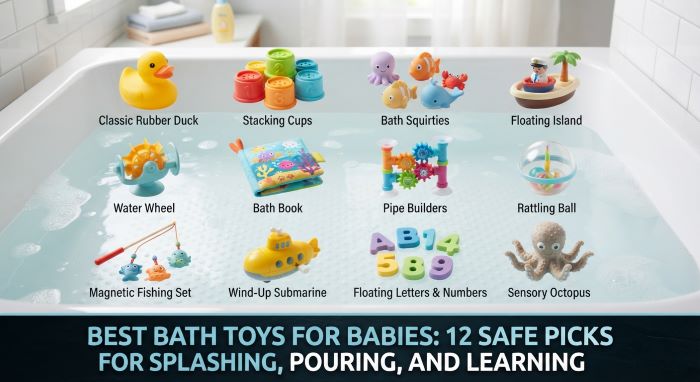
Bath time can go one of two ways. Some babies kick and laugh the moment they touch the water. Others cry until they are wrapped in a towel. A few good toys can tip the balance. The best bath toys for babies turn the tub into a place to pour, squeeze, splash, and explore, and they give a nervous baby something happy to focus on.
Not every toy belongs in the water, though. Squirt toys can grow mold inside. Small parts can come loose. Some toys suit a one-year-old but do nothing for a baby of four months. This guide lists 12 specific picks, compares them in a table, and explains how to choose, clean, and store them.
What to Look For in a Baby Bath Toy
- Age fit. Check the age on the package. A young baby needs light toys that are easy to grip. An older baby wants to pour and stack.
- No holes, or easy to open. Toys that trap water grow mold. Choose sealed toys or toys that come apart for cleaning.
- Safe materials. Look for BPA-free plastic, food-grade silicone, or natural rubber.
- No small parts. Anything that fits through a toilet paper tube is a choking risk for a child under three.
- Easy cleaning. Dishwasher-safe toys save time.
- Simple design. Babies learn most from open-ended toys such as cups and scoops.
- Soft edges. Babies put everything in their mouths.
We used these seven points to pick the best bath toys for babies on the list below.
Comparison Table: 12 Bath Toys at a Glance
| Toy | Type | Best Age | Material | Mold Resistance | Price Range |
|---|---|---|---|---|---|
| The First Years Stack Up Cups | Stacking cups | 6 months and up | Plastic | High, open design | Under $10 |
| Munchkin Float and Play Bubbles | Floating balls | 4 months and up | Plastic | High, sealed | Under $10 |
| Skip Hop Zoo Stack and Pour Buckets | Pouring buckets | 9 months and up | Plastic | High, open design | $10 to $15 |
| Green Toys Tugboat | Boat and scoop | 6 months and up | Recycled plastic | High, open design | $10 to $15 |
| Nuby Octopus Hoopla | Ring toss | 18 months and up | Plastic | High, sealed | Under $10 |
| Boon Pipes | Wall pipes | 12 months and up | Plastic | High, open design | $15 to $20 |
| Hevea Kawan Rubber Duck | Rubber duck | Birth and up | Natural rubber | High, no hole | $10 to $15 |
| Yookidoo Elephant Baby Shower | Battery shower | Birth and up | Plastic | Medium, drain after use | $25 to $35 |
| Ubbi Interchangeable Bath Toys | Squeeze toys | 6 months and up | Plastic | High, opens up | $10 to $15 |
| Lovevery Bath Set | Mixed set | 9 months and up | Plastic and silicone | High, quick dry | Higher |
| Munchkin Fishin’ | Magnetic fishing | 24 months and up | Plastic | High, sealed | $10 to $15 |
| Skip Hop Zoo Bath Puppet | Washcloth puppet | Birth and up | Terry cloth | High, machine wash | Under $10 |
Price ranges are rough guides and change often. Check the current price and the age label before you buy.
1. The First Years Stack Up Cups
These eight bright cups may be the best value in the toy aisle. Each cup has holes in the base, so water rains out in a different pattern. Babies fill them, pour them, stack them, and nest them. The cups have numbers on the bottom for later counting games. They have no hidden spaces, so they dry fast and rarely grow mold.
2. Munchkin Float and Play Bubbles
This set of four sealed balls floats on the water. Each one has a small toy inside that spins or rattles. The textured bands make them easy for small hands to hold. Because they are sealed, no water gets in. They suit young babies who are just starting to reach and grasp.
3. Skip Hop Zoo Stack and Pour Buckets
These five animal buckets nest inside each other and have handles that are easy to grab. Each has a different sprinkle pattern in the base. Older babies love to scoop and pour over their own hands and feet. The open shape makes them easy to rinse and dry.
4. Green Toys Tugboat
Green Toys makes this boat in the United States from recycled milk jugs. It floats, and the wide spout lets a child scoop and pour water. It has no metal parts and no paint to chip. It is dishwasher safe. The simple shape works for a baby of six months and still gets used at age three.
5. Nuby Octopus Hoopla
A purple octopus floats in the tub, and the child tosses three rings onto its arms. The pieces are sealed, so they do not take in water. It builds hand-eye skill. The ring game suits toddlers, so check the age label, but younger babies still like to hold and chew the rings with a parent close by.
6. Boon Pipes
These five pipes stick to the tub wall with suction cups. Each has a different shape. The child pours water in the top and watches it flow out. You can use them one at a time or link them in a chain. They teach cause and effect, and they come off the wall for a full rinse.
7. Hevea Kawan Rubber Duck
Classic rubber ducks have a hole in the base, and that hole lets in water and mold. The Kawan duck has no hole. It is made from natural rubber in one sealed piece. It doubles as a teether. Some parents notice a mild rubber smell at first, which fades. Skip it if your family has a latex allergy.
8. Yookidoo Elephant Baby Shower
This battery-powered toy draws water from the tub and sends a soft stream out of the elephant’s trunk. Many parents use it to rinse hair, since the gentle flow upsets babies less than a cup of water over the head. Drain it and let it dry after each bath.
9. Ubbi Interchangeable Bath Toys
These squeeze toys look like classic squirters, but each one splits into two halves. You can open them, wash the inside, and let them dry. The halves also mix and match, so a child can build silly animals. They solve the main problem with squirt toys.
10. Lovevery Bath Set
Lovevery designs toys around stages of child growth. Its bath set includes cups, a pouring toy, and floating pieces made to dry fast. Several parts are dishwasher safe. It costs more than the other picks and needs storage space, but the quality is high.
11. Munchkin Fishin’
This set has a magnetic rod and three floating sea creatures. The child “catches” them with the rod. It builds patience and aim. This one is for toddlers of about two and up, so save it for later or for an older sibling who shares the tub.
12. Skip Hop Zoo Bath Puppet
A soft terry cloth puppet lets you wash your baby while you play. It is a good first bath toy, since a newborn cannot hold anything yet but will watch a friendly face. Toss it in the washing machine after use.
Best Picks by Age
| Age | What Babies Can Do | Good Choices |
|---|---|---|
| 0 to 3 months | Watch and listen | Bath puppet, sealed rubber duck |
| 4 to 6 months | Reach, grasp, and mouth | Float and Play Bubbles, rubber duck |
| 6 to 9 months | Sit with support, splash, bang | Stack Up Cups, Green Toys Tugboat |
| 9 to 12 months | Pour, fill, and dump | Stack and Pour Buckets, Lovevery set |
| 12 to 24 months | Stack, aim, and pretend | Boon Pipes, Octopus Hoopla, Fishin’ |
When you choose the best bath toys for babies, match the toy to what your child can do right now. A toy that is too hard gets ignored. A toy that is too simple gets dull.
How Bath Play Helps Babies Learn
Water play is real learning.
- Motor skills: Grasping, pouring, and squeezing build hand strength.
- Cause and effect: A baby learns that tipping a cup makes water fall.
- Early science: Some things float. Some sink. A full cup is heavier than an empty one.
- Language: You name what you see. “Splash. Pour. The duck is wet.”
- Senses: Warm water, bubbles, and new textures give rich input.
- Bonding: A calm, playful bath builds trust.
Bath Safety Rules
Toys make bath time fun, but safety comes first. These rules matter more than any product.
- Never leave a baby alone in the bath, not even for a moment. A baby can drown in a small amount of water in very little time.
- Stay within arm’s reach. Keep a hand on a young baby at all times.
- Gather everything first. Towel, soap, diaper, and clothes should be in reach before you start.
- Check the water. Aim for warm, not hot, at about 100 degrees Fahrenheit. Test it with your wrist or elbow.
- Keep the water shallow. A few inches is enough.
- Do not rely on bath seats. They are not safety devices.
- Ignore the phone and the door. If you must leave, wrap the baby in a towel and take the baby with you.
- Drain the tub right away.
No toy, seat, or older sibling replaces an adult who is watching.
The Mold Problem and How to Avoid It
Mold is the top complaint about bath toys. Any toy with a small hole pulls in water, and the dark, damp inside is a perfect place for mold to grow. You often cannot see it until black flecks squirt out.
To avoid it:
- Choose sealed toys or toys that open.
- Squeeze out all the water after each bath.
- Store toys where air can reach them.
- Wash them once a week.
- Throw out any toy with mold you cannot reach.
Some parents seal the hole in a squirt toy with a dab of hot glue. That stops the water, but it also ends the squirting.
How to Clean Bath Toys
- After each bath: Rinse, shake off the water, and set the toys out to dry.
- Weekly: Wash them in warm, soapy water, or run dishwasher-safe toys on the top rack.
- Monthly: Soak hard plastic toys for about an hour in a mix of equal parts white vinegar and warm water. Rinse well and air dry.
- Fabric toys: Machine wash and dry fully.
- Natural rubber: Wash by hand. Do not boil it or put it in the dishwasher.
Follow the care label on each toy, since materials differ.
Smart Storage
Wet toys piled in a closed bin stay wet. Use storage that drains.
- A mesh bag that hangs on the wall
- A scoop-style organizer with drain holes
- A slotted basket on the tub edge
- A corner shelf with open sides
Let toys dry fully between baths when you can. If you bathe your baby daily, rotate two small sets.
Materials Guide
| Material | Pros | Cons |
|---|---|---|
| Hard plastic | Cheap, tough, easy to clean | Can crack over time |
| Silicone | Soft, heat safe, dishwasher safe | Costs more, picks up lint |
| Natural rubber | Soft, plant based | Not for latex allergy, hand wash only |
| Foam | Sticks to wet walls, light | Babies can bite off pieces |
| Fabric | Soft, good for newborns | Must dry fully |
Foam letters and shapes are popular, but watch a teething baby closely. Small bitten pieces are a choking risk.
Toys to Skip
- Classic squirt toys with a hole that cannot be opened
- Toys with small magnets or button batteries
- Painted toys from unknown brands with no safety details
- Toys with long cords or strings
- Anything smaller than your baby’s fist
- Old or cracked toys that hold water
You May Already Own Good Bath Toys
You do not need to spend much. Many household items work well, as long as they are clean and have no sharp edges.
- Plastic measuring cups
- A small colander
- A clean plastic funnel
- A washcloth
- A plastic bowl
- A small watering can
Building a Wider Toy Collection
Bath toys are one part of a child’s play. Around the first birthday, babies are ready for more kinds of toys on dry land too. For ideas, see this guide to the best toys for 1 year old. Many water play skills, such as pouring and scooping, also carry over to the sandbox and the yard. As your child grows, this list of the best outdoor toys for kids can help you plan the next stage.
What to Do if Your Baby Hates the Bath
- Check the water and the room. A cold room upsets many babies.
- Keep baths short.
- Get in the tub with your baby if it is safe to do so.
- Introduce one toy at a time.
- Sing the same song each bath so it feels familiar.
- Let your baby hold a toy before the water touches the skin.
- Try a different time of day.
Most babies come around within a few weeks.
How Many Toys Do You Need?
Three to five is plenty. Even the best bath toys for babies lose their charm in a crowd. Too many toys crowd the tub and overwhelm a baby. Rotate them every week or two to keep interest fresh. A set of cups, one floating toy, and one scoop or boat cover most needs for the first year.
Frequently Asked Questions
When can babies start to use bath toys? From the first weeks, a baby can watch a puppet or a floating duck. Real play starts around four to six months, when babies can grasp.
What are the best bath toys for babies under 6 months? Sealed floating balls, a hole-free rubber duck, and a soft bath puppet.
Are squirt toys safe? Mold inside them is the worry. Choose ones that open for cleaning.
How often should I replace bath toys? Replace them when they crack, peel, smell, or show mold.
Can bath toys go in the dishwasher? Many hard plastic and silicone toys can. Check the label.
Is mold in bath toys dangerous? Most healthy children are not harmed by brief contact, but it is best avoided. Throw out moldy toys, and ask your pediatrician if your child has allergies, asthma, or a weak immune system.
Do babies need bath toys at all? No. They help make the bath fun and build skills, but your voice and attention matter most.
Final Thoughts
The best bath toys for babies are simple, safe, and easy to keep clean. A set of stacking cups, a few sealed floating balls, and a boat or bucket will keep most babies happy for the whole first year. Add wall pipes or a ring toss game as your child grows.
Choose toys with no hidden spaces, dry them after each bath, and replace them when they wear out. Above all, stay within arm’s reach every second your child is in the water. With a watchful parent and two or three of the best bath toys for babies, bath time can become one of the happiest parts of the day. Start small, see what your child loves, and build your set of the best bath toys for babies from there.
Key Takeaways
- The best bath toys for babies are sealed or open in design, so water cannot get trapped and grow mold.
- Stacking cups, sealed floating balls, pouring buckets, and a simple boat give the most play for the least money.
- Match toys to age: watching toys for newborns, grasping toys at 4 to 6 months, pouring toys from 9 months.
- Rinse and dry toys after each bath, and wash them weekly.
- Skip classic squirt toys that cannot be opened and any toy with small parts.
- Three to five toys are enough. Rotate them to keep interest high.
- Never leave a baby alone in the bath. Stay within arm’s reach at all times.