Best Laundry Detergent for Sensitive Skin: 10 Gentle Picks for Itch-Free Clothes
If your skin itches, burns, or breaks out in a rash after putting on freshly washed clothes, your laundry detergent may be the culprit. Fragrances, dyes, and certain preservatives in detergent can linger in fabric fibers and irritate skin for hours. People with eczema, contact dermatitis, allergies, or naturally sensitive skin are especially affected, and babies are more sensitive than most adults.
Switching detergents is one of the easiest ways to reduce irritation. This guide lists 10 specific products, compares their formats and certifications in a table, and explains what to look for when choosing the best laundry detergent for sensitive skin for your household.
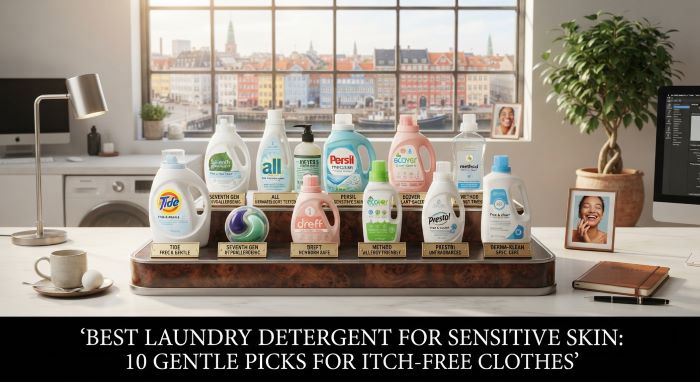
Why Detergent Can Irritate Skin
Detergent residue stays on clothes, sheets, and towels even after rinsing. When fabric rubs against skin all day, those residues can trigger reactions. Common irritants include:
- Fragrances: The most common trigger for allergic contact dermatitis from laundry products.
- Dyes: Added only for color, they serve no cleaning purpose.
- Preservatives: Some, like methylisothiazolinone, are known allergens.
- Optical brighteners: Chemicals that make whites look brighter can irritate some people.
- Harsh surfactants: Strong cleaning agents can dry and irritate skin if they are not fully rinsed.
The fix is not to stop washing clothes, of course, but to choose products without unnecessary additives and to rinse thoroughly.
What to Look For
Fragrance-free: Look for “fragrance-free” rather than “unscented.” Unscented products may contain masking fragrances to cover chemical smells.
Dye-free: Clear or white detergents avoid unnecessary dyes.
National Eczema Association Seal of Acceptance: This seal means the product has been reviewed for ingredients known to irritate sensitive skin.
EPA Safer Choice certification: This label means ingredients meet the EPA’s safety standards for people and the environment.
Hypoallergenic and dermatologist tested: Helpful signals, though these terms are not strictly regulated.
Short ingredient list: Fewer ingredients mean fewer potential triggers.
Comparison Table: Best Laundry Detergent for Sensitive Skin
| Detergent | Format | Fragrance and Dye Free | Notable Certification | Approx. Price | Best For |
|---|---|---|---|---|---|
| Tide Free & Gentle | Liquid | Yes | National Eczema Association Seal | around $18 | Strong cleaning, sensitive skin |
| all Free Clear | Liquid | Yes | National Eczema Association Seal | around $18 | Widely available everyday pick |
| Seventh Generation Free & Clear | Liquid | Yes | EPA Safer Choice | around $15 | Plant-based option |
| Arm & Hammer Sensitive Skin | Liquid | Yes | SkinSafe certified | around $8 | Budget households |
| Ecos Plant-Powered (Free & Clear) | Liquid | Yes (choose fragrance-free version) | EPA Safer Choice | around $11 | Eco-conscious budget |
| Molly’s Suds Original Powder | Powder | Yes | Hypoallergenic | around $15 | Minimal-ingredient powder |
| Earth Breeze Detergent Sheets | Sheets | Yes | Hypoallergenic | around $12 | Travel and plastic-free laundry |
| Blueland Laundry Tablets | Tablets | Yes | EPA Safer Choice | around $24 | Low-waste households |
| Dropps Sensitive Skin Pods | Pods | Yes | Hypoallergenic | around $35 | Easy dosing |
| Charlie’s Soap | Powder or liquid | Yes | Hypoallergenic | varies | Simple, residue-free formula |
Prices vary by size and retailer, so check current listings before you buy.
1. Tide Free & Gentle
Tide Free & Gentle combines Tide’s strong cleaning power with a formula free of dyes and perfumes. It carries the National Eczema Association Seal of Acceptance and works in both standard and high-efficiency machines.
It is a great choice for families who want reliable stain removal without irritation. Many dermatologists recommend it as the best laundry detergent for sensitive skin for people who still need tough cleaning on sports clothes, work wear, and kids’ clothes.
2. all Free Clear
all Free Clear is one of the most widely available sensitive skin detergents. It is free of dyes and perfumes, carries the National Eczema Association Seal, and is affordable. It is easy to find at almost any grocery store or pharmacy.
3. Seventh Generation Free & Clear
Seventh Generation Free & Clear uses plant-based ingredients and carries EPA Safer Choice certification. It is fragrance-free and dye-free. It appeals to families who want gentle ingredients and a smaller environmental footprint.
4. Arm & Hammer Sensitive Skin
Arm & Hammer Sensitive Skin is one of the most affordable options on this list at around $8. It is free of perfumes and dyes and is SkinSafe certified. It is a solid pick for large households and budget-conscious shoppers who still want a gentle formula.
5. Ecos Plant-Powered Free & Clear
Ecos offers a plant-powered detergent with EPA Safer Choice certification. It comes in both scented and fragrance-free versions, so check the label and choose the Free & Clear option for sensitive skin. It is affordable and widely available.
6. Molly’s Suds Original Powder
Molly’s Suds uses a short, simple ingredient list in powder form. Powder detergents often contain fewer preservatives than liquids, which can help people who react to preservatives. It works in HE machines and is popular with families who want minimal ingredients.
7. Earth Breeze Laundry Detergent Sheets
Earth Breeze sheets are thin, pre-measured strips that dissolve in the wash. They are lightweight, plastic-free, and easy to pack for travel. The fragrance-free version suits sensitive skin.
Sheets are convenient but may not handle very heavy stains as well as liquid detergents. Pre-treat tough spots for best results.
8. Blueland Laundry Tablets
Blueland’s laundry tablets come in plastic-free packaging and carry EPA Safer Choice certification. The fragrance-free version avoids common irritants. They are a good pick for low-waste households.
9. Dropps Sensitive Skin Pods
Dropps Sensitive Skin pods are free of dyes and fragrances and come in plastic-free cardboard packaging. Pre-measured pods prevent overdosing, which can leave excess residue on clothes.
Keep pods out of reach of children, since they can be dangerous if bitten or swallowed.
10. Charlie’s Soap
Charlie’s Soap is a simple, fragrance-free detergent known for rinsing cleanly and leaving very little residue. It comes in powder and liquid forms. It has a loyal following among people with very sensitive skin and cloth diaper users.
Liquid vs. Powder vs. Pods vs. Sheets
Liquid detergents dissolve easily in all water temperatures and work well for pre-treating stains. They often contain preservatives to keep the formula stable.
Powder detergents usually contain fewer preservatives and are often cheaper per load. They may not dissolve fully in cold water, which can leave residue.
Pods offer convenience and prevent overuse, but they cost more per load and pose a safety risk around children.
Sheets and tablets are lightweight and low-waste, though some may be less effective on heavy stains.
The best laundry detergent for sensitive skin depends on your washer, water temperature, and preferences. If you react to preservatives, try a powder. If you wash in cold water, a liquid may rinse more cleanly.
Washing Tips for Sensitive Skin
- Use less detergent. Overdosing leaves more residue on clothes. Follow the dosing lines, or use slightly less for small loads.
- Add an extra rinse cycle. This removes more detergent residue.
- Skip fabric softener. Most softeners contain fragrance and coat fibers with chemicals. Use wool dryer balls instead.
- Avoid dryer sheets. They leave fragrance and residue on clothes.
- Wash new clothes before wearing. New garments often contain finishing chemicals and dyes.
- Clean your washer monthly. Residue builds up in the drum and dispensers.
- Use warm water when possible. Warm water rinses detergent more thoroughly than cold.
Laundry for Babies and Kids
Babies have thinner, more sensitive skin than adults. Many parents choose gentle, fragrance-free detergents from the start. Wash baby clothes, bedding, and burp cloths separately at first, then switch to washing with the family’s laundry once you know your baby tolerates your detergent. Any of the fragrance-free options on this list can work for baby clothes. For many families, the best laundry detergent for sensitive skin becomes the household standard so everyone’s clothes are washed the same way.
Eczema and Laundry
People with eczema often notice flares after switching detergents or using scented products. Dermatologists commonly recommend:
- Fragrance-free and dye-free detergents
- Double rinsing
- Soft, breathable fabrics like cotton
- Avoiding wool and rough synthetic fabrics against the skin
- Washing new clothes before wearing them
If you continue to react, a dermatologist can perform patch testing to identify specific allergens.
Reading Detergent Labels
Detergent labels can be confusing, so here is how to decode common terms:
- Fragrance-free: No fragrance added, including masking fragrances. This is what you want.
- Unscented: Might still contain fragrance chemicals used to cover the smell of other ingredients.
- Hypoallergenic: Suggests a lower chance of reactions, but the term is not strictly regulated.
- Dermatologist tested: The product was tested on skin, but results and standards vary.
- Free & Clear: Usually means free of dyes and perfumes, though always check the full ingredient list.
- Plant-based: Ingredients come from plants, but plant-derived ingredients can still irritate some people.
The most reliable signs are third-party certifications like the National Eczema Association Seal and EPA Safer Choice, along with a short, clear ingredient list. Checking labels carefully is the fastest way to find the best laundry detergent for sensitive skin in any store aisle.
Stain Removal Without Harsh Chemicals
People with sensitive skin still need to remove stains. Choose fragrance-free stain removers, or use simple options like a paste of baking soda and water, a little fragrance-free dish soap on grease, or an oxygen-based powder soak for whites. Rinse treated areas well before washing. Avoid chlorine bleach on items that touch the skin often, since residue can irritate. Pairing a gentle stain treatment with the best laundry detergent for sensitive skin keeps clothes clean without sacrificing comfort.
Bedding, Towels, and Everyday Items
Clothes are not the only items that touch your skin. Sheets, pillowcases, towels, and pajamas spend hours against your body, often while you sleep. Wash these with the same fragrance-free detergent and extra rinse cycle. Change pillowcases often, especially if you have facial eczema or acne. Wash bath towels after a few uses, and avoid fabric softener on towels, since it reduces absorbency and leaves residue.
Do not forget items like cloth face masks, hats, scarves, and gloves. These sit directly against sensitive areas of the face and neck. Washing every textile in your home with the best laundry detergent for sensitive skin removes hidden sources of irritation that are easy to overlook.
Laundromats and Shared Machines
Shared washers at laundromats or apartment buildings may contain residue from other people’s scented detergents and fabric softeners. Run a quick rinse cycle with hot water before your load if possible, or wipe the drum and door seal. Bring your own fragrance-free detergent, and skip shared dryer sheets. Some people with severe sensitivities run an extra rinse cycle at home after using shared machines.
Water Temperature and Hardness
Water conditions affect how well detergent rinses out. Hard water, which is high in calcium and magnesium, can bind with detergent and leave more residue on fabric. If you have hard water, you may notice stiff towels and dull colors. A water softener or a fragrance-free laundry booster designed for hard water can help detergent rinse more completely.
Cold water saves energy, and many modern detergents work well in it. However, powder detergents may not dissolve fully in very cold water, which can leave white streaks and residue. If you wash in cold water, dissolve powder in a little warm water before adding it, or choose a liquid formula.
Switching Detergents the Right Way
When you switch to a gentler detergent, old residue from your previous product may still be in your clothes, sheets, and washer. To get a fresh start:
- Run an empty hot wash cycle with a washer cleaner or a cup of white vinegar.
- Rewash bedding, towels, and the clothes you wear most with the new detergent.
- Add an extra rinse to each load for the first few weeks.
- Give your skin two to four weeks to settle before judging the results.
This reset helps you see whether the new detergent truly improves your skin.
Fabric Choices That Help
Detergent is only part of the picture. Fabric matters too. Soft, breathable cotton, bamboo-derived fabrics, and silk tend to feel gentler on sensitive skin. Rough wool and some synthetic blends can rub and trap heat, which makes itching worse. Look for tagless clothing and flat seams, and choose looser fits for areas prone to irritation, such as waistbands and underarms. When you buy new clothing, wash it at least once with a gentle detergent before wearing to remove finishing chemicals and excess dye.
Storing Detergent Safely
Keep detergent in its original container with the label intact, so you can check ingredients later. Store it in a cool, dry place out of reach of children and pets.
Natural and DIY Alternatives
Some people try homemade detergents made with soap flakes, washing soda, and borax. These can work for some households, but soap-based homemade recipes can build up in fabric and machines over time, and they may not suit HE washers. Commercial fragrance-free detergents are usually a more reliable option.
Signs You Need to Switch Detergents
- Itchy skin after putting on clean clothes
- Red patches or rash where clothing touches skin
- Rashes under waistbands, collars, or bra straps
- Flares in eczema symptoms after laundry day
- Irritation that improves when you wear clothes washed elsewhere
If you notice these signs, switch to a fragrance-free detergent, rewash your clothes, bedding, and towels, and watch for improvement over a few weeks.
Choosing the Right Detergent
For strong cleaning with sensitive skin, Tide Free & Gentle is a top choice. For wide availability and value, all Free Clear and Arm & Hammer Sensitive Skin are easy to find and affordable. For plant-based formulas, Seventh Generation and Ecos fit well. For low-waste laundry, Earth Breeze, Blueland, and Dropps offer plastic-free options.
The best laundry detergent for sensitive skin skips fragrances and dyes, rinses cleanly, and fits your washing habits. Combine the right detergent with smart washing habits, and you can reduce itching and irritation for the whole family.
Key Takeaways
- Fragrances and dyes are the most common laundry triggers for itchy, irritated skin.
- Choose “fragrance-free” rather than “unscented,” since unscented products may contain masking fragrances.
- Tide Free & Gentle and all Free Clear carry the National Eczema Association Seal of Acceptance.
- Seventh Generation, Ecos, and Blueland offer EPA Safer Choice certified options.
- Earth Breeze sheets, Blueland tablets, and Dropps pods provide plastic-free choices.
- Use less detergent, add an extra rinse, and skip fabric softeners and dryer sheets.
- Wash new clothes before wearing them and see a dermatologist if irritation continues.