
Best Tents for Family Camping 2025: 10 Roomy Tents for Comfortable Campouts
A family camping trip should be fun, not a cramped, soggy struggle. The right tent gives everyone room to sleep, stand up to change clothes, stash gear, and ride out a rainy afternoon with card games. The wrong tent leaks, blows over, or leaves everyone crawling over each other all night.
Family tents are very different from backpacking tents. Weight matters less, since you carry them from the car. Space, height, weather protection, and easy setup matter much more. This guide lists 10 specific tents, compares them in a table, and explains how to choose the best tents for family camping 2025 and the seasons ahead.
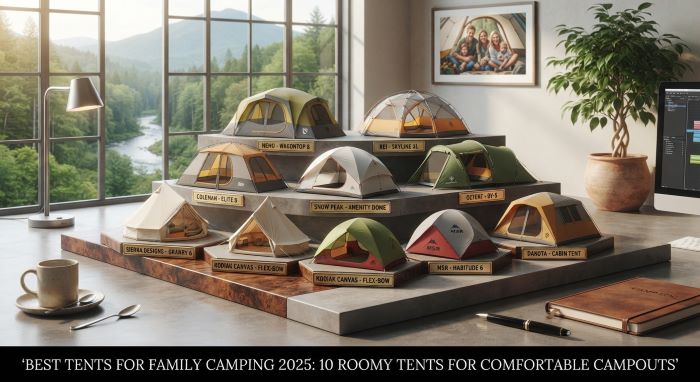
What Makes a Great Family Tent
Capacity: Tent ratings assume people packed shoulder to shoulder. For comfort, size up. A family of four usually enjoys a six-person tent.
Peak height: A peak of 72 inches or more lets most adults stand upright, which makes changing clothes and moving around far easier.
Wall shape: Near-vertical walls create more usable space than steep dome walls.
Doors: Two or more doors mean fewer people climbing over each other at night.
Vestibules: Covered areas outside the doors store muddy boots and gear.
Weather protection: A full-coverage rainfly, sealed seams, and a sturdy pole structure keep you dry.
Ventilation: Mesh panels and vents reduce condensation inside the tent.
Setup: Color-coded poles and clips make pitching fast, which matters with tired kids.
Comparison Table: Best Tents for Family Camping 2025
| Tent | Capacity | Peak Height | Weight | Approx. Price | Best For |
|---|---|---|---|---|---|
| The North Face Wawona 6 | 6 | 76 in | about 19 lb 7 oz | around $585 | Huge vestibule and headroom |
| REI Co-op Westward 6 | 6 | 77 in | about 19 lb 10 oz | around $549 | Tall interior, mild conditions |
| NEMO Aurora Highrise 4 | 4 | 75 in | about 15 lb 14 oz | around $400 | Easy setup, quality materials |
| REI Co-op Base Camp 6 | 6 | 74 in | about 20 lb 11 oz | around $569 | Stormy weather, lots of storage |
| Kelty Wireless 6 | 6 | 74 in | about 18 lb 15 oz | around $280 | Best value |
| Mountainsmith Conifer 5+ | 5+ | 74 in | about 14 lb 11 oz | around $450 | Durability, dual vestibules |
| Kelty Daydreamer 6 | 6 | 77 in | about 19 lb 12 oz | around $270 | Light sleepers, blackout fly |
| Coleman Skydome 4 | 4 | 56 in | about 13 lb 11 oz | around $190 | Budget weekend camping |
| Coleman Instant Cabin 6 | 6 | about 6 ft | varies by model | $200 to $280 | Fast pre-attached pole setup |
| Core 9-Person Instant Cabin | 9 | about 6 ft | varies by model | $200 to $300 | Large families on a budget |
Specs come from manufacturer and tester data and can vary by model year. Check current listings for exact dimensions and prices.
1. The North Face Wawona 6
The North Face Wawona 6 is a favorite for families who want space and comfort. Its standout feature is a massive front vestibule that works like a covered porch for chairs, gear, and muddy shoes. A 76-inch peak lets most adults stand upright.
Testers describe it as luxurious for three or four people and comfortable for five. At around $585, it is one of the best tents for family camping 2025 buyers can find for livability.
2. REI Co-op Westward 6
The REI Co-op Westward 6 has one of the tallest interiors on this list at 77 inches. It offers a large vestibule and plenty of living space. It is best suited to mild conditions, since its design prioritizes space and airflow over storm resistance.
It is a great choice for summer camping at established campgrounds.
3. NEMO Aurora Highrise 4
The NEMO Aurora Highrise 4 combines easy setup with high-quality materials. It has a 75-inch peak and near-vertical walls, which make the interior feel roomy for a four-person tent.
At around $400, it suits smaller families who want premium quality without a huge footprint.
4. REI Co-op Base Camp 6
The REI Co-op Base Camp 6 is built for tougher weather. Its sturdy pole structure handles wind and rain better than many family tents. It includes 14 interior mesh pockets for organizing headlamps, phones, and small items.
It is a strong pick for families who camp in the shoulder seasons or in unpredictable mountain weather.
5. Kelty Wireless 6
The Kelty Wireless 6 offers excellent value at around $280. It has a 74-inch peak, a roomy floor, and a straightforward setup. Many testers call it the best bang for your buck among family tents.
It is ideal for families who camp a few times a year and want reliable performance without a premium price.
6. Mountainsmith Conifer 5+
The Mountainsmith Conifer 5+ is built to last, with durable materials and dual vestibules for extra storage. At about 14 pounds 11 ounces, it is lighter than many six-person tents.
It is a smart choice for families who want a durable tent that will last many seasons.
7. Kelty Daydreamer 6
The Kelty Daydreamer 6 features a blackout rainfly that blocks early morning sunlight. That makes it a favorite for families with young kids who wake up at sunrise. It has a tall 77-inch peak and costs around $270.
8. Coleman Skydome 4
The Coleman Skydome 4 is a budget-friendly option for casual campers. It sets up quickly and costs around $190. Its 56-inch peak means adults cannot stand upright, but it works well for weekend trips in good weather.
9. Coleman Instant Cabin 6
The Coleman Instant Cabin 6 uses pre-attached poles that unfold and lock into place, so setup can take just a minute or two. It has a tall cabin shape with room to stand.
It is ideal for families who value quick setup, especially when arriving at camp late or dealing with restless kids.
10. Core 9-Person Instant Cabin
The Core 9-Person Instant Cabin offers a huge interior at a budget price. Pre-attached poles speed up setup, and the large floor fits multiple air mattresses or cots.
It is a good fit for large families or groups who camp in fair weather at established campgrounds.
How to Choose the Right Size
A simple rule is to add two to the number of people. A family of four often enjoys a six-person tent, and a family of five or six may want an eight-person tent. Consider:
- Air mattresses and cots: These take up more space than sleeping pads.
- Gear storage: If you keep bags inside, you need more floor space.
- Pets: Dogs need room too.
- Age of kids: Teenagers need more space than toddlers.
Bigger is not always better, though. Very large tents are heavier, harder to pitch, and need bigger campsites.
Cabin vs. Dome Tents
Cabin tents have near-vertical walls and tall ceilings. They offer the most living space and standing room. They can catch more wind, so they suit sheltered campsites and fair weather.
Dome tents have curved walls that shed wind and rain better. They are often lighter and more stable, but interior space shrinks near the walls.
Hybrid tents combine dome stability with steeper walls for more headroom. Many of the best tents for family camping 2025 families choose, like the NEMO Aurora Highrise and REI Base Camp, use hybrid designs.
Instant Tents: Worth It?
Instant tents use pre-attached poles that pop into place. They set up in minutes, which is a big advantage for families. The trade-offs are heavier weight, bulkier packed size, and sometimes weaker wind performance. For campground camping in mild weather, instant tents are a great option.
Weather Protection Tips
- Choose a full-coverage rainfly for rainy regions.
- Look for sealed or taped seams.
- Use a footprint or ground tarp under the tent to protect the floor.
- Tuck the footprint edges under the tent so rain does not pool on top.
- Stake out all guylines in windy conditions.
- Pitch on high ground, never in low spots where water collects.
- Open vents at night to reduce condensation.
Packing the Rest of Your Gear
A great tent is only one part of a comfortable trip. You also need sleeping bags rated for the season, sleeping pads or air mattresses, a camp stove, lighting, and a first aid kit. Use a camping gear checklist to make sure nothing gets left behind, especially items that are easy to forget like extra stakes, a tent repair kit, and a mallet.
Keeping Everyone Comfortable
Comfort in camp starts from the ground up. Good sleeping pads insulate against cold ground. Warm layers help when temperatures drop at night. And happy feet make hikes, playtime, and campsite chores more enjoyable. Pack moisture-wicking socks for every family member, since wet cotton socks lead to blisters and cold toes. The best hiking socks keep feet dry and cushioned on trails and around camp.
Seasonal Ratings Explained
Most family tents are three-season tents, designed for spring, summer, and fall. They balance ventilation with rain protection but are not built for heavy snow or extreme winds.
Four-season tents handle snow loads and strong winds, but they are heavier, more expensive, and warmer inside, which makes them uncomfortable in summer. Most families do not need four-season tents unless they camp in winter.
Some tents are marketed as “three-plus season,” with extra poles or fewer mesh panels for cooler weather. These suit families who camp in the mountains or in early spring and late fall. When comparing the best tents for family camping 2025 options, match the seasonal rating to when and where you actually camp.
Budget Guide
- Under $300: Kelty Wireless 6, Kelty Daydreamer 6, Coleman Skydome 4, Coleman Instant Cabin 6, and Core 9-Person Instant Cabin.
- $300 to $500: NEMO Aurora Highrise 4 and Mountainsmith Conifer 5+.
- Over $500: The North Face Wawona 6, REI Co-op Westward 6, and REI Co-op Base Camp 6.
Budget tents work well for fair-weather campground trips. Premium tents offer better materials, stronger poles, and longer lifespans, which pay off for families who camp often. Many of the best tents for family camping 2025 shoppers compare also go on sale during spring and end-of-season events, so timing your purchase can save money.
Campsite Selection Tips
Choosing the right spot is almost as important as choosing the right tent. Look for flat, level ground free of rocks, roots, and pinecones. Avoid low spots where rainwater collects. Check for dead branches overhead, which can fall in wind. Position the tent door away from prevailing wind. Leave space between the tent and campfire to avoid sparks. At established campgrounds, check the tent pad size before your trip, since some pads are too small for large family tents.
Camping With Young Kids
Young children make camping extra fun and a little more challenging. Bring familiar comforts like a favorite blanket or stuffed animal. Pack a portable potty or plan routes to campground bathrooms. Use a headlamp or lantern for nighttime trips outside the tent. Choose a tent with a separate room divider if you want a quieter space for naps. Most of all, keep the first few trips short and close to home so everyone builds confidence.
Tent Accessories Worth Buying
A few inexpensive accessories make family camping more comfortable:
- Footprint: Protects the tent floor from rocks and moisture, extending its life.
- Extra stakes: Heavy-duty stakes hold better than the thin stakes included with many tents.
- Mallet: Makes staking in hard ground much easier.
- Tent fan and lantern: Battery-powered fans help on hot nights, and hanging lanterns light the interior.
- Doormat: A small mat outside the door reduces dirt tracked inside.
- Gear loft: A mesh shelf that hangs from the ceiling for glasses, phones, and headlamps.
- Repair kit: Seam sealer, patches, and a pole splint handle surprise damage.
These small additions help keep the tent clean, organized, and comfortable throughout the trip.
Sleeping Arrangements Inside the Tent
Plan your sleeping layout before the trip. Measure your air mattresses or sleeping pads and compare them to the tent floor dimensions. Place younger kids between adults for comfort and warmth. Keep a clear path to the door so nobody steps on sleeping family members during nighttime bathroom trips. Store bags in vestibules or along the walls to maximize floor space for sleeping.
Practice Before Your Trip
Set up your new tent in the backyard or a park before your first trip. This helps you learn the steps, check for missing parts, and see how gear fits inside. Kids can help, which gets them excited for the trip. Practicing at home saves frustration when you arrive at camp in the dark or rain.
Caring for Your Tent
- Shake out dirt and debris before packing.
- Never store a tent wet, since mold and mildew can ruin fabric.
- Dry the tent fully at home if you pack up in the rain.
- Clean with mild soap and water, never harsh detergents.
- Store loosely in a cool, dry place, not tightly compressed.
- Reapply waterproofing spray as the tent ages.
Choosing the Right Tent
For space and comfort, The North Face Wawona 6 and REI Co-op Westward 6 lead the way. For tough weather, the REI Co-op Base Camp 6 is a strong choice. For value, the Kelty Wireless 6 and Kelty Daydreamer 6 deliver a lot for under $300. For quick setup, instant cabin tents from Coleman and Core are hard to beat. For smaller families, the NEMO Aurora Highrise 4 offers premium quality.
The best tents for family camping 2025 and beyond give your family room to relax, stay dry, and enjoy time outdoors together. Choose the right size, match the tent to your weather, and practice setup before you go. Picking from the best tents for family camping 2025 lists is the first step toward many happy campouts.
Key Takeaways
- Size up by two people for comfort, so a family of four often enjoys a six-person tent.
- The North Face Wawona 6 offers a huge vestibule and a 76-inch peak for spacious family camping.
- The REI Co-op Base Camp 6 handles wind and rain better than most family tents.
- The Kelty Wireless 6 and Kelty Daydreamer 6 deliver strong value for under $300.
- Instant cabin tents from Coleman and Core set up in minutes but are heavier and bulkier.
- Choose cabin tents for space, dome tents for wind, and hybrids for a balance of both.
- Practice setup at home and never store a tent wet to protect it from mold.