Best Places to Hike in Colorado: Trails Worth the Trip
Colorado is a hiker’s dream. With more than 50 peaks topping 14,000 feet, alpine lakes that mirror the sky, and trails through red rock canyons and pine forests, the state serves up scenery that stops you in your tracks. Whether you want a gentle stroll or a lung-burning summit push, there is a trail for you. The hard part is choosing. This guide rounds up the best places to hike in Colorado, from famous national parks to hidden gems, plus the tips you need to hike here safely.
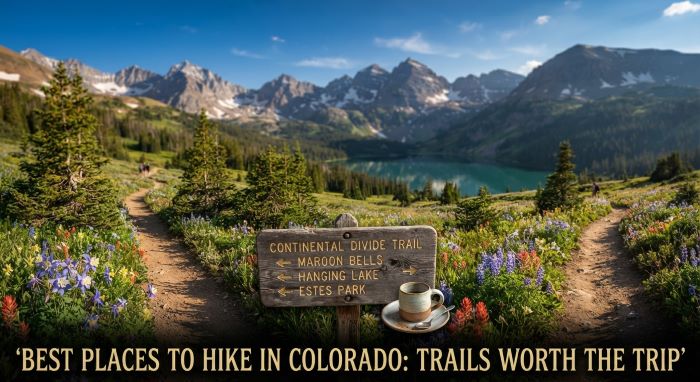
What makes Colorado hiking special
Colorado packs an incredible range of landscapes into one state. You can walk through red rock formations in the morning and stand beside an alpine lake by afternoon. The Rocky Mountains dominate, but the terrain shifts from high desert to dense forest to tundra above the treeline.
That variety is what puts so many of the best places to hike in Colorado on every hiker’s list. There truly is something for every skill level, from paved nature loops to serious mountaineering routes. The one constant is elevation, which shapes every hike here in ways newcomers should respect.
Rocky Mountain National Park
No list of the best places to hike in Colorado is complete without Rocky Mountain National Park. Just a couple of hours from Denver, this crown jewel offers hundreds of miles of trails through stunning alpine scenery. Highlights include the walk to Emerald Lake, the challenging climb up to Sky Pond, and the chance to spot elk, marmots, and bighorn sheep.
The park suits every level. Easy lakeside strolls sit alongside demanding summit hikes, so you can tailor your day to your fitness. It is popular for a reason, so arrive early or use the timed-entry system in peak season.
Maroon Bells
Often called the most photographed peaks in North America, the Maroon Bells near Aspen are breathtaking. The two maroon-colored mountains reflected in Maroon Lake create a postcard view, and the trails around them are just as lovely. The gentle Maroon Lake Scenic Trail is easy, while Crater Lake and beyond offer more challenge.
The Maroon Bells rank among the best places to hike in Colorado for sheer beauty. Access is managed by a reservation and shuttle system in the busy months, so plan ahead to secure your spot.
Garden of the Gods
For something different, Garden of the Gods in Colorado Springs trades alpine peaks for dramatic red rock formations. This free public park has easy, mostly paved trails winding among towering sandstone fins and spires, with Pikes Peak as a backdrop. It is perfect for families, casual walkers, and anyone short on time.
Garden of the Gods earns a spot on the list of the best places to hike in Colorado because it is accessible, stunning, and welcoming to all abilities. The gentle terrain makes it a great choice if you are still adjusting to the altitude.
More trails worth exploring
Beyond the icons, Colorado is full of incredible hikes. Add these to your list of the best places to hike in Colorado:
- Hanging Lake: A short but steep climb to a turquoise lake perched on a cliff, near Glenwood Springs (permit required)
- Mount Bierstadt: One of the more accessible 14,000-foot peaks, great for a first fourteener
- Great Sand Dunes National Park: Hike the tallest dunes in North America against a mountain backdrop
- Chautauqua Park and the Flatirons: Boulder’s iconic tilted rock slabs with trails for all levels
- Ice Lake Basin: A stunning alpine basin near Silverton with vivid blue lakes
Each offers a different flavor of Colorado, from desert dunes to high alpine basins.
Quick trail guide
| Trail | Difficulty | Known for |
|---|---|---|
| Garden of the Gods | Easy | Red rock formations |
| Emerald Lake (RMNP) | Moderate | Alpine lakes |
| Maroon Bells | Easy to hard | Iconic peak views |
| Hanging Lake | Hard (steep) | Cliffside turquoise lake |
| Mount Bierstadt | Hard | Accessible fourteener |
Respect the altitude
Here is the most important tip for the best places to hike in Colorado: take the elevation seriously. Many trails start well above where most visitors live, and altitude sickness is real. To stay safe:
- Give yourself a day or two to acclimate before big hikes
- Drink far more water than usual, since the dry air dehydrates you fast
- Start summit hikes early to beat the afternoon thunderstorms common in summer
- Turn back if you feel dizzy, nauseous, or short of breath
- Know that weather changes fast, so pack layers even on warm days
Respecting the altitude and weather is what keeps a dream hike from turning into a dangerous one.
Gear up before you go
The right gear makes any of the best places to hike in Colorado more enjoyable. Sturdy footwear, sun protection, plenty of water, and good socks all matter on rocky, high-elevation trails. This guide to the Best Hiking Socks is a smart read before you set out, since blisters can ruin a beautiful hike faster than anything, and the right socks make long miles far more comfortable.
Round out your kit with layers, a rain shell, snacks, a map or GPS, and a small first-aid kit. Colorado weather is unpredictable, so being prepared lets you enjoy the views instead of worrying.
The bottom line
Colorado rewards hikers with some of the most beautiful trails in the country, from the alpine lakes of Rocky Mountain National Park to the red rocks of Garden of the Gods and the iconic Maroon Bells. There is a trail for every level, but every one asks you to respect the altitude and the fast-changing weather. Pick your route, prepare with the right gear, acclimate before the big climbs, and set out early. Explore the best places to hike in Colorado with care, and you will come home with sore legs, full memory cards, and a deep love for this remarkable state.
Key Takeaways
- Colorado offers the best places to hike for every level, from paved red-rock loops to serious fourteener summits, with elevation shaping every trail.
- Rocky Mountain National Park is the crown jewel, with alpine lakes, wildlife, and trails from easy strolls to tough summits.
- The Maroon Bells near Aspen offer iconic reflected-peak views but require a reservation and shuttle in busy months.
- Garden of the Gods provides easy, mostly paved red-rock trails ideal for families and those adjusting to altitude.
- Other standouts include Hanging Lake, Mount Bierstadt, the Great Sand Dunes, the Flatirons, and Ice Lake Basin.
- Take altitude seriously: acclimate first, drink extra water, start early to avoid afternoon storms, and turn back if you feel ill.
- Pack the right gear, including sturdy footwear, quality hiking socks, layers, water, and a map, since mountain weather changes fast.