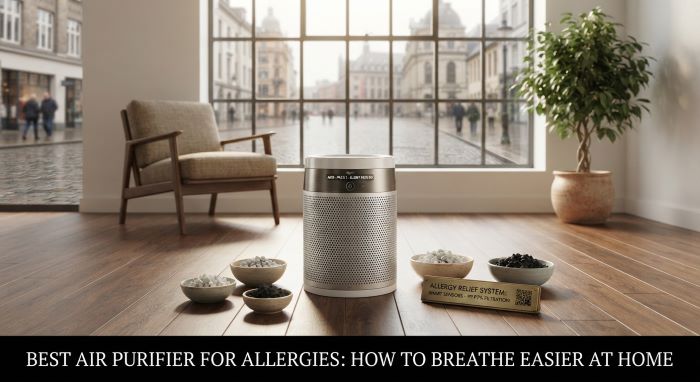
Best Air Purifier for Allergies: How to Breathe Easier at Home
Allergies do not clock out when you get home. Pollen drifts in through open windows, dust settles on every surface, and pet dander floats through the air you breathe all night. For a lot of people, indoor air is just as rough as the outdoors, sometimes worse. A good air purifier can change that, quietly pulling the triggers out of your air so you sneeze less and sleep better. This guide breaks down how to choose the best air purifier for allergies and what features actually matter.
Why an air purifier helps with allergies
Allergy symptoms come from tiny particles floating in your air: pollen, dust mite debris, pet dander, mold spores, and more. Your nose and lungs catch these, and the reaction follows. An air purifier works by pulling air through a filter that traps those particles, then pushing clean air back into the room.
Run it consistently and the concentration of allergens drops, which means fewer triggers reaching you. The best air purifier for allergies keeps that cycle going around the clock, giving your body a break from the constant exposure that keeps symptoms flaring.
HEPA is the feature that matters most
If you remember one thing, make it this: look for a true HEPA filter. HEPA stands for high-efficiency particulate air, and a true HEPA filter captures 99.97 percent of particles as small as 0.3 microns. That range covers pollen, dust, dander, and mold spores, the exact things that set off allergies.
The best air purifier for allergies is built around a genuine HEPA filter, not a vague “HEPA-type” or “HEPA-like” filter, which does not meet the same standard. When you shop, confirm the words “true HEPA” and you are on the right track. This single feature does most of the heavy lifting.
Match the purifier to your room size
A purifier only works if it can handle the space it is in. Every model is rated for a certain room size, usually listed in square feet, and running a small unit in a big room means it never really clears the air.
Look for the CADR, or clean air delivery rate, which tells you how quickly a purifier cleans a room. A higher CADR means faster cleaning. To pick the best air purifier for allergies for your space:
- Measure the room where you will use it most
- Choose a unit rated for that size or larger
- Aim for a model that can cycle the air several times per hour
- Size up if you have high ceilings or an open floor plan
Buying slightly bigger than you need is smart, since the purifier can run on a lower, quieter setting and still keep up.
Features worth having
Beyond HEPA and room size, some extras make a real difference. When comparing the best air purifier for allergies, look for these:
- A pre-filter: Catches large particles like hair and lint, extending the life of the main filter.
- An activated carbon filter: Absorbs odors, smoke, and gases, useful if pets or cooking smells are an issue.
- An air quality sensor: Automatically adjusts fan speed based on how dirty the air is.
- A quiet mode: Important for bedrooms, so you can run it overnight without noise.
- A filter change indicator: Reminds you when it is time to swap the filter.
These features add convenience and performance, though the HEPA filter and correct room size remain the foundation. Do not let flashy add-ons distract you from those basics.
What to avoid
Not every “air purifier” helps with allergies, and some can even hurt. When hunting for the best air purifier for allergies, steer clear of these:
- Ozone generators: These produce ozone, which can irritate your lungs and worsen breathing problems.
- Ionizers as a main filter: On their own, they do not remove particles as effectively as HEPA and may produce some ozone.
- Units without a true HEPA filter: If it cannot trap fine particles, it cannot do the main job.
- Oversized claims: Be skeptical of vague promises without CADR or HEPA specs.
Sticking with a straightforward HEPA purifier from a reputable brand avoids these pitfalls entirely.
Where to place it and how to use it
Getting the most from the best air purifier for allergies comes down to placement and habits. A few tips:
- Put it in the room where you spend the most time, often the bedroom
- Keep doors and windows closed while it runs, so it cleans the same air
- Run it continuously, not just during flare-ups
- Do not block the intake or output with furniture
- Replace the filter on schedule, since a clogged filter stops working
Consistency is key. An air purifier that runs all day quietly beats one you switch on only when symptoms hit.
Part of a bigger allergy plan
An air purifier is powerful, but it works best alongside other steps to cut allergens at home. Air filters play a broader role in easing symptoms across your whole living space, and this guide on the Role of Air Filters in Reducing Seasonal Allergies is a helpful companion when you are building a full plan. Pairing the best air purifier for allergies with good filters in your HVAC system covers far more of your home.
Round it out with regular vacuuming using a HEPA vacuum, washing bedding in hot water, keeping humidity in check to discourage mold, and grooming pets often. Together these habits shrink the allergen load your purifier has to handle.
The bottom line
The best air purifier for allergies is simpler to choose than the crowded market suggests. Focus on a true HEPA filter, match the unit to your room size using CADR, and add helpful extras like a carbon filter and a quiet mode. Skip ozone generators and vague marketing, place the purifier where you spend the most time, and run it continuously. Combine it with smart cleaning habits and good home filtration, and you will breathe noticeably easier, with fewer sneezes, less congestion, and better sleep.
Key Takeaways
- Air purifiers ease allergies by trapping airborne triggers like pollen, dust, pet dander, and mold spores, lowering your exposure.
- A true HEPA filter is the most important feature, capturing 99.97 percent of particles as small as 0.3 microns.
- Match the purifier to your room size using the CADR rating, and size up for high ceilings or open floor plans.
- Helpful extras include a pre-filter, an activated carbon filter for odors, an air quality sensor, a quiet mode, and a filter indicator.
- Avoid ozone generators and ionizers as a main filter, since they can irritate the lungs and do not filter as well as HEPA.
- Place the purifier where you spend the most time, keep windows closed, run it continuously, and replace filters on schedule.
- Pair the purifier with HEPA vacuuming, hot-water bedding washes, humidity control, and good HVAC filters for the best results.