How to Stop Dog Shedding: What Actually Works
Black trousers become a lint-roller emergency. The vacuum fills after one pass through the living room. There is a fine layer of fur on surfaces you did not know the dog could reach. Every owner of a shedding breed knows the feeling, and most have wondered whether anything genuinely stops it. The honest answer requires adjusting the question, because shedding is a normal biological process, not a malfunction. What you can do is manage it dramatically better. Here is what actually works.
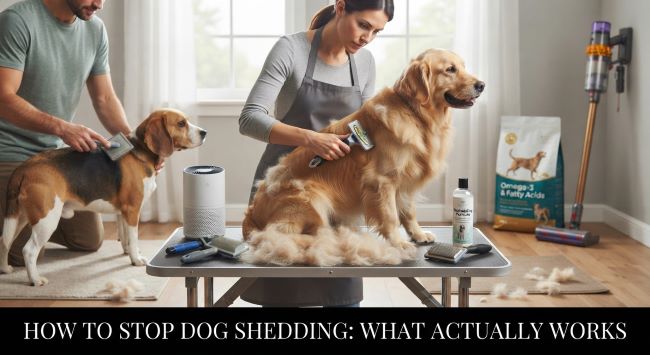
Why Dogs Shed
Understanding the process is the foundation of how to stop dog shedding. It is the natural replacement of old or damaged hair, and every dog with fur does it. Volume depends on several factors:
- Breed, which is by far the biggest determinant. Double-coated breeds like Huskies, German Shepherds, and Golden Retrievers shed enormously, while breeds like Poodles and Bichons shed very little.
- Season, since many dogs blow their coat in spring and autumn as they transition between winter and summer coats.
- Coat type, with double coats shedding far more than single coats.
- Age and health, as puppies transition from puppy coats and health conditions affect shedding.
- Indoor living, which can disrupt seasonal cycles and cause more year-round shedding.
The realistic goal in how to stop dog shedding is not elimination but management, which is genuinely achievable and makes a substantial difference.
Brushing: The Single Biggest Factor
If you do only one thing, brush your dog regularly. This is the most effective approach to how to stop dog shedding by a considerable margin, because it captures loose hair in the brush rather than on your furniture.
Frequency matters more than duration. Daily brushing during heavy shedding periods, and several times weekly otherwise, produces far better results than an occasional long session. Even ten minutes daily makes a visible difference.
The right tool depends on the coat:
| Coat type | Suitable tools |
|---|---|
| Short, smooth | Rubber curry brush, bristle brush |
| Double coat | Undercoat rake, deshedding tool |
| Long, silky | Pin brush, slicker brush, comb |
| Curly, wool | Slicker brush, comb (mats more than sheds) |
For double-coated breeds, an undercoat rake or dedicated deshedding tool reaches the dense underlayer where most loose hair sits. A surface brush alone will not touch it, which is why owners of these breeds often feel brushing is not working.
One caution: deshedding tools should be used with a light touch and not excessively, since aggressive use can irritate the skin or damage the coat.
Bathing
Regular bathing supports how to stop dog shedding by loosening dead hair so it comes out during the bath and subsequent brushing rather than around the house.
Use a dog-specific shampoo, since human products disrupt canine skin pH, and deshedding formulas can help. Brush before bathing, and again once the coat is fully dry, which is when loosened hair comes away most readily. Do not overdo it, since frequent bathing strips natural oils and dries skin, which can increase shedding. Monthly is reasonable for most dogs.
Diet and Nutrition
What your dog eats genuinely affects coat quality, making nutrition an important part of how to stop dog shedding.
A complete, quality diet appropriate to your dog’s age and size provides the protein and nutrients healthy hair requires, and poor nutrition shows in the coat before almost anywhere else.
Omega-3 and omega-6 fatty acids support skin and coat health, and many owners find supplementation helps. However, supplements should be discussed with your veterinarian first, since dosing depends on size and health and some interact with existing conditions or medications. Hydration matters too, so fresh water should always be available.
Managing It in Your Home
Alongside working on the dog, a few strategies make how to stop dog shedding more manageable in practice:
- Brush outdoors where possible, so the loose hair never enters the house.
- Use washable covers on furniture and in the car.
- Vacuum frequently with a machine designed for pet hair.
- Keep lint rollers in convenient places, including the car and by the door.
- Rubber gloves or a slightly damp rubber squeegee pull hair off upholstery remarkably effectively.
- Wash bedding regularly, since it collects an enormous amount.
- Consider an air purifier to help with airborne dander.
What Does Not Work
Shaving a double-coated dog is a common mistake, since the coat insulates against both cold and heat and protects from sun. Shaving can damage it permanently and does not reduce shedding, only shortens the hairs that shed. Speak to a groomer or vet first. Similarly, no supplement or tool eliminates shedding entirely, and products promising to are overselling.
When to See a Vet
An important part of how to stop dog shedding is recognizing when it signals a problem rather than normal biology. Contact your veterinarian if you notice:
- A sudden or dramatic increase in shedding beyond the normal seasonal pattern.
- Bald patches or thinning in specific areas.
- Skin irritation, redness, sores, or scabs.
- Excessive scratching, licking, or biting at the skin.
- A dull, brittle, or greasy coat.
- Any accompanying symptoms like lethargy, weight change, or appetite changes.
Excessive shedding can be a sign of allergies, parasites, skin infections, hormonal conditions, stress, or nutritional problems, several of which are straightforward to treat once diagnosed. Your vet is the right person to assess this rather than guesswork, particularly before changing diet or starting supplements.
The bottom line on how to stop dog shedding is that eliminating it entirely is not realistic, but managing it well absolutely is. Brush regularly with a tool matched to your dog’s coat, using an undercoat rake or deshedding tool for double-coated breeds, since this single habit does more than everything else combined. Bathe periodically with dog-specific shampoo without overdoing it, feed a good-quality diet and discuss omega supplements with your vet, and use practical home strategies like brushing outdoors and washable covers. Never shave a double-coated breed without professional advice, and see your veterinarian if shedding changes suddenly or comes with bald patches, skin problems, or other symptoms.
Key Takeaways
- Shedding is a normal biological process, so the realistic goal is management rather than elimination.
- Breed is the biggest factor, with double-coated breeds shedding far more than single-coated ones.
- Many dogs blow their coat seasonally in spring and autumn as they transition between coats.
- Regular brushing is by far the most effective approach, ideally daily during heavy shedding periods.
- Match the tool to the coat, using an undercoat rake or deshedding tool for double-coated breeds.
- Use deshedding tools gently, since aggressive use irritates skin and can damage the coat.
- Bathe periodically with dog-specific shampoo, brushing before and after, but avoid over-bathing.
- A quality diet supports coat health, and omega fatty acid supplements should be discussed with your vet first.
- Never shave a double-coated dog without professional advice, since the coat insulates and protects.
- See a vet for sudden increases, bald patches, skin irritation, excessive scratching, or other symptoms.