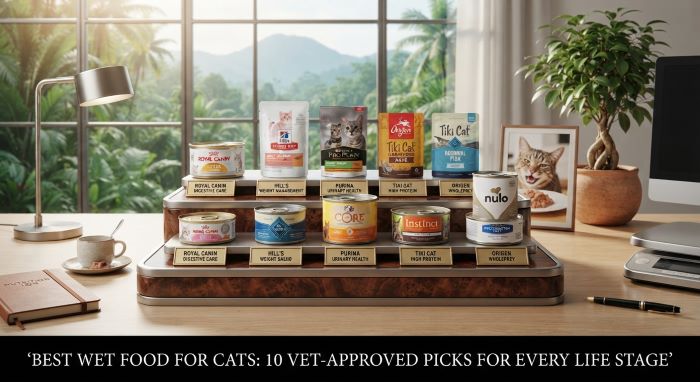
Best Wet Food for Cats: 10 Vet-Approved Picks for Every Life Stage
Cats are obligate carnivores. Their bodies are built to get nutrition from animal protein, and they evolved to get most of their water from food rather than drinking. That is why many veterinarians recommend wet food as part of a cat’s diet. Wet food helps keep cats hydrated, supports urinary and kidney health, and often has more protein and fewer carbohydrates than dry food.
With so many brands and textures on store shelves, choosing the right food can be confusing. This guide lists 10 specific wet cat foods, compares them in a table, and explains how to read labels, transition foods, and choose the best wet food for cats based on age, health, and preferences.
Why Wet Food Matters for Cats
Hydration: Wet food is about 75 to 80 percent water. Dry food is only about 10 percent water. Cats often do not drink enough on their own, so wet food helps prevent dehydration.
Urinary health: Higher water intake dilutes urine, which helps reduce the risk of urinary crystals, bladder stones, and urinary tract problems.
Kidney support: Hydration is especially important for senior cats and cats with kidney disease.
Weight management: Wet food is less calorie-dense than dry food, so cats feel full on fewer calories.
Protein: Many wet foods have high animal protein and low carbohydrates, which matches a cat’s natural diet.
What to Look for on the Label
AAFCO statement: Look for a statement that the food is “complete and balanced” for your cat’s life stage. This means it meets the nutrient standards set by the Association of American Feed Control Officials.
Named animal protein first: Chicken, turkey, salmon, or beef should be among the first ingredients.
Taurine: Cats need taurine for heart and eye health. All complete cat foods should include it.
Life stage: Kittens, adults, and seniors have different needs.
Complementary vs. complete: Some foods, like certain broth-based toppers, are labeled “complementary” or “for supplemental feeding only.” These are not complete meals.
Comparison Table: Best Wet Food for Cats
| Product | Texture | Main Protein | Life Stage | Best For | Price Level |
|---|---|---|---|---|---|
| Wellness Complete Health Chicken & Turkey Pâté | Pâté | Chicken, turkey | Adult | Best overall value | Moderate |
| Purina Pro Plan Sensitive Skin & Stomach | Pâté | Duck, arctic char, others | Adult | Sensitive stomachs | Moderate |
| Hill’s Science Diet Adult Wet Cat Food | Pâté and minced | Chicken, tuna | Adult | Vet-trusted everyday nutrition | Moderate |
| Tiki Cat After Dark Chicken & Beef | Shredded | Chicken, beef, organ meat | Adult | High protein, shred lovers | Higher |
| Tiki Cat Luau Wild Salmon | Shredded in consommé | Wild salmon | Adult | Sensitive cats, fish lovers | Higher |
| Weruva Cats in the Kitchen Funk in the Trunk | Shredded in broth | Chicken breast | Adult | Hydration, picky eaters | Higher |
| Weruva Kitten Chicken Breast Formula | Shredded in broth | Chicken | Kitten | Growing kittens | Higher |
| Smalls Fresh Ground Bird | Fresh ground | Turkey, turkey liver | All, including seniors | Fresh food subscription | Premium |
| Royal Canin Feline Health Nutrition | Thin slices in gravy | Mixed meats | Adult | Balanced vet-formulated diet | Moderate |
| Fancy Feast Classic Pâté | Pâté | Chicken, fish, beef | Adult | Budget and picky eaters | Budget |
1. Wellness Complete Health Chicken & Turkey Pâté
Wellness Complete Health is a balanced, affordable wet food with named animal proteins as the first ingredients. The smooth pâté texture works well for cats who prefer uniform food and for cats with dental issues.
It is widely available and reasonably priced, which makes it a strong daily food. Many owners and vets consider it one of the best wet food for cats options for everyday feeding.
2. Purina Pro Plan Sensitive Skin & Stomach
Purina Pro Plan’s Sensitive Skin & Stomach line is designed for cats with digestive issues or skin sensitivity. It uses easily digestible proteins, prebiotic fiber, and omega fatty acids. The variety pack includes flavors like duck and arctic char.
Purina invests heavily in research and feeding trials, and many veterinarians trust the brand.
3. Hill’s Science Diet Adult Wet Cat Food
Hill’s Science Diet is one of the most vet-recommended brands in the world. Its adult wet food provides balanced nutrition with high-quality protein and essential nutrients.
Hill’s also makes prescription diets for kidney disease, urinary issues, and weight management, so it is a brand many cats stay with throughout their lives.
4. Tiki Cat After Dark Chicken & Beef
Tiki Cat After Dark combines chicken, beef, and organ meats in a shredded texture. Organ meats are nutrient-dense and closer to what cats eat in the wild. It is high in protein and low in carbohydrates.
It is a great option for cats who love shredded textures and owners who want a high-protein diet.
5. Tiki Cat Luau Wild Salmon
Tiki Cat Luau Wild Salmon uses wild-caught Alaskan salmon in a hydrating consommé. It is grain-free and has a limited ingredient list, which can help cats with sensitive stomachs.
It is best as part of a rotation, since fish-heavy diets are not ideal as a cat’s only food.
6. Weruva Cats in the Kitchen Funk in the Trunk
Weruva’s Cats in the Kitchen line uses shredded chicken breast in a flavorful broth. The high moisture content makes it excellent for hydration, and many picky eaters love it.
It is a great choice for cats who need to drink more water.
7. Weruva Kitten Chicken Breast Formula
Kittens need more calories, protein, and certain nutrients than adult cats. Weruva’s kitten formula uses boneless, skinless chicken breast and is designed for growth.
It is a strong option for kittens who are transitioning to solid food.
8. Smalls Fresh Ground Bird
Smalls delivers fresh, gently cooked cat food to your door through a subscription. Ground Bird uses turkey and turkey liver and is made with human-grade ingredients.
It is especially helpful for senior cats and picky eaters. It costs more than canned food and needs refrigeration or freezing.
9. Royal Canin Feline Health Nutrition
Royal Canin creates science-based formulas for different ages, breeds, and health needs. Its Feline Health Nutrition line offers thin slices in gravy, which many cats enjoy.
Royal Canin also makes breed-specific and veterinary diets, which is useful if your cat has specific health issues.
10. Fancy Feast Classic Pâté
Fancy Feast is one of the most popular wet cat foods and a budget-friendly option. Many cats love its taste and texture, which makes it a go-to for picky eaters. Its small cans make portion control easy.
While not as premium as some brands, Fancy Feast Classic Pâté provides complete and balanced nutrition at an affordable price.
Pâté, Shreds, Chunks, or Broth?
Cats can be very particular about texture. Some love smooth pâté, while others only eat shreds or chunks in gravy.
- Pâté: Smooth and uniform. Good for kittens, seniors, and cats with dental problems.
- Shreds: Stringy pieces of meat, often in broth or gravy.
- Chunks: Bite-sized pieces in gravy or sauce.
- Broth-based: High moisture, great for hydration.
If your cat refuses a food, try a different texture before giving up on the brand.
Best Choices by Life Stage
Kittens: Choose foods labeled for growth or all life stages. Kittens need more protein, fat, and calories. Weruva Kitten and Hill’s Science Diet Kitten are good options.
Adults: A balanced adult maintenance formula works well. Wellness, Purina Pro Plan, and Hill’s are strong choices.
Seniors: Older cats may need more easily digestible protein, controlled phosphorus for kidney health, and softer textures. Smalls and senior-specific formulas from Hill’s and Royal Canin can help.
Mixing Wet and Dry Food
Many owners feed a combination of wet and dry food. Wet food provides hydration and protein, while dry food is convenient, can be left out for grazing, and costs less per calorie.
If you feed dry food, choose a high-quality kibble with high protein. For example, Dr. Gary’s Best Breed Cat Diet dry cat food is formulated with real meat and whole ingredients. For indoor cats who need plenty of protein, Acana Highest Protein Indoor dry cat food pairs well with wet meals. When mixing, adjust portions so your cat does not overeat, since dry food is calorie-dense.
How Much Wet Food to Feed
Most adult cats need about 20 calories per pound of body weight per day, though this varies with age, activity, and health. A typical 10-pound adult cat needs about 200 calories daily. Most 3-ounce cans contain 70 to 100 calories, so a 10-pound cat might eat two to three cans a day if fed only wet food.
Check the feeding guide on the label, weigh your cat regularly, and ask your vet for personalized advice.
Switching to a New Food
Switch gradually over 7 to 10 days to avoid stomach upset.
- Days 1 to 3: 75 percent old food, 25 percent new food.
- Days 4 to 6: 50 percent old food, 50 percent new food.
- Days 7 to 9: 25 percent old food, 75 percent new food.
- Day 10: 100 percent new food.
If your cat has vomiting or diarrhea, slow the transition down.
Tips for Picky Eaters
- Warm the food slightly to room temperature or just above to release aroma.
- Try different textures and proteins.
- Serve in a wide, shallow dish to avoid whisker fatigue.
- Offer fresh food at each meal rather than leaving it out for hours.
- Keep food and water bowls away from litter boxes.
Best Picks by Health Need
Many cats have specific health concerns that affect which food works best.
- Sensitive stomach: Purina Pro Plan Sensitive Skin & Stomach or Tiki Cat Luau.
- Urinary health: High-moisture foods like Weruva, or prescription urinary diets from Hill’s or Royal Canin.
- Weight loss: Lower-calorie pâtés and portion-controlled feeding. Ask your vet about weight management formulas.
- Senior cats: Soft textures and easily digestible protein, such as Smalls or senior formulas from Hill’s.
- Kidney disease: Prescription renal diets with controlled phosphorus, only under veterinary guidance.
- Food allergies: Limited-ingredient or novel protein foods, such as duck or rabbit.
For cats with medical conditions, the best wet food for cats is often a prescription diet recommended by your vet. Do not switch to a prescription food without veterinary guidance, and do not stop one without checking with your vet first.
Grain-Free: Is It Necessary?
Grain-free cat foods are popular, but most cats do not need them. True grain allergies are rare in cats. Many high-quality foods include small amounts of rice or other grains without problems. What matters most is that the food is complete and balanced, high in animal protein, and suited to your cat’s life stage. Grain-free foods can still be good choices, but they are not automatically better. When comparing the best wet food for cats, focus on protein quality and moisture rather than grain-free marketing.
Wet Food Cost Comparison
Wet food costs more per calorie than dry food. Budget brands like Fancy Feast can cost well under a dollar per can, while premium brands like Tiki Cat and Weruva cost more. Fresh subscription food like Smalls costs the most.
To control costs, buy in bulk cases, use subscription discounts, and combine wet food with a quality dry food. Even one wet meal a day provides meaningful hydration benefits. You do not need to buy the most expensive option to feed the best wet food for cats. Choose the highest-quality food you can comfortably afford over the long term, since consistency matters too.
Environmental and Sourcing Considerations
Some owners care about sustainable sourcing. Look for brands that use responsibly caught fish, humanely raised poultry, and recyclable packaging. Aluminum cans are widely recyclable. Some brands also publish sourcing and manufacturing details on their websites, which helps you make informed choices that align with your values.
Signs Your Cat’s Food Is Working
A good diet shows up in your cat’s health and behavior. Look for a shiny, soft coat, healthy energy levels, and steady weight. Stools should be firm and regular, and your cat should urinate regularly with normal-sized clumps in the litter box. Bright eyes and good muscle tone are other positive signs.
Watch for warning signs like vomiting, diarrhea, weight loss or gain, a dull or flaky coat, excessive thirst, or changes in litter box habits. These can signal a food intolerance or a health issue, so talk to your vet if you notice them.
Feeding Schedule Tips
Most adult cats do well with two meals a day, though some prefer smaller, more frequent meals. Kittens need three to four meals daily. Feeding at consistent times helps with digestion and routine. Automatic feeders with ice packs can serve wet food on schedule if you are away during mealtime.
Water Bowls and Fountains
Even cats on wet food benefit from fresh water available at all times. Many cats prefer moving water, so a pet fountain can encourage more drinking. Place water bowls away from food bowls, since some cats avoid drinking near where they eat. Wash bowls daily and refresh water often to keep it clean and appealing.
Storing Wet Food Safely
Refrigerate opened cans and use them within two to three days. Cover them with a lid or plastic wrap. Throw away wet food left out for more than two to four hours, especially in warm weather, since bacteria grow quickly.
Choosing the Right Food for Your Cat
For everyday value, Wellness Complete Health and Fancy Feast Classic Pâté are reliable options. For sensitive stomachs, try Purina Pro Plan Sensitive Skin & Stomach or Tiki Cat Luau. For high protein, Tiki Cat After Dark is excellent. For hydration and picky eaters, Weruva shines. For seniors and fresh food lovers, Smalls is worth considering.
The best wet food for cats is complete and balanced, matches your cat’s life stage, and is something your cat actually wants to eat. Talk to your veterinarian if your cat has health conditions, and choose the best wet food for cats that supports a long, healthy life.
Key Takeaways
- Wet food is 75 to 80 percent water, which supports hydration, urinary health, and kidney function.
- Look for an AAFCO “complete and balanced” statement and a named animal protein as a top ingredient.
- Wellness Complete Health Chicken & Turkey Pâté is a strong everyday value pick.
- Purina Pro Plan Sensitive Skin & Stomach and Tiki Cat Luau help cats with sensitive stomachs.
- Weruva’s broth-based foods are excellent for hydration and picky eaters.
- Transition to a new food gradually over 7 to 10 days to prevent stomach upset.
- Refrigerate opened cans and use them within two to three days.