What Is a Rolling Boil? Understanding This Key Cooking Term
Recipes are full of instructions that assume you already know what they mean, and few trip up newer cooks more than the boiling terms. A recipe says to bring water to a rolling boil, then reduce to a simmer, and you are left wondering exactly what those look like and why they matter. Getting these right actually makes a real difference in how your food turns out. If you have ever paused at the stove wondering whether your pot is doing the right thing, this guide clears it up. Here is what a rolling boil is and everything you need to know about it.
What Is a Rolling Boil?
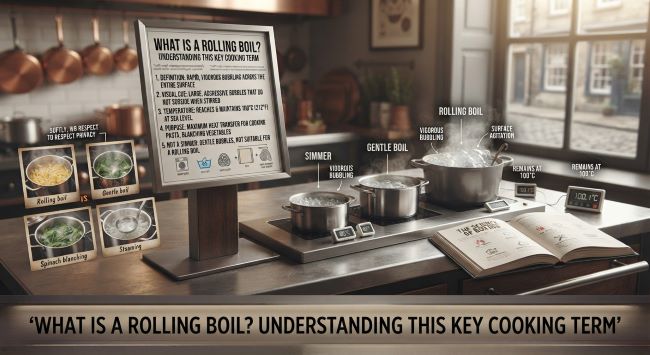
So, what is a rolling boil? A rolling boil is the most vigorous stage of boiling, where the water is bubbling rapidly and energetically, with large bubbles breaking the surface continuously and turbulently. The bubbles roll and churn actively, and the boiling cannot be stopped or calmed by stirring.
At a rolling boil, water has reached its full boiling temperature and is producing constant, vigorous bubbling across the entire surface. This is the strongest, most active boil, distinct from gentler bubbling stages. Understanding what a rolling boil is comes down to recognizing this rapid, rolling, continuous, turbulent bubbling that keeps going even when you stir.
How It Differs From a Simmer
A big part of understanding it is distinguishing it from a simmer and other stages, since recipes use these terms precisely:
| Stage | What It Looks Like |
|---|---|
| Simmer | Small bubbles rising gently, occasional breaks at the surface |
| Slow/gentle boil | More bubbles, moderate activity |
| Rolling boil | Large bubbles, rapid, vigorous, continuous, turbulent |
A simmer is gentle, with small bubbles rising slowly and the surface barely moving, used for delicate cooking. A rolling boil is the opposite: aggressive, turbulent, and vigorous. The difference matters because recipes call for each for different reasons, and confusing them affects results. Knowing what is a rolling boil versus a simmer helps you follow recipes correctly.
How to Recognize a Rolling Boil
Recognizing it in practice is straightforward once you know the signs:
- Large, vigorous bubbles breaking across the entire surface.
- Continuous, rapid bubbling that does not slow down.
- Turbulent, rolling motion in the water.
- Bubbling that cannot be stirred away, which is the classic test: if stirring calms the bubbles, it is not yet a rolling boil.
The stirring test is a reliable way to confirm a rolling boil, since a true rolling boil keeps churning even as you stir. Once you have seen a genuine rolling boil, it becomes easy to recognize the vigorous, unmistakable activity.
When Recipes Call for a Rolling Boil
Knowing when to use it is part of the picture. Recipes call for a rolling boil in several situations:
- Cooking pasta, where a rolling boil keeps the pasta moving and cooks it evenly.
- Boiling eggs, where a proper boil is often specified.
- Blanching vegetables, where quick, vigorous boiling is needed.
- Boiling potatoes and other foods that need thorough, active cooking.
- Reducing liquids quickly in some recipes.
- Ensuring water safety, since bringing water to a rolling boil is the standard for making water safe to drink.
In these cases, the vigorous heat and movement of a rolling boil serve a purpose, whether cooking evenly, cooking quickly, or ensuring thorough heating. This is why recipes specify what is a rolling boil rather than a gentler stage.
Why the Distinction Matters
You might wonder why cooks fuss over what is a rolling boil versus a simmer. The distinction matters because the intensity of the boil affects your food. A rolling boil cooks quickly and vigorously, keeps items like pasta moving, and is needed for certain techniques, while a simmer cooks gently, prevents delicate foods from breaking apart, and is used for sauces, stews, and tender preparations. Using a rolling boil when a simmer is called for can overcook, toughen, or break apart food, while using a simmer when a rolling boil is needed can leave food undercooked or cooking unevenly. Getting the boil right helps your dishes turn out as intended.
Tips for Managing the Boil
A few practical tips help you work with what is a rolling boil:
- Use high heat to reach a rolling boil, then adjust down to maintain a simmer if the recipe calls for it.
- Cover the pot to bring water to a boil faster, since a lid traps heat.
- Watch for boil-over, since a vigorous rolling boil can bubble over, especially with starchy foods like pasta.
- Reduce heat to transition from a rolling boil to a simmer, giving it a moment to calm.
- Use enough water so the boil has room to roll, especially for pasta.
These tips make managing the boil easy, letting you move between a rolling boil and a simmer as recipes require.
Boiling Times for Common Foods
Understanding what is a rolling boil naturally leads to questions about how long to boil different foods, since the boil is only part of the equation and timing determines the result. Eggs are a perfect example, where the boiling time determines whether you get soft, medium, or hard-boiled results. The guidance in How Long to Boil Eggs covers the timing for perfect eggs, which pairs naturally with understanding boiling stages since knowing both what a rolling boil looks like and how long to cook your food is the key to consistent, reliable results in the kitchen.
The bottom line on what is a rolling boil is that it is the most vigorous stage of boiling, where large bubbles break the surface rapidly, continuously, and turbulently, and cannot be stirred away. It differs from a gentle simmer, and recipes call for each for good reasons. Recognize a rolling boil by its vigorous, rolling, continuous bubbling, use it for pasta, blanching, eggs, and making water safe, and adjust down to a simmer when needed. Master this simple distinction, and you will follow recipes with confidence and get better cooking results.
Key Takeaways
- A rolling boil is the most vigorous stage of boiling, with large bubbles breaking the surface rapidly and continuously.
- It is turbulent and cannot be calmed by stirring, which is the classic test for a true rolling boil.
- It differs from a gentle simmer, which has small bubbles rising slowly with the surface barely moving.
- Recognize it by large, vigorous, continuous bubbling and rolling, turbulent motion in the water.
- Recipes call for a rolling boil for pasta, boiling eggs, blanching vegetables, and making water safe to drink.
- The distinction matters because boil intensity affects food: a rolling boil cooks vigorously, a simmer gently.
- Use high heat to reach a rolling boil, cover the pot to speed it up, and watch for boil-over.
- Knowing both the right boil and the right timing, as with eggs, is key to consistent cooking results.