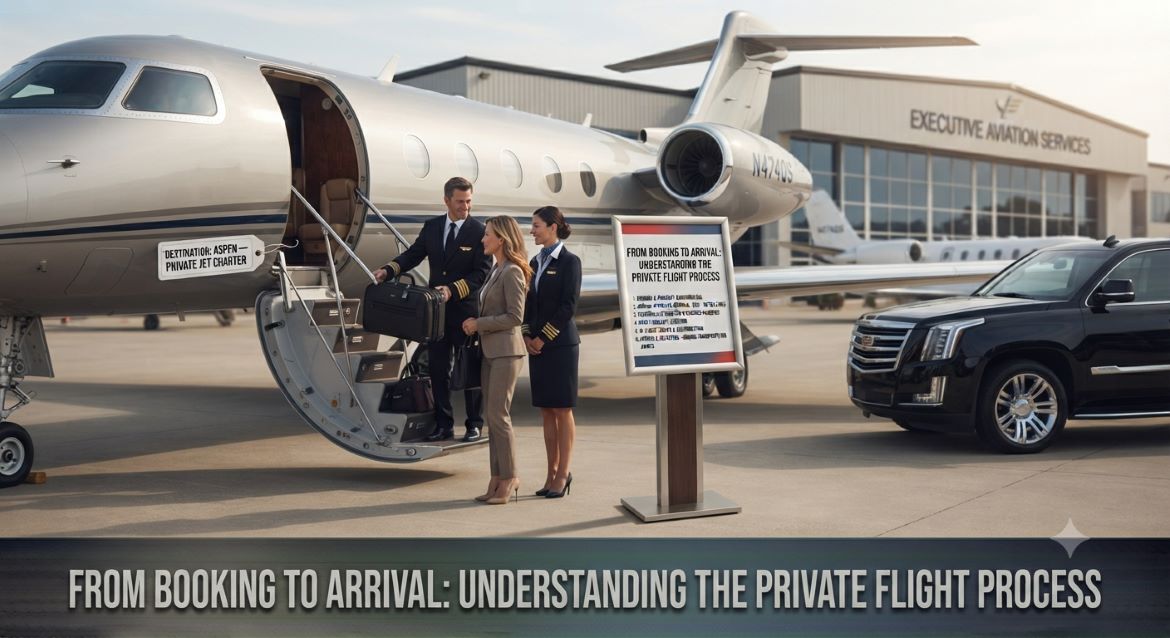
From Booking to Arrival: Understanding the Private Flight Process
For travelers who have never chartered a private jet, the process can seem unfamiliar. Many people assume that arranging a private flight is complicated, time-consuming, or reserved exclusively for large corporations and ultra-high-net-worth individuals.
In reality, modern private aviation is designed to simplify travel. From the initial booking request to arriving at your final destination, every step is built around efficiency, flexibility, and personalized service.
Unlike commercial airlines, where travelers must adapt to fixed schedules and airport procedures, private aviation revolves around the passenger’s needs. The result is a seamless travel experience that saves time, reduces stress, and offers an exceptional level of comfort.
At Hera Flight, we guide clients through every stage of their journey. Here’s a detailed look at what happens from the moment you book a private flight until you arrive at your destination.
Step 1: Making the Initial Flight Request
The private aviation journey begins with a simple request.
Unlike commercial travel, where passengers search through airline schedules, private aviation starts with your travel requirements.
Typical information includes:
- Departure airport;
- Destination;
- Preferred travel dates;
- Number of passengers;
- Special luggage requirements;
- Catering requests;
- Ground transportation needs.
This information allows aviation specialists to identify the most suitable aircraft and flight options.
Many first-time travelers are surprised by how quickly this process can be completed.
Understanding Your Travel Needs
Every private flight is unique.
A business executive traveling alone may require a light jet for a short regional flight, while a family traveling internationally may need a larger aircraft with additional baggage capacity and long-range capabilities.
Factors considered include:
- Flight distance;
- Passenger count;
- Cabin requirements;
- Budget preferences;
- Airport accessibility.
Selecting the right aircraft is one of the most important parts of the booking process.
Step 2: Aircraft Selection
Once the travel requirements are confirmed, suitable aircraft options are presented.
Private aviation offers a wide range of aircraft categories.
Light Jets
Ideal for:
- Short regional routes;
- Small groups;
- Business travel.
Benefits include efficiency, flexibility, and access to smaller airports.
Midsize Jets
Popular for:
- Longer domestic flights;
- Corporate travel;
- Increased cabin comfort.
These aircraft offer additional space and range.
Super-Midsize Jets
Suitable for:
- Cross-country flights;
- International routes;
- Larger passenger groups.
They combine range, speed, and comfort.
Heavy Jets
Designed for:
- Long-haul travel;
- International missions;
- Premium passenger experiences.
Heavy jets provide spacious cabins and extensive onboard amenities.
Ultra-Long-Range Aircraft
These aircraft can connect major international destinations with minimal stops while offering the highest levels of comfort and performance.
Step 3: Receiving the Charter Proposal
After identifying the best aircraft options, clients receive a charter proposal.
This proposal typically includes:
- Aircraft information;
- Flight schedule;
- Passenger capacity;
- Estimated flight time;
- Charter cost;
- Included services.
The process is transparent and allows travelers to compare options before making a decision.
Once the preferred aircraft is selected, the booking can be confirmed.
Step 4: Flight Planning and Logistics
Following confirmation, a dedicated team begins coordinating every aspect of the flight.
This includes:
- Route planning;
- Airport slot coordination;
- Fuel arrangements;
- Crew scheduling;
- Weather monitoring;
- Ground handling services.
For international flights, additional planning may involve:
- Customs coordination;
- Immigration requirements;
- Overflight permits;
- Landing permissions.
Much of this work happens behind the scenes, allowing passengers to focus on their travel plans.
Step 5: Personalizing the Journey
One of the defining characteristics of private aviation is personalization.
Passengers often have the opportunity to customize various aspects of the flight experience.
Common requests include:
- Specific catering preferences;
- Dietary accommodations;
- Favorite beverages;
- Ground transportation arrangements;
- Pet travel coordination;
- Business meeting requirements.
This attention to detail helps create a travel experience tailored to each client’s needs.
Step 6: Preparing for Departure
As the departure date approaches, passengers receive detailed travel information.
This typically includes:
- Departure terminal location;
- Recommended arrival time;
- Passenger documentation requirements;
- Ground transportation details.
Unlike commercial airlines, private aviation generally requires far less advance arrival time.
Most travelers arrive only 15 to 30 minutes before departure.
Step 7: Arriving at the Private Terminal
One of the first major differences passengers notice is the departure experience.
Most private flights operate through dedicated private terminals known as Fixed Base Operators (FBOs).
Instead of navigating crowded airport terminals, passengers arrive at a quiet, private facility.
Benefits include:
- Minimal waiting;
- Personalized service;
- Private lounges;
- Efficient procedures.
For many travelers, this alone transforms the airport experience.
Step 8: Security and Passenger Verification
Security remains a vital component of private aviation.
Passengers typically complete:
- Identity verification;
- Passenger manifest confirmation;
- Travel document review.
Because private terminals handle far fewer travelers than commercial airports, these procedures are usually completed quickly and efficiently.
The result is a secure environment without lengthy queues or delays.
Step 9: Baggage Handling
Private aviation simplifies luggage management.
Upon arrival at the terminal:
- Staff assist with baggage;
- Luggage is loaded directly onto the aircraft;
- Special items receive personalized handling.
Passengers generally avoid:
- Long baggage drop lines;
- Weight-check queues;
- Baggage claim delays.
This streamlined process contributes significantly to the overall convenience of private travel.
Step 10: Boarding the Aircraft
When the aircraft is ready, passengers are escorted directly from the terminal to the jet.
This is often one of the most memorable moments for first-time private flyers.
There are:
- No boarding groups;
- No gate announcements;
- No crowded waiting areas.
In many cases, passengers simply walk across the ramp and board the aircraft within minutes.
Step 11: The Flight Experience
Once onboard, passengers enjoy a travel experience designed around comfort and flexibility.
Depending on the aircraft, amenities may include:
- Spacious seating;
- Private workspaces;
- Conference-style layouts;
- Premium catering;
- Entertainment systems;
- Wi-Fi connectivity.
The cabin environment allows travelers to work, relax, or socialize without the interruptions common in commercial aviation.
Productivity in the Air
Business travelers often use flight time to:
- Conduct meetings;
- Review presentations;
- Make confidential calls;
- Prepare for client visits.
The privacy and comfort of a private jet create an ideal environment for productive travel.
Step 12: Continuous Operational Monitoring
While passengers enjoy the flight, aviation professionals continuously monitor:
- Weather conditions;
- Air traffic updates;
- Airport operations;
- Flight progress.
This operational oversight helps ensure safety, efficiency, and adaptability throughout the journey.
Step 13: Arrival at the Destination
The arrival experience is just as streamlined as departure.
Upon landing:
- Ground transportation is often waiting nearby;
- Baggage is unloaded immediately;
- Passengers exit the airport quickly.
Many private airports allow travelers to move from aircraft to vehicle within minutes.
This eliminates much of the delay associated with commercial arrivals.
Step 14: Customs and Immigration for International Flights
For international travel, private aviation often provides a more efficient customs experience.
Depending on the airport:
- Customs officers may process passengers at private terminals;
- Dedicated facilities may be available;
- Waiting times are often significantly reduced.
These procedures remain compliant with international regulations while improving overall efficiency.
Step 15: Reaching Your Final Destination
The final stage of the journey often involves pre-arranged transportation.
Options may include:
- Luxury vehicles;
- Chauffeur services;
- Executive transportation;
- Helicopter transfers.
This door-to-door approach ensures a seamless travel experience from departure to arrival.
Why Travelers Choose Private Aviation
The private flight process is designed to eliminate many of the frustrations associated with commercial air travel.
Key benefits include:
- Time savings;
- Flexible scheduling;
- Enhanced privacy;
- Personalized service;
- Greater comfort;
- Access to more airports.
For many travelers, these advantages create significant value beyond the flight itself.
The Hera Flight Difference
At Hera Flight, we understand that every journey is unique.
Our team manages every stage of the process, including:
- Aircraft sourcing;
- Flight planning;
- Passenger support;
- Ground transportation;
- International coordination.
We focus on delivering a seamless and stress-free experience that allows clients to travel with confidence.
Conclusion
The private flight process is remarkably simple when supported by experienced aviation professionals.
From the initial booking request to the moment you arrive at your destination, every detail is coordinated to maximize convenience, efficiency, and comfort.
Private aviation is not simply about flying on a different aircraft. It is about transforming the entire travel experience.
Whether traveling for business or leisure, passengers benefit from a level of flexibility, privacy, and service that commercial airlines simply cannot match.
FAQ:
How long does it take to book a private jet?
Many private flights can be arranged within a few hours, depending on aircraft availability and operational requirements.
How early should I arrive for a private flight?
Most passengers arrive approximately 15–30 minutes before departure.
Can I choose the aircraft type?
Yes. Clients are typically presented with several aircraft options based on their travel needs and preferences.
Is catering included on private flights?
Many charter flights include catering options, which can often be customized according to passenger preferences.
Do private jets use separate terminals?
Yes. Most private flights operate through dedicated private aviation terminals known as FBOs.
How is baggage handled in private aviation?
Ground staff typically manage luggage directly, simplifying the process and reducing waiting times.
Are security procedures required?
Yes. Private aviation follows strict security protocols, although procedures are generally faster and more efficient than commercial airports.
Can private jets access smaller airports?
Yes. Private aircraft often operate from airports that commercial airlines cannot serve.
What happens after landing?
Passengers typically disembark quickly, collect their luggage immediately, and proceed directly to waiting transportation.
Why do travelers prefer private aviation?
The most common reasons include flexibility, privacy, efficiency, comfort, productivity, and significant time savings.