Roof Replacement: Costs, Timing, Materials, and Contractor Vetting
A roof announces its own retirement, and homeowners usually notice too late. The shingles curl, granules collect in the gutters, a stain appears on a bedroom ceiling after a storm, and suddenly a project you were planning for “someday” is urgent. Roof replacement is among the largest home expenses most people face, typically five figures, and it is also one of the most consequential, since everything below the roof depends on it. Here is the practical guide: when replacement is genuinely necessary, what materials cost, how the process works, and how to hire someone who will do it right.
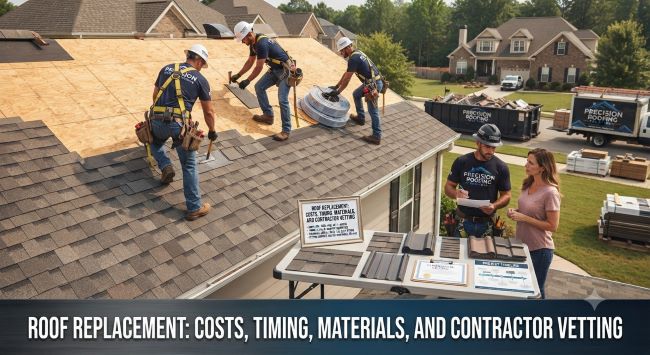
Signs You Actually Need Replacement
Not every leak means a roof replacement. The signs that genuinely indicate replacement rather than repair:
- Age. Asphalt shingle roofs last 15 to 30 years depending on quality. Knowing your roof’s install date is the single most useful data point.
- Curling, cupping, or clawing shingles across large areas rather than isolated spots.
- Granule loss. Significant granules in gutters and downspouts means shingles are shedding their protective layer.
- Bald spots and cracked shingles in multiple areas.
- Sagging rooflines, which indicate structural or decking problems and demand immediate professional evaluation.
- Daylight visible through roof boards in the attic.
- Repeated leaks in different locations, signaling systemic rather than localized failure.
- Neighbors replacing roofs. Subdivisions built simultaneously age simultaneously.
A single leak, damaged flashing, or a handful of blown-off shingles usually calls for repair, not replacement. Get an honest assessment before assuming the worst.
Material Options and Costs
Material choice drives roof replacement cost more than any other factor:
| Material | Cost per Sq Ft (Installed) | Lifespan |
|---|---|---|
| 3-tab asphalt shingles | $3.50-$5.50 | 15-20 years |
| Architectural asphalt shingles | $4.50-$8 | 25-30 years |
| Metal (standing seam) | $10-$18 | 40-70 years |
| Metal (corrugated/exposed fastener) | $6-$12 | 25-40 years |
| Wood shake | $8-$15 | 25-40 years |
| Clay/concrete tile | $10-$25 | 50-100 years |
| Slate | $15-$40 | 75-150 years |
| Synthetic composite | $8-$14 | 40-50 years |
For a typical 2,000 square foot roof, that translates to roughly $9,000-$16,000 for architectural asphalt shingles (the most common choice in America) and considerably more for premium materials.
Cost drivers beyond material: roof pitch (steep roofs cost more to work on safely), complexity (dormers, valleys, and multiple planes add labor), the number of existing layers to tear off, decking replacement if the plywood beneath is damaged, and regional labor rates.
The Process, Step by Step
Knowing the roof replacement sequence helps you evaluate whether a contractor is doing things properly:
- Inspection and estimate. A thorough contractor inspects the attic as well as the roof surface, since ventilation and decking condition matter.
- Permitting. Most jurisdictions require permits for roof replacement. A contractor who suggests skipping this is a red flag.
- Property protection. Tarps over landscaping, plywood against siding, and a plan for debris.
- Tear-off. Removing existing shingles down to the decking. Layering new shingles over old is permitted in some areas but generally inadvisable, since it hides decking problems and shortens the new roof’s life.
- Decking inspection and repair. Rotted or soft plywood gets replaced. Contracts should specify a per-sheet price for this so surprises are priced in advance.
- Underlayment and ice/water shield. Synthetic underlayment across the deck, with ice and water barrier in valleys, eaves, and around penetrations.
- Flashing. New flashing around chimneys, vents, skylights, and walls. Reusing old flashing is a common corner-cut and a common source of future leaks.
- Shingle installation from eaves upward, with proper nailing patterns.
- Ridge vents and ventilation. Adequate attic ventilation extends roof life significantly and is frequently under-addressed.
- Cleanup and magnet sweep for nails across the property.
- Final inspection by the contractor and, where required, the municipality.
A typical asphalt shingle replacement on an average home takes one to three days of active work, weather permitting.
Vetting Contractors
This decision matters more than material choice on any roof replacement. What separates professionals from problems:
- Licensing and insurance. Verify both, including workers’ compensation. If an uninsured worker is injured on your roof, liability can land on you.
- Local presence and history. Established local companies with a physical address and years in business beat out-of-town storm-chasers who appear after hail events and disappear before warranty claims.
- Written detailed estimates. Material brand and line, underlayment type, flashing replacement, decking price per sheet, ventilation work, cleanup, and permit handling should all be itemized.
- Manufacturer certifications. Shingle manufacturers certify installers, and certified contractors can offer enhanced warranties.
- Two warranties. Manufacturer warranty covers materials; workmanship warranty covers installation. Both matter, and workmanship warranties vary from one year to lifetime.
- Three bids minimum, compared on scope rather than just price. The cheapest bid often excludes flashing replacement or decking allowances.
- Payment structure. A reasonable deposit followed by payment on completion is normal. Large upfront payments are a warning sign.
Insurance and Storm Damage
If damage came from a storm, homeowners insurance may cover replacement. The process: document damage with photos immediately, file the claim promptly, meet the adjuster on site (ideally with your contractor present), and understand whether your policy pays actual cash value (depreciated) or replacement cost value.
Be cautious with contractors who offer to “handle your deductible,” which is illegal in many states and a sign of an operation you do not want on your roof.
What Comes After
Two follow-ups after a roof replacement protect the investment. First, keep all documentation: contracts, warranties, permits, and photos, since warranty claims and future home sales both require them. Second, address any water damage that occurred before replacement. Roof leaks that soaked insulation, drywall, or framing can develop mold well after the roof itself is fixed, and Professional Mold Remediation is worth investigating if the leak was prolonged or if any musty smell persists after the new roof goes on.
A well-executed roof replacement with quality materials and proper installation buys 25 to 30 years of not thinking about your roof, which for a project of this size and disruption is exactly the return you want.
Key Takeaways
- Replacement signs include age (15-30 years for asphalt), widespread curling, granule loss in gutters, sagging, and repeated leaks in different locations.
- Architectural asphalt shingles cost $4.50-$8 per square foot installed and last 25-30 years, making them the most common choice.
- A typical 2,000 sq ft asphalt roof runs roughly $9,000-$16,000; pitch, complexity, and decking repairs drive cost beyond materials.
- Insist on full tear-off rather than layering, new flashing rather than reused, and adequate attic ventilation.
- Verify licensing, insurance including workers’ comp, local history, and manufacturer certification before hiring.
- Get three itemized bids and compare scope, since cheap bids often exclude flashing or decking allowances.
- Confirm both manufacturer and workmanship warranties, and avoid contractors offering to cover your deductible.
- Keep all documentation, and investigate mold remediation if leaks were prolonged or musty smells persist afterward.