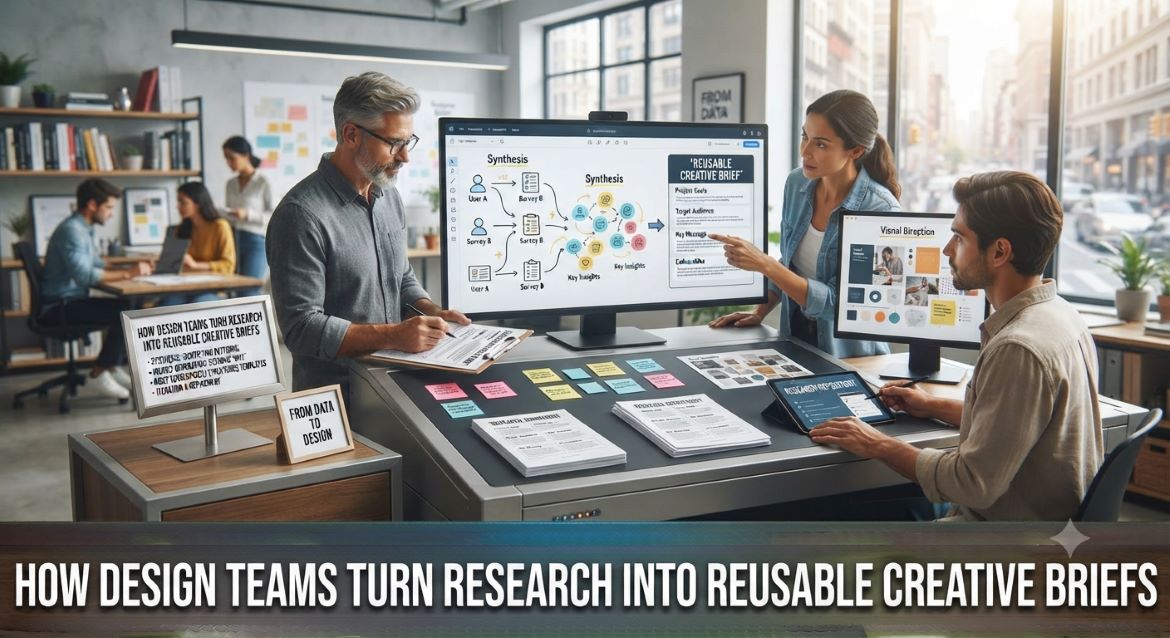
How Design Teams Turn Research Into Reusable Creative Briefs
Good design research produces more than a folder of screenshots. It reveals patterns: what audiences notice first, which claims require proof, how competitors frame similar problems, and where a campaign could take a more distinctive direction. The difficulty begins when those observations enter production without first becoming clear creative decisions.
A useful creative brief performs that translation. It explains which findings matter, what they mean for the work, and which boundaries should guide writing, design, and distribution. Without that step, research may be interesting but difficult to apply.
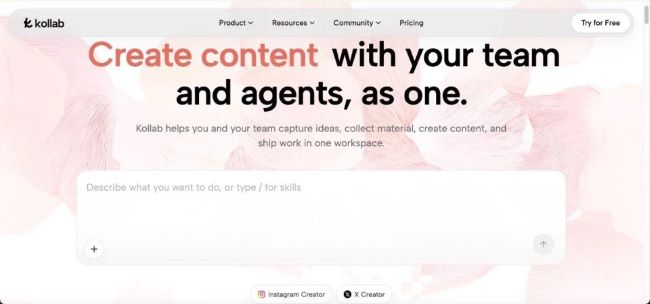
Kollab supports this process by helping teams collect material, create in several formats, and keep project preferences, brand voice, feedback, and version history in one workspace. The platform does not replace creative judgment. It gives research and project guidance a clearer path into execution.
Why Research Libraries Do Not Automatically Produce Better Briefs
Teams often confuse access with usefulness. A shared folder may contain competitor pages, moodboards, interview notes, trend reports, and campaign examples, yet still fail to answer the questions a creator faces when starting a task.
Which reference should influence the layout? Which customer phrase should shape the headline? Which competitor pattern should the team avoid rather than imitate? A research library stores evidence, but a creative brief must interpret it.
Creators rarely need every research detail at once. They need the conclusions that affect the next decision. A useful brief filters research into priorities, boundaries, and unresolved questions. It makes the direction easier to act on without separating the recommendation from the evidence behind it.
When a brief performs that role, research becomes part of the creative method rather than a collection the team reviews once and rarely uses again.
Turn Observations Into Creative Decisions
The most valuable step in briefing is not collecting more references. It is converting observations into instructions that can shape actual work. Three kinds of decisions make that transition practical.
State Why Each Reference Matters
A saved page or image should include a short explanation of its purpose. A reference may matter because of its information hierarchy, pacing, composition, proof placement, or tone—not because the entire design should be copied.
Kollab can bring web pages, documents, podcasts, videos, and team conversations into project material, while the creative brief records why each source matters to the work. This helps the team preserve both the evidence and the intended lesson.
Translate Research Into Creative Boundaries
Research should help define what the team will and will not produce. A brief might require an editorial visual style, prohibit unsupported performance claims, preserve a customer quote exactly, or avoid highly technical language in the opening section.
These boundaries are more useful than broad labels such as “modern” or “premium.” They give writers and designers a practical way to test whether a concept follows the intended direction before formal review begins.
Separate Facts From Interpretations
A reliable brief distinguishes what the research demonstrates from what the team has inferred. Customer interviews may show that onboarding feels slow, but they do not automatically prove which visual idea will communicate the solution most effectively.
Keeping facts, interpretations, and creative proposals separate makes discussion more productive. People can challenge a proposed direction without reopening the underlying evidence, and they can revise the idea later without rebuilding the complete research record.
Use the Brief as a Working Filter
A strong brief should help creators reject weak options early. It is not only a description of what the team hopes to produce; it is a filter for deciding which ideas deserve further development.
A writer can test whether a headline reflects the audience’s actual concern rather than an internal product phrase. A designer can compare a concept with agreed visual principles instead of relying on personal taste alone. An editor can check whether a claim is supported by the available material and whether the current version follows the intended tone.
The AI Creation Workspace model can support this approach by keeping project material, brand voice, feedback, and version history close to the work. Kollab’s Memory also retains project preferences, brand voice, and team rules, reducing the need to repeat stable guidance whenever the team begins another draft or format.
The brief remains a team-created decision tool. The workspace simply helps keep its most useful guidance available while the project develops.
Build a Brief That Can Be Reused Without Becoming Generic
Reuse does not mean applying the same document to every project. It means preserving the parts of a briefing method that repeatedly help the team make better decisions. The structure can remain consistent while the evidence, audience, and creative direction change.
Reuse Questions, Not Finished Answers
The strongest template is a set of practical questions: Who is this for? What must the audience understand? Which evidence is required? What should the work avoid? Which decision is still unresolved?
These questions create consistency without forcing every campaign toward the same result. They also expose missing information before production starts, when research gaps are easier to resolve than they are during final review.
Turn Proven Methods Into Team Skills
When a briefing process works, the team should not have to rediscover it inside an old document or conversation. Kollab’s Skills can turn proven prompts, workflows, and templates into reusable capabilities for the team and its Agent.
A Skill might guide research synthesis, organize findings into a creative-direction summary, or check whether a draft reflects the brief. The method becomes reusable, while the source material and final creative decisions remain specific to each project.
Branch From One Direction Into Several Formats
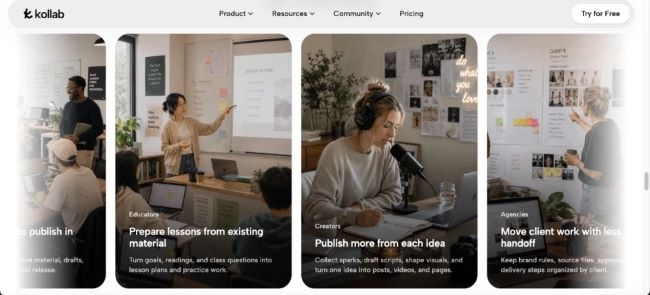
A single campaign direction may later become an article, landing page, social post, image set, video, or website. Kollab supports creating multiple formats from reusable project material.
The purpose is not to make every output identical. It is to preserve the central claim, supporting evidence, and creative logic while adapting structure, pacing, and detail for each destination. Shared direction creates coherence, while format-specific decisions keep each deliverable effective.
Know When the Brief Should Change
A reusable brief should remain stable enough to guide the team but flexible enough to respond to meaningful new information. It may need revision when research changes the team’s understanding of the audience, when an important claim can no longer be supported, or when early creative testing shows that the chosen direction is not working.
Not every comment should alter the main brief. A wording preference may apply only to one asset. A platform adjustment may affect only one channel. The brief should change when the underlying creative decision changes, not whenever someone edits a sentence.
Kollab keeps feedback and version history in the same creation space, helping teams see how the work develops over time. Scheduled Tasks and Bots can also support recurring preparation or team updates, but they are most useful after the team has clearly defined what should be repeated.
Automation should reinforce a reliable briefing method, not convert every temporary comment into a permanent project rule.
Move From Research to Production Without Skipping Interpretation
Design research does not become useful merely because it has been collected. Before production begins, someone must decide what the findings mean for the work.
A customer insight may influence the headline but not the visual style. A competitor example may reveal a category convention the team should deliberately avoid. A trend may provide an opening idea without becoming the central campaign message.
This interpretive stage is where a creative brief earns its value. It narrows the research into decisions that writers, designers, and channel owners can use. It also makes disagreements easier to resolve because the team can discuss the reasoning behind a direction rather than comparing personal preferences alone.
Kollab can keep the source material, project guidance, and developing outputs inside the same working environment. The team still decides what the research means, but it does not need to detach those decisions from the material that informed them.
A Better Brief Makes Research Actionable
Design research creates value only when it changes what the team makes. The creative brief is where evidence becomes direction: references gain a purpose, audience findings become priorities, risks become boundaries, and unresolved questions become visible.
The best brief is therefore not the longest or most polished document. It is the one that helps people make consistent decisions without removing room for creative judgment. It preserves the reasoning that matters while allowing writers, designers, and channel owners to adapt the idea for their own work.
Kollab is useful in this process when teams need to collect varied material, retain project guidance, reuse proven methods, and develop several outputs from the same foundation. The technology supports the system, but the quality of the brief still depends on the team’s ability to interpret research clearly and decide what the work should accomplish.