Full Size Mattress: Dimensions, Who It Fits, and How to Choose
The full size mattress occupies the most useful middle ground in bedding: wider than a twin, cheaper and smaller than a queen, and it fits rooms where a queen would eat the floor. It is also the most misunderstood size, going by two names (full and double) while buyers routinely misjudge whether it works for two people.
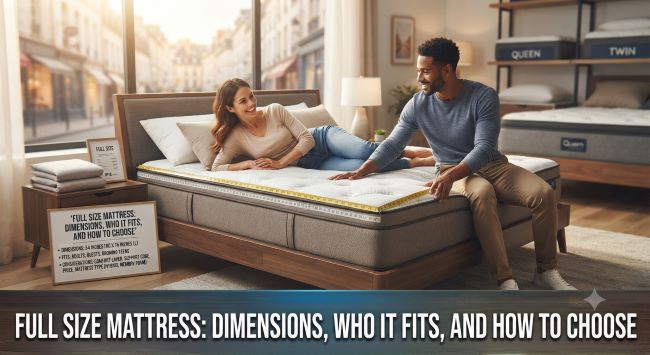
The Exact Dimensions
A standard full size mattress measures 54 inches wide by 75 inches long, or roughly 137 by 190 centimeters. Two variants exist:
- Full XL: 54 by 80 inches, adding five inches of length for taller sleepers while keeping the same width. Less common but available.
- Standard full (double): 54 by 75 inches, the version you will find nearly everywhere.
Here is the number that surprises people: a full is only 16 inches wider than a twin (38 inches) but 6 inches narrower than a queen (60 inches). Split between two adults, a full gives each sleeper 27 inches of width, which is less than a standard crib mattress width per person. That single statistic explains most of the disappointment couples report with a full.
Who a Full Size Mattress Actually Suits
The size shines in specific situations:
Single adults who want room to sprawl. This is the full’s best use case by far. One person on a full has genuinely generous space, room for a pet, and space to shift positions without falling off. For solo sleepers, a full is a meaningful upgrade over a twin at modest cost.
Teenagers and college students. A full outlasts a twin as a child grows into adulthood, and it fits most dorm and small bedroom footprints.
Guest rooms. A full accommodates a single guest comfortably or two guests occasionally, without dominating a small guest room.
Small primary bedrooms. In rooms under about 10 by 10 feet, a full leaves walking space where a queen would not.
Couples on a budget or in tight rooms, with caveats. Two adults do fit, and generations did exactly that, but it is close quarters and works best as a temporary arrangement.
Full vs. Twin vs. Queen: The Comparison
| Size | Dimensions | Best For | Room Minimum |
|---|---|---|---|
| Twin | 38 x 75 in | Kids, small rooms, bunks | 7 x 10 ft |
| Twin XL | 38 x 80 in | Tall teens, dorms | 7 x 10 ft |
| Full | 54 x 75 in | Solo adults, teens, guest rooms | 10 x 10 ft |
| Full XL | 54 x 80 in | Tall solo sleepers | 10 x 11 ft |
| Queen | 60 x 80 in | Couples, most primary bedrooms | 10 x 12 ft |
The queen upgrade question comes down to two factors: room size and whether two people sleep there nightly. If the room fits a queen and two adults share it every night, the queen is worth the modest additional cost and space. If either condition fails, the full size mattress is the smarter buy.
Room Requirements and Measuring
Before buying, measure the space properly rather than eyeballing it. A full size mattress needs roughly 10 by 10 feet of bedroom to feel comfortable, with 24 inches of walking clearance on the sides you use and clearance for door swings and dresser drawers. The frame adds several inches beyond the mattress dimensions, typically bringing a full frame to around 56 to 60 inches wide and 78 to 82 inches long depending on style.
The tape-on-the-floor method beats guessing every time: mark the frame’s footprint (not the mattress size) on your bedroom floor with painter’s tape and live with it for a day, walking around it and opening every door and drawer. For a thorough approach to planning the whole room, the process in How to Measure a Room for Furniture applies directly to bedroom layout and prevents the most expensive furniture regret there is.
Choosing the Right Mattress Type
Once the size is settled, the construction decision follows the same logic as any mattress:
Memory foam. Contours to the body, isolates motion well (which matters more on a full than a queen, since you are closer to your partner), and suits side sleepers. Can sleep warm unless gel-infused or open-cell.
Innerspring. Traditional coil support, better airflow, more bounce, and typically the lowest price point. Motion transfers more, which is a real consideration at full width.
Hybrid. Coils plus foam layers, combining support and contouring. The most popular category now and a strong default choice.
Latex. Responsive, durable, cooler, and longest-lasting, at a higher price.
Firmness follows sleep position: side sleepers generally want medium-soft to medium, back sleepers medium to medium-firm, and stomach sleepers firm to keep hips aligned.
Pricing and Where to Buy
Full size mattress pricing spans a wide range:
- Budget ($200-$500): Compressed bed-in-a-box foam mattresses and basic innersprings. Serviceable for guest rooms and short-term use.
- Mid-range ($500-$1,100): Quality hybrids and foam mattresses from established online and retail brands. The value sweet spot for most buyers.
- Premium ($1,100-$2,500+): Latex, luxury hybrids, and specialty constructions with long warranties.
Online bed-in-a-box brands typically undercut showroom pricing meaningfully, and nearly all offer 100-night trials with free returns, which effectively removes the risk of buying without lying on the mattress first. If you prefer testing in person, showroom trials plus an online price check is the hybrid approach that saves the most.
Bedding and Accessories
One practical note that catches buyers: full-size sheets are widely available but noticeably less abundant than queen sheets in most stores, and “full/queen” labeled comforters run large on a full. Buy sheets specifically sized full, and consider a full-specific comforter rather than a full/queen for proper drape.
A full size mattress remains one of the smartest purchases in bedding for the right buyer: a single adult who wants real space, a growing teen, or a guest room that needs to accommodate anyone. Match it to the room with a tape measure first, pick the construction to your sleep position, and buy on a trial period, and the size does exactly what it has done for generations of sleepers.
Key Takeaways
- A standard full size mattress measures 54 by 75 inches; Full XL adds five inches of length at 54 by 80.
- A full is 16 inches wider than a twin but 6 inches narrower than a queen, giving each of two sleepers only 27 inches of width.
- The size is ideal for solo adults, teens, guest rooms, and small primary bedrooms; couples fit but sleep close.
- Plan on a 10 by 10 foot room minimum, with 24 inches of walking clearance and frame dimensions running several inches beyond the mattress.
- Tape the frame footprint on the floor before buying to catch layout problems early.
- Choose construction by sleep needs: memory foam for motion isolation, innerspring for airflow and price, hybrid as the balanced default, latex for durability.
- The $500-$1,100 range delivers the best quality-to-price ratio for most buyers.
- Buy sheets sized specifically full rather than full/queen comforters, which run large on the smaller size.