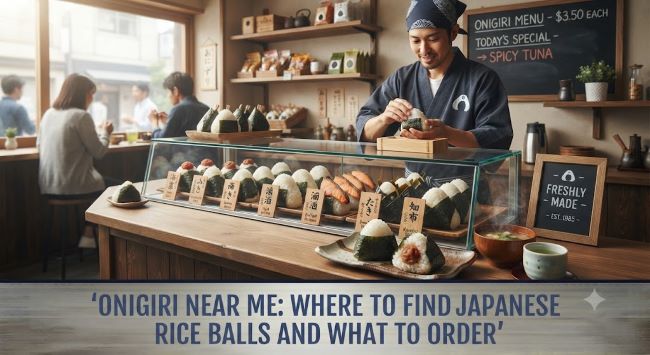
Onigiri Near Me: Where to Find Japanese Rice Balls and What to Order
You see them stacked in neat triangles behind the glass, each one wrapped in crisp nori, hiding a different filling inside. Salmon, pickled plum, tuna mayo, spicy cod roe. A single rice ball costs a few dollars, takes thirty seconds to eat, and somehow satisfies like a full meal. If you have ever tried onigiri from a Japanese convenience store and now find yourself searching for onigiri near me back home, you already know why this simple food inspires such loyalty. Here is where to find it and how to pick the best ones.
What Onigiri Actually Is
Onigiri is a ball or triangle of seasoned rice, usually filled with something savory and wrapped partially or fully in nori seaweed. It is not sushi. The rice is plain salted or lightly seasoned, not vinegared, and the filling sits inside rather than on top. Japanese families pack them for lunches, hikers carry them on trails, and convenience stores in Japan sell billions of them every year.
The simplest versions contain nothing but salt-seasoned rice and a strip of nori. The most popular fillings in Japan include salted salmon, umeboshi (pickled plum), kombu (seasoned kelp), tuna with mayonnaise, and mentaiko (spicy pollock roe). American shops sometimes add fusion fillings like teriyaki chicken, spam and egg, or spicy shrimp, and those can be excellent in their own right.
Where to Look in the US
The search for onigiri near me often disappoints because this food does not live where most people look. Skip the sushi restaurants and try these instead:
Japanese convenience stores and specialty grocers. Shops like Nijiya, Mitsuwa marketplace, Marukai, and H Mart carry freshly made onigiri in the prepared foods case, sometimes a dozen varieties deep. These are the closest American equivalent to a Tokyo konbini.
Dedicated onigiri shops. A growing number of storefronts in cities like New York, Los Angeles, San Francisco, Seattle, Portland, and Honolulu specialize in handmade rice balls exclusively. These shops press each order fresh with warm rice, which puts them in a different league from pre-wrapped versions.
Japanese bakeries and cafes. Often overlooked in the onigiri near me search, many Japanese-style bakeries carry a small selection alongside their bread and pastries. The display case is usually near the register.
Asian food halls. Indoor food halls that feature multiple Asian vendors often include a stall making onigiri to order or selling them pre-wrapped.
Farmer’s markets and pop-ups. Smaller producers sell at weekend markets, especially in West Coast cities. Quality tends to be high because the batches are small.
How to Judge Quality
Not all onigiri is created equal, and once you start finding onigiri near me options, a few markers separate the great from the mediocre:
- Rice temperature. Fresh onigiri served at room temperature or slightly warm is the standard. Refrigerated rice hardens and loses its texture. Good shops either make them fresh or store them briefly.
- Rice texture. The grains should hold together but not feel compressed or gummy. Overworked rice turns into a dense block. Properly shaped onigiri has a gentle, barely-there press.
- Nori crispness. The best shops use the konbini-style wrapper that keeps nori separate from rice until you open it, so the seaweed crackles when you bite. Pre-wrapped onigiri where the nori has gone soft is still fine but signals it has been sitting for a while.
- Filling ratio. A good rice ball has enough filling that you hit it by the second bite. If you eat half the triangle before reaching anything inside, the ratio is off.
The Essential Fillings to Try First
If you are new to this, start with these and branch out from there:
| Filling | Japanese Name | Flavor Profile |
|---|---|---|
| Salted salmon | Sake | Rich, flaky, savory |
| Pickled plum | Umeboshi | Sour, salty, intense |
| Tuna mayo | Tsuna mayo | Creamy, mild, familiar |
| Spicy cod roe | Mentaiko | Briny, spicy, bold |
| Seasoned kelp | Kombu | Sweet-savory, chewy |
| Grilled salmon | Yaki-sake | Smoky, crispy edged |
Once you find onigiri near me that checks those boxes, start with tuna mayo as the safe entry point. Umeboshi is the litmus test. If you love umeboshi, you will love the whole category. Mentaiko is the enthusiast pick and the one most fans eventually call their favorite.
Pricing and What to Expect
A single onigiri typically runs between 2 and 5 dollars, depending on the filling and location. Specialty shops with premium fillings like ikura (salmon roe) or wagyu charge more. Two rice balls plus a drink makes a solid light meal for under 10 dollars, which is part of the appeal.
Most shops wrap onigiri for takeaway, and it travels well for a few hours. Eat it the same day you buy it. Refrigerating it overnight is possible but the rice texture suffers noticeably. If your search for onigiri near me leads you to a shop that makes them to order with warm rice, eat it within the hour for the best experience.
Making It at Home When No Shop Exists Nearby
If onigiri near me returns nothing in your area, making it at home is straightforward. Cook short-grain Japanese rice (Calrose or Koshihikari), season it with salt while warm, place a spoonful of filling in the center, and press it into a triangle with wet hands. Wrap with nori. The whole process takes less time than driving to most restaurants.
The only requirement that matters: use Japanese short-grain rice. Long-grain, jasmine, and basmati do not stick together properly and fall apart immediately. With the right rice, homemade onigiri can match or beat many store-bought versions. Stock your fillings from any Asian grocery, and onigiri near me becomes onigiri in your kitchen for a fraction of the cost.
Key Takeaways
- Onigiri is a Japanese rice ball made with salted short-grain rice, a savory filling, and nori seaweed, and it is not sushi.
- The best US sources are Japanese grocers like Nijiya and Mitsuwa, dedicated onigiri shops, Japanese bakeries, and Asian food halls.
- Judge quality by rice temperature (room temp or warm, not cold), gentle pressing (not dense), crisp nori, and generous filling ratio.
- Start with tuna mayo for accessibility, umeboshi for the authentic experience, and mentaiko for bold flavor.
- Pricing runs $2-$5 per piece; two rice balls plus a drink make a full light meal under $10.
- Eat onigiri the same day you buy it for the best texture, and within an hour if it is made to order with warm rice.
- If no shop exists nearby, homemade onigiri requires only Japanese short-grain rice, salt, fillings, and nori.
- West Coast cities, Honolulu, and New York have the densest concentration of dedicated shops and Japanese grocers.