
Kataifi: What It Is, How to Use It, and Where to Find It
Kataifi is one of those ingredients that, once you know what it is and how to use it, opens up an entire category of distinctive desserts and savory dishes you may not have realized had a specific, identifiable component at their foundation. Recognizable by its shredded, vermicelli-like appearance, kataifi has been gaining broader recognition outside its traditional Mediterranean and Middle Eastern culinary contexts in recent years, partly through its role in viral dessert trends, making this a genuinely useful ingredient to understand whether you’re cooking traditional recipes or experimenting with newer applications.
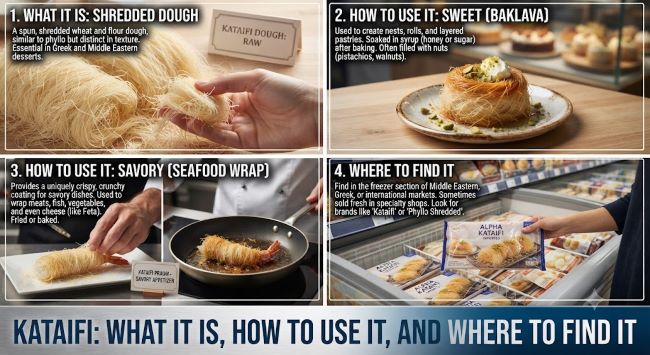
What Kataifi Actually Is
Kataifi (also spelled kadayif, knafeh dough, or shredded phyllo, depending on regional naming conventions and the specific dish it’s associated with) is a type of dough made from the same basic ingredients as standard phyllo dough — flour, water, and a small amount of oil — but processed and shaped into extremely thin, long strands resembling vermicelli noodles or shredded wheat, rather than the broad, flat sheets associated with standard phyllo.
This shredded format gives kataifi a distinctly different textural quality once cooked compared to standard layered phyllo: rather than the flaky, sheet-like layers phyllo produces, kataifi develops a crispy, almost crunchy texture with a more textured, nest-like appearance, making it particularly well suited to specific applications where this distinctive crunch is a desired characteristic.
Traditional Uses for Kataifi
Knafeh (Kunafa). Perhaps the most famous traditional application, knafeh is a popular Middle Eastern dessert featuring kataifi dough layered around a soft, often slightly salty cheese filling, baked until the kataifi turns golden and crispy, then soaked in a sweet syrup (typically flavored with rosewater or orange blossom water) after baking, creating a distinctive sweet-and-savory combination with contrasting crispy and gooey textures.
Kataifi pastries with nuts. Various Mediterranean and Middle Eastern desserts wrap or layer kataifi around nut fillings (commonly pistachios, walnuts, or almonds), often formed into small rolled or nest-shaped pastries, baked until crispy, and finished with a sweet syrup soak similar to baklava’s preparation approach, despite using the shredded kataifi format rather than standard layered phyllo sheets.
Savory applications. While desserts represent kataifi’s most common use, the shredded dough also appears in some savory preparations, sometimes used as a crispy coating or wrap for seafood, chicken, or cheese-based appetizers, taking advantage of its distinctive crunch when fried or baked in a savory context.
Why Kataifi Has Gained Broader Popularity Recently
Kataifi has seen a notable surge in mainstream recognition in recent years, significantly driven by viral dessert trends incorporating the ingredient into non-traditional applications, most notably the “Dubai chocolate” trend featuring kataifi mixed with pistachio cream inside chocolate bars and similar confections, which introduced the ingredient and its distinctive crispy texture to a substantially broader international audience than its traditional culinary contexts alone had previously reached.
This broader exposure has led many home cooks outside the ingredient’s traditional regions to seek it out specifically for the first time, recreating viral dessert trends or simply experimenting with the ingredient’s distinctive textural properties in their own original recipe creations.
How to Work With Kataifi
Thaw it properly if frozen, since kataifi is most commonly sold frozen and needs to come to room temperature gradually (typically a few hours, or overnight in the refrigerator followed by a shorter room-temperature rest) before use, since attempting to separate and work with still-frozen kataifi strands is significantly more difficult and prone to breakage.
Separate the strands gently before incorporating into your recipe, gently pulling apart the compressed mass of dough into looser strands, which helps ensure more even cooking and a better final texture than working with the dough in dense, compressed clumps.
Toss with melted butter before baking for most applications, since this both adds flavor and helps achieve the golden, crispy texture that makes kataifi distinctive, similar to how standard phyllo sheets are typically brushed with butter between layers.
Keep unused portions covered while working, since like standard phyllo dough, kataifi dries out and becomes brittle relatively quickly when exposed to air, making it harder to work with if left uncovered for extended periods during preparation.
Bake until genuinely golden brown, since kataifi’s signature crispy texture depends on adequate baking time and temperature — pulling it from the oven too early results in a softer, less distinctively textured result that doesn’t deliver the crunch the ingredient is specifically valued for.
Where to Find Kataifi
Middle Eastern and Mediterranean grocery stores are the most reliable source, typically stocking kataifi in their frozen section alongside other phyllo and pastry dough products, often from established brands specializing in Mediterranean and Middle Eastern ingredients.
Specialty international grocery sections at larger supermarkets, particularly in areas with diverse populations, sometimes carry kataifi alongside standard phyllo dough, though selection and availability varies considerably more than at a dedicated Middle Eastern grocery store.
Online specialty food retailers increasingly carry kataifi for shipping to areas without convenient access to a Middle Eastern grocery store locally, a particularly useful option given the ingredient’s growing popularity beyond its traditional geographic distribution.
Substitutions If You Can’t Find Kataifi
If kataifi genuinely isn’t available in your area, standard phyllo dough cut into thin strips can approximate some of the textural qualities, though it won’t fully replicate kataifi’s distinctive natural shredded format and resulting texture. For recipes specifically built around kataifi’s crunch (like the viral pistachio chocolate applications), this substitution will produce a noticeably different, though still potentially enjoyable, result rather than a true equivalent.
For other gluten-conscious dessert exploration, since kataifi (like standard phyllo) contains wheat and isn’t suitable for a gluten-free diet, gluten free dessert recipes covers reliable alternative dessert options worth exploring if you’re managing gluten sensitivity but still want to experiment with achieving satisfying textural contrast in your dessert cooking.
Key Takeaways
- Kataifi is a shredded phyllo-style dough made from the same basic flour, water, and oil ingredients as standard phyllo but processed into thin, vermicelli-like strands rather than flat sheets, producing a distinctly crispy, textured result when cooked
- The most famous traditional application is knafeh (kunafa), a Middle Eastern dessert layering kataifi around cheese filling, baked until crispy, and soaked in sweet syrup after baking
- Recent viral dessert trends, particularly Dubai chocolate-style confections combining kataifi with pistachio cream, have significantly broadened the ingredient’s mainstream recognition beyond its traditional culinary contexts
- Properly thaw frozen kataifi gradually, gently separate the compressed strands, toss with melted butter before baking, and keep unused portions covered to prevent drying out during preparation
- Bake kataifi until genuinely golden brown, since pulling it too early results in a softer texture that doesn’t deliver the signature crunch the ingredient is specifically valued for
- Middle Eastern and Mediterranean grocery stores are the most reliable source, typically stocking it frozen, with online specialty retailers offering an increasingly useful alternative for areas without convenient local access
- Standard phyllo cut into strips can approximate kataifi in a pinch but won’t fully replicate its distinctive natural texture, since it lacks the ingredient’s specific manufactured shredded format