Hoisin Sauce: What It Is, How to Use It, and Where to Find It
Hoisin sauce is one of the most versatile and widely used condiments in Chinese cooking, recognizable to most people even if they couldn’t immediately name it — it’s the thick, dark, glossy sauce brushed over Peking duck, mixed into countless stir-fries, and served as a dipping accompaniment for spring rolls across Chinese restaurants. Understanding what’s actually in it, how to use it well at home, and what to look for when buying a bottle helps you get more value out of this genuinely useful pantry staple.
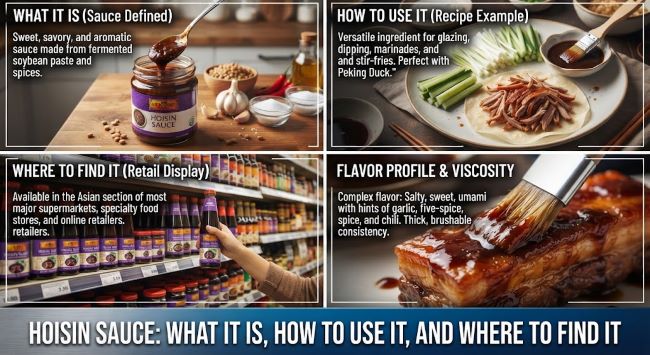
What Is Hoisin Sauce?
Hoisin sauce is a thick, dark reddish-brown Chinese condiment with a flavor profile that balances sweet, salty, and umami-rich notes with a subtle background spice. Despite the name’s similarity to “seafood” in Cantonese (the word “hoisin” derives from a term related to seafood), the sauce itself doesn’t typically contain any seafood ingredients — the name reflects a historical connection rather than the actual current ingredient composition.
Typical ingredients include fermented soybean paste as the base, combined with garlic, vinegar, sugar or another sweetener, five-spice powder or similar spice blends, and sometimes chili for subtle heat. The exact recipe varies somewhat between brands and homemade versions, but the core flavor profile of sweet-savory depth with a thick, glossy texture remains consistent across most preparations.
How Hoisin Sauce Is Used in Cooking
As a glaze for roasted or grilled meats. This is perhaps hoisin’s most iconic use, particularly for Peking duck, char siu (Chinese barbecue pork), and similar roasted meat preparations, where the sauce’s sugar content caramelizes beautifully under heat, creating a glossy, flavorful exterior coating.
As a stir-fry sauce component. Hoisin works well mixed into stir-fry sauces, often combined with soy sauce, rice vinegar, and a thickening agent, providing both sweetness and depth that balances the saltier, sharper notes of soy sauce alone.
As a dipping sauce. Served alongside spring rolls, Peking duck pancakes, and various dim sum items, sometimes used on its own and sometimes thinned slightly with water or mixed with other condiments.
As a marinade base. Hoisin’s combination of sugar, salt, and umami makes it an effective marinade ingredient for chicken, pork, or tofu, particularly when combined with other aromatics like ginger, garlic, and a splash of rice wine.
In fusion and non-traditional applications. Hoisin has found its way into a wide range of non-traditional uses in Western cooking specifically, including as a base for barbecue sauce variations, mixed into burger toppings, or used as a glaze for non-Chinese roasted vegetables and proteins, reflecting the sauce’s genuine versatility beyond its traditional culinary context.
How to Choose a Good Bottle of Hoisin Sauce
Check the ingredient list for quality indicators. Better hoisin sauces list actual fermented soybean paste prominently rather than relying primarily on modified starches and excessive sugar as filler ingredients. Reading the ingredient order (ingredients are listed by descending quantity) gives you a useful sense of what you’re actually buying.
Established Asian grocery brands generally outperform generic supermarket versions. Brands like Lee Kum Kee, Koon Chun, and similar established Chinese condiment manufacturers tend to produce more authentic, complex-flavored hoisin sauce compared to some generic Western supermarket house-brand versions, which can sometimes taste flatter or overly sweet by comparison.
Consider your specific use case. If you’re using hoisin primarily as a quick flavor addition to home cooking rather than for an authentic traditional preparation specifically, a widely available supermarket brand may serve your needs perfectly well, while more involved or traditional cooking projects may benefit from seeking out a more specifically authentic option from an Asian grocery store.
Storage and Shelf Life
Hoisin sauce, once opened, should be refrigerated and generally keeps well for several months to up to a year when properly stored, given its high sugar and salt content, both of which act as natural preservatives. Check the specific bottle’s guidance, since this can vary somewhat by brand and formulation, but hoisin is generally one of the more shelf-stable condiments in this broader category compared to some fresher sauce alternatives.
Substituting for Hoisin Sauce
If you don’t have hoisin sauce on hand, a reasonable homemade substitute can be made by combining soy sauce with a small amount of peanut butter or tahini (for body and richness), a touch of honey or brown sugar (for sweetness), a small amount of rice vinegar, and a pinch of five-spice powder or garlic powder if available. This substitute won’t be identical to genuine hoisin sauce but approximates the core sweet-salty-umami flavor profile reasonably well in a pinch.
Hoisin Sauce vs. Other Asian Sauces
It’s worth distinguishing hoisin from a few commonly confused or related sauces. Oyster sauce, despite sometimes having a visually similar dark, thick appearance, has a distinctly different flavor profile built around actual oyster extract rather than fermented soybean paste, producing a more savory, less sweet result. Soy sauce is much thinner, saltier, and lacks hoisin’s characteristic sweetness and thickness entirely. Plum sauce, sometimes confused with hoisin in Western Chinese restaurant contexts since both are served as dipping sauces, has a notably fruitier, tangier flavor profile distinct from hoisin’s deeper savory-sweet character.
For other distinctive condiments worth exploring from different culinary traditions, if you enjoy bold, flavorful sauces that anchor a dish the way hoisin does in Chinese cooking, best llajwa salsa near me covers a completely different but similarly essential condiment from Bolivian cuisine, worth exploring if you enjoy discovering how different food cultures build signature flavor profiles around a single defining sauce.
Key Takeaways
- Hoisin sauce is a thick, dark Chinese condiment with a sweet-salty-umami flavor profile, traditionally based on fermented soybean paste combined with garlic, vinegar, sugar, and spices
- Despite its name’s connection to a word related to seafood, hoisin sauce typically contains no actual seafood ingredients
- Common uses include glazing roasted meats like Peking duck and char siu, incorporating into stir-fry sauces, serving as a dipping sauce for spring rolls, and using as a marinade base
- Established Asian grocery brands like Lee Kum Kee and Koon Chun generally offer more authentic, complex flavor than generic supermarket house-brand versions
- Once opened, hoisin sauce keeps well refrigerated for several months to a year due to its high sugar and salt content acting as natural preservatives
- A reasonable substitute can be made from soy sauce, peanut butter, honey, rice vinegar, and five-spice or garlic powder if you don’t have hoisin on hand
- Hoisin differs meaningfully from oyster sauce (more savory, oyster-based), soy sauce (thinner, saltier, no sweetness), and plum sauce (fruitier and tangier), despite some visual or contextual similarity between these condiments