Acana Highest Protein Indoor Dry Cat Food: A Complete Review
Acana is a Canadian pet food brand owned by Champion Petfoods that has built a strong reputation among owners who prioritize high-protein, biologically appropriate diets for their cats. The Highest Protein Indoor formula is specifically designed for cats that live indoors, addressing the particular nutritional considerations that apply to cats with reduced activity levels and limited environmental stimulation. This guide covers what’s in the formula, how it performs nutritionally, who benefits most from it, and how it stacks up against alternatives.
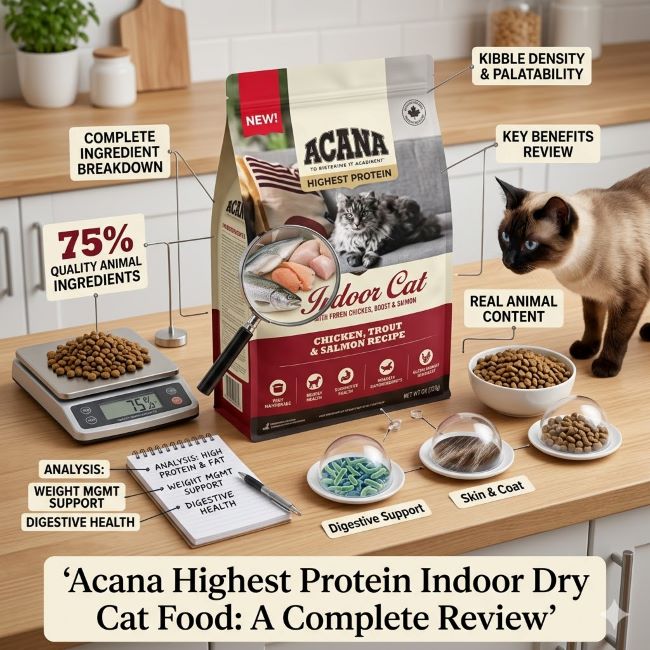
What Acana Highest Protein Indoor Cat Food Contains
Acana markets this formula around a high meat inclusion rate, and the ingredient list reflects that commitment.
Primary animal proteins (first several ingredients):
- Deboned chicken
- Deboned turkey
- Chicken liver
- Whole Atlantic mackerel
- Deboned turkey
- Whole sardine
- Whole egg
The multiple named animal protein sources in the first positions are a notable characteristic of Acana’s formulation approach. Unlike many mainstream cat foods where a grain or carbohydrate fills the first few positions, Acana’s Highest Protein Indoor formula leads heavily with animal ingredients.
WholePrey ingredient philosophy. Acana follows what they call a “WholePrey” approach: including not just muscle meat but also organ meats (liver, kidney, heart) and cartilage in proportions that approximate what a cat would consume eating a whole prey animal. This is intended to provide a more complete nutrient profile from animal sources rather than relying heavily on synthetic supplementation.
Carbohydrate content. The formula includes peas, lentils, and chickpeas as carbohydrate sources. These are grain-free options but are notable because in recent years the FDA has investigated a potential link between legume-heavy grain-free diets and dilated cardiomyopathy (DCM) in dogs. While the investigation has focused primarily on dogs and the evidence is less established for cats, it’s worth being aware of if you’re considering legume-heavy formulas.
Notable additional ingredients: freeze-dried chicken liver (palatability and nutrient density), chicken fat (energy and omega-6 fatty acids), whole pumpkin, whole butternut squash, dried chicory root (prebiotic fiber), and a full mineral and vitamin supplement panel.
Guaranteed Analysis
The Acana Highest Protein Indoor formula’s guaranteed analysis:
- Crude Protein: minimum 38%
- Crude Fat: minimum 18%
- Crude Fiber: maximum 5%
- Moisture: maximum 12%
The 38% protein content is genuinely high by dry cat food standards. For comparison, many mainstream cat foods fall in the 28-34% range. This protein level reflects the WholePrey ingredient philosophy and is appropriate for cats, which are obligate carnivores with higher protein requirements than dogs.
The 18% fat content is moderate. Combined with the protein level, this formula is calorie-dense.
“Indoor” Formula: What That Means
The Acana Highest Protein Indoor designation addresses specific concerns relevant to cats that don’t go outside:
Hairball management. Indoor cats groom more than outdoor cats (more idle time, less environmental activity) and swallow more fur. The indoor formula includes a higher fiber content (from pumpkin, butternut squash, and chicory root) to support hairball passage.
Weight management support. Indoor cats have lower caloric needs than outdoor cats because they’re less active. Despite the high protein and moderate fat content, Acana calibrates the indoor formula’s caloric density with this in mind. Protein is more satiating than carbohydrates, which helps with portion control.
Urinary health. Cats that eat dry food and don’t drink much water are at higher risk for urinary tract issues. While wet food is generally recommended for cats with urinary concerns, the indoor formula’s mineral balance is formulated with urinary health in mind.
Who Acana Highest Protein Indoor Is Best For
Indoor cats in generally good health whose owners want a high-protein, high-meat-inclusion diet without grains. If your cat is healthy, active (for an indoor cat), and has no specific dietary restrictions, this formula represents a premium option with strong animal protein sourcing.
Cats with a history of hairballs. The fiber blend and hairball management focus make this a reasonable choice for cats that frequently vomit hairballs or have owners looking to reduce that frequency.
Owners committed to biologically appropriate feeding. If your feeding philosophy prioritizes high meat inclusion, named animal protein sources, and limited plant-based ingredients, Acana’s formulation approach aligns with that.
Who Should Consider Alternatives
Overweight or obese indoor cats. Despite the indoor formula’s caloric consideration, the high protein and fat content means this food is energy-dense. Cats that need significant weight reduction may do better on a veterinary weight management formula or a wet food diet that provides volume with fewer calories.
Cats with kidney disease. High protein diets are generally not recommended for cats with diagnosed chronic kidney disease (CKD), where protein restriction is often part of the management protocol. A veterinary renal diet is appropriate for these cats.
Budget-sensitive owners. Acana is a premium-priced food. It runs significantly higher per pound than mid-range options. The quality is there but the cost may not be sustainable for every budget.
Cats with legume sensitivities. The pea and lentil content, while providing a grain-free carbohydrate base, may be a consideration for owners concerned about legume-heavy diets.
How Acana Compares to Other High-Protein Indoor Cat Foods
Compared to Orijen (also made by Champion Petfoods, Acana’s parent company), Acana Highest Protein Indoor has a similar WholePrey philosophy but lower overall meat inclusion than Orijen’s cat formulas, at a lower price point. Orijen is the more premium of the two brands.
Compared to Instinct Original Grain-Free, both are high-protein grain-free options. Instinct uses cage-free chicken or rabbit as its first ingredient across formulas and is similarly priced in the premium tier.
Compared to Blue Buffalo Wilderness Indoor, both target indoor cats with higher protein content than standard adult formulas. Blue Buffalo Wilderness runs slightly lower in protein (34-36%) and is more widely available at mass market retailers.
Compared to Royal Canin Indoor, Acana’s protein content is significantly higher. Royal Canin Indoor prioritizes specific hairball and weight management features over raw protein percentage and uses more plant-based protein contributions.
For broader context on nutritional formulations designed for specific dietary needs in pets, sensitive skin and stomach dog food covers the parallel considerations in the dog food space where high-quality ingredient sourcing and targeted formulation similarly command premium pricing.
Key Takeaways
- Acana Highest Protein Indoor dry cat food leads with multiple named animal proteins (chicken, turkey, liver, mackerel, sardine, egg) using a WholePrey philosophy that includes muscle meat, organs, and cartilage
- The 38% minimum protein content is genuinely high by dry cat food standards, reflecting the obligate carnivore protein requirements of cats
- The indoor-specific formulation addresses hairball management (pumpkin, chicory root fiber), caloric density appropriate for lower activity, and urinary health mineral balance
- It’s best suited for healthy indoor cats whose owners prioritize high meat inclusion and biologically appropriate feeding: not appropriate for cats with kidney disease or those needing significant caloric restriction
- The legume-based carbohydrate content (peas, lentils, chickpeas) is worth being aware of given ongoing research into grain-free legume-heavy diets, though the evidence for cats is less established than for dogs
- Acana sits below Orijen in the Champion Petfoods brand hierarchy and carries premium pricing significantly above mainstream options: the quality reflects the price but it’s not accessible to all budgets
- Transition to Acana gradually over 7-10 days to avoid digestive upset: the high protein and fat content represents a significant shift from most standard adult cat foods