Best Pinchos Morunos Near Me: Spain’s Spiced Pork Skewers Explained
Pinchos morunos are one of those dishes where the name tells you most of the story. Moorish skewers: pork marinated in the spice combination that the Moorish culinary tradition left behind in Andalusia when the Islamic occupation of Spain ended. The irony is that the original Moorish preparation would have used lamb, not pork. The Spanish version made the swap after the Reconquista and the result has been on Andalusian menus ever since. If you’ve been searching for the best pinchos morunos near me, here’s what you need to know.
What Pinchos Morunos Are
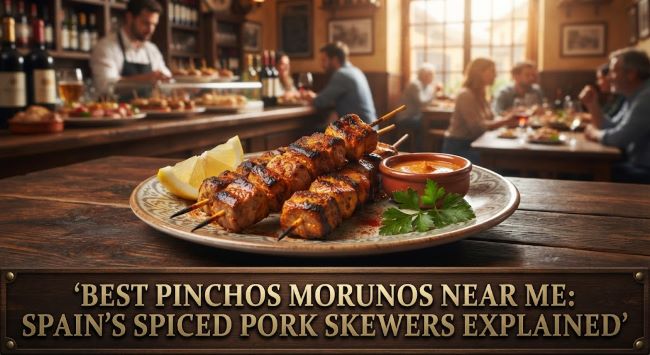
The dish is simple in structure: cubed pork (typically pork loin or shoulder) marinated in a spice paste and grilled on skewers. What makes it distinctive is the spice combination, which reads as unmistakably North African-Andalusian: cumin, coriander, paprika (sweet and smoked), turmeric, garlic, oregano, and sometimes a pinch of cinnamon or cayenne. The meat marinates for at least a few hours, ideally overnight, before hitting a hot grill or griddle.
The result is charred on the outside, juicy inside, and deeply flavored with warm spices that have a different character from the chili-forward spicing common in Latin American grilled meats. Pinchos morunos near me should smell of cumin and smoke from across the table.
In Spain they’re eaten as a tapa: two or three skewers served with bread to soak up the juices, a wedge of lemon, and sometimes a small salad alongside. They’re bar food in the best sense of the term: made to be eaten standing or at a small table, paired with a cold beer or a glass of dry sherry.
The Moorish Spice Tradition
The spice combination in pinchos morunos is a direct legacy of the centuries of Moorish presence in southern Spain. Cumin, coriander, and turmeric were central to the North African and Middle Eastern culinary tradition that the Moorish settlers brought with them. When they left, the spices stayed. They embedded themselves in Andalusian cooking so thoroughly that dishes like pinchos morunos, cazón en adobo, and various rice preparations still carry that flavor signature today.
This is part of what makes pinchos morunos different from other Spanish grilled meats. It’s not olive oil and herbs. It’s a spice paste with real complexity, built on a tradition that pre-dates most of what most people think of as “Spanish food.”
Where to Find Pinchos Morunos Near You
Spanish restaurants and tapas bars are the right starting point when looking for the best pinchos morunos near me. The dish is Andalusian in origin but has spread across Spain and appears on tapas menus nationally.
Search approaches:
- Google Maps filtered for “Spanish restaurant” or “tapas bar” in your area, then check menus for pinchos morunos specifically
- Yelp’s Spanish cuisine filter combined with “pinchos morunos” as a keyword search
- Spanish cultural centers and Instituto Cervantes branches in larger cities organize food events where traditional tapas appear
- In cities with significant Spanish communities (New York, Miami, Chicago, Tampa), dedicated Spanish restaurants often carry pinchos morunos as a standard tapa
Outside dedicated Spanish restaurants, pinchos morunos sometimes appear at Mediterranean restaurants with a Spanish or North African focus, reflecting the dish’s cross-cultural spice heritage. It’s worth checking broader Mediterranean spots if no Spanish restaurant is nearby.
What Makes a Proper Version
The marinade color. Pinchos morunos should have a deep reddish-orange exterior from the paprika and turmeric in the marinade. Pale, under-colored meat means either insufficient marinating time or a spice paste that was too diluted.
The char. Real grill marks and some blackened edges are correct. The spice paste caramelizes and chars slightly on the outside while the interior stays moist. Pale, steamed-looking pork means the grill wasn’t hot enough or the meat was cooked in a pan with too much moisture.
The cumin presence. Cumin should be the most prominent spice flavor. If the skewer tastes mainly of paprika or garlic without the warm earthiness of cumin, the balance is off.
The pork. Tender and juicy inside. Pork loin is leaner and can dry out if overcooked. Shoulder is more forgiving and stays moist. Either works, but the meat should never be dry or chewy. If you have to work to chew through it, it was either the wrong cut or overcooked.
The lemon. A wedge of lemon on the side is standard. Squeeze it over the skewers just before eating. The acid brightens the spices and cuts through the fat of the pork. A plate that arrives without lemon is missing the finishing element.
The bread. Always served with bread in a proper Spanish presentation. The juices from the skewers are meant to be mopped up.
Pinchos vs. Pintxos
The words pinchos and pintxos both derive from the Spanish verb “pinchar” (to pierce or skewer) but refer to different things. Pinchos morunos are grilled meat skewers from Andalusia. Pintxos are the small snacks on bread common in the Basque Country of northern Spain. They share a root word but are entirely different preparations. A tapas menu listing “pintxos” is typically referring to the Basque bread-based snacks, not to grilled meat skewers.
Pairing Pinchos Morunos
The traditional Spanish drink alongside pinchos morunos is a cold beer (cerveza) or a manzanilla sherry. Manzanilla’s dry, saline character works particularly well with the cumin-spiced pork. A dry Andalusian white wine is another natural match.
For a full tapas spread, pinchos morunos pair well with other Spanish preparations. Coca de recapte is a Catalan flatbread that often appears at the same kind of Spanish restaurant serving pinchos morunos and provides a good vegetable-forward contrast to the meat skewers.
Making Pinchos Morunos at Home
If finding pinchos morunos near me proves difficult, this is one of the more achievable Spanish dishes to replicate at home. Pork loin or shoulder, cubed to about 3cm, goes into a marinade of cumin, coriander, smoked paprika, sweet paprika, turmeric, garlic paste, dried oregano, olive oil, and a small amount of salt. Let it sit overnight in the fridge.
The critical step is cooking over very high heat. A cast iron griddle or a very hot outdoor grill will produce the char that the dish requires. Press the skewers flat against the cooking surface and resist moving them too early: let the crust develop before turning. The whole cooking time is about eight minutes total.
Squeeze lemon over everything as soon as the skewers come off the heat. Serve immediately with crusty bread. The marinade takes five minutes to put together the night before, which is the most time-intensive part of the preparation.
Key Takeaways
- Pinchos morunos are Andalusian grilled pork skewers marinated in a Moorish-heritage spice paste of cumin, coriander, paprika, turmeric, garlic, and oregano, served as a tapa with bread and lemon
- The dish’s spice combination traces directly to the North African culinary tradition left behind in southern Spain after the Moorish occupation
- The best pinchos morunos near me will come from Spanish restaurants and tapas bars, with cities that have established Spanish communities offering the most options
- Quality markers include deep reddish-orange exterior color from paprika and turmeric, visible char from a hot grill, prominent cumin flavor, juicy pork interior, and lemon wedge on the side
- The correct pairing is cold beer, manzanilla sherry, or dry Andalusian white wine
- Pinchos morunos (grilled skewers) are different from Basque pintxos (bread-based snacks): the words share an origin but refer to completely different preparations
- Traditionally eaten as bar food: standing, with cold drinks, with bread to mop up the juices