Best Buñuelos Colombianos Near Me: Finding Colombia’s Fried Cheese Puffs
The word buñuelo covers a lot of ground across Latin America. In Mexico it’s a thin fried dough dusted with sugar. In Spain it’s a fritter. In Colombia it’s a fried cheese puff: a round ball of cooked corn masa and fresh cheese that puffs up in the hot oil and comes out golden, crispy on the outside, and slightly hollow and chewy inside. They’re one of the most beloved snacks in Colombian food culture, strongly associated with Christmas but eaten year-round at bakeries and markets. If you’ve been looking for the best buñuelos colombianos near me, here’s what they are and how to find the real thing.
What Buñuelos Colombianos Are
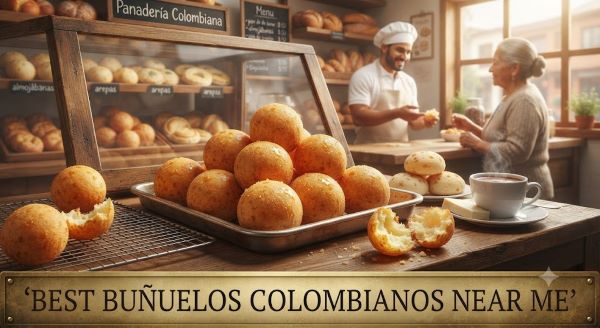
Colombian buñuelos are made from a dough that combines costeño cheese (a salty, crumbly Colombian fresh cheese) or another fresh white cheese, masarepa or corn starch, eggs, a small amount of sugar, and sometimes a touch of baking powder. The dough is shaped into balls and dropped into hot oil. As they fry, they puff up and develop a thin, crispy shell while the inside becomes hollow and slightly chewy.
The result is not what most people expect when they hear “fried cheese ball.” They’re not dense or heavy. They’re not gooey in the center like a mozzarella stick. Buñuelos colombianos are light, almost airy, with a delicate crunch on the outside and a soft, slightly elastic interior that has a faint saltiness from the cheese. The contrast between the crispy exterior and the chewy inside is the defining texture experience.
They’re eaten hot, almost always right out of the oil. Buñuelos colombianos near me that have been sitting for more than twenty minutes lose their crunch and the interior goes flat and dense. Freshness is everything.
In Colombia, buñuelos are sold at panaderías (bakeries), at street stalls, and at home during the holiday season. The Christmas connection is strong: along with natilla (a Colombian cornstarch pudding), buñuelos are one of the two foods most associated with Colombian Christmas traditions.
Where to Find Buñuelos Colombianos Near You
Colombian bakeries are the most reliable source for the best buñuelos colombianos near me. A panadería with Colombian ownership will almost certainly make them, particularly in the morning and around the holiday season.
Places to search:
Colombian panaderías. The first stop. Call ahead and ask what time they make buñuelos: they’re often made in batches in the morning and again in the afternoon, and timing your visit around fresh production makes a significant difference.
Colombian restaurants with a breakfast or snack menu. Some Colombian restaurants offer buñuelos as a starter, snack, or accompaniment to breakfast. They sometimes appear alongside changua (Colombian milk soup) or arepa boyacense in a traditional morning spread.
Latin American bakeries with Colombian bakers. Even bakeries that don’t identify specifically as Colombian sometimes make them if there’s a Colombian baker on staff.
Colombian community events and markets. Buñuelos are one of the most common items at Colombian cultural events. Home cooks fry them fresh on-site and sell them hot in small bags or by the piece.
Holiday pop-ups and seasonal events. Around Christmas, Colombian buñuelos appear at pop-ups, markets, and community fundraisers where otherwise they might be absent. If you’re searching in December, your options expand significantly.
Cities with strong Colombian communities and therefore better odds of finding buñuelos colombianos near me: Miami (Doral, Brickell), New York (Jackson Heights in Queens), New Jersey (Paterson, Elizabeth), Chicago, and Houston.
What a Proper Buñuelo Colombiano Looks Like
The shape. Perfectly round or nearly so. Buñuelos that come out lumpy or misshapen were either rolled unevenly or the oil temperature was wrong. Even shape means even cooking.
The color. Deep golden, not pale. Pale buñuelos were fried at too low a temperature and will be greasy and soft. Dark brown ones were overfried. Golden means the temperature was right: hot enough to crisp the exterior quickly before the inside can absorb excess oil.
The puff. A proper buñuelo colombiano puffs up in the oil to at least double its original size. This puffing creates the hollow interior. If the buñuelo is dense and solid throughout, either the formula was off or the oil wasn’t hot enough.
The exterior texture. Crispy when hot, with a thin shell that gives with slight pressure. You should hear a faint crunch when you bite into it.
The interior. Slightly hollow, with a thin layer of cooked dough around the hollow center. The dough itself should be slightly chewy and have a mild, faintly salty cheese flavor throughout. No strong cheese flavor, just a background note.
The temperature. Hot. Buñuelos colombianos near me are only worth eating when they come directly from the oil. Ask for them fresh if the bakery makes them in batches.
The Cheese Question
Costeño cheese is the traditional choice in Colombian buñuelos. It’s a semi-hard, salty fresh cheese from Colombia’s coastal region that holds its structure in the dough without melting out during frying. Outside Colombia, it’s not always easy to find.
Substitutes used by Colombian bakers in diaspora communities include queso blanco, queso fresco, or a combination of mozzarella and queso fresco. The mozzarella adds elasticity while the queso fresco provides salt and the right crumbly texture. Neither substitute is identical to costeño but both produce acceptable results.
The cheese in a buñuelo colombiano should never taste strong or pungent. If the fried ball has an aggressive cheese flavor, the wrong variety was used or too much was added.
The Christmas Connection
In Colombia, buñuelos and natilla go together the way gingerbread and eggnog go together in North American Christmas culture. They’re made at home on Christmas Eve, eaten late at night, and shared between family members after the novena (the nine nights of Christmas prayer that lead up to December 24th).
The association is so strong that Colombian buñuelos colombianos near me are easier to find in December than at any other time of year, even in cities with small Colombian communities. If you’re trying them for the first time in December, you’re likely to find them at their freshest and most traditional.
For other Colombian baked goods worth exploring at the same panadería, roscón colombiano is a sweet ring bread that often appears in the same display case and rounds out a traditional Colombian bakery visit.
Key Takeaways
- Buñuelos colombianos are round fried cheese puffs made from a dough of fresh white cheese, corn starch or masarepa, and eggs: they puff up in hot oil to form a thin crispy shell around a hollow, slightly chewy interior
- The Colombian version is distinct from Mexican, Spanish, or other Latin American buñuelos: it’s not a flat fried dough or a sweet fritter but a round, hollow, cheese-flavored puff
- The best buñuelos colombianos near me will come from Colombian panaderías, Colombian community events, and occasionally Colombian restaurants with a snack or breakfast menu
- Quality markers include deep golden color, round shape, hollow puffed interior, thin crispy shell, and mild salty cheese flavor: pale, dense, or strongly cheesy buñuelos indicate problems with temperature or formula
- Freshness is critical: eat them within minutes of frying; twenty-minute-old buñuelos lose their crunch and go flat
- The Christmas association makes December the easiest time to find them: look for seasonal pop-ups and community events in addition to bakeries
- Costeño cheese is traditional but queso fresco combined with mozzarella is the common diaspora substitute