
My Dog Has a Rash on His Belly and Inner Thighs: Causes, Care, and When to See a Vet
Noticing that your dog has a rash on his belly and inner thighs can be alarming, especially if it appeared quickly or your dog is scratching and licking at the area constantly. Most skin rashes in dogs have identifiable causes and respond well to treatment once you know what you are dealing with. The challenge is that a rash in this area can stem from several different things, from contact irritants to food allergies to infections, and the right approach depends on the cause.
This guide walks through the most common reasons a dog develops a rash on his belly and inner thighs, what symptoms to watch for, what you can do at home, and when a vet visit is the right call.
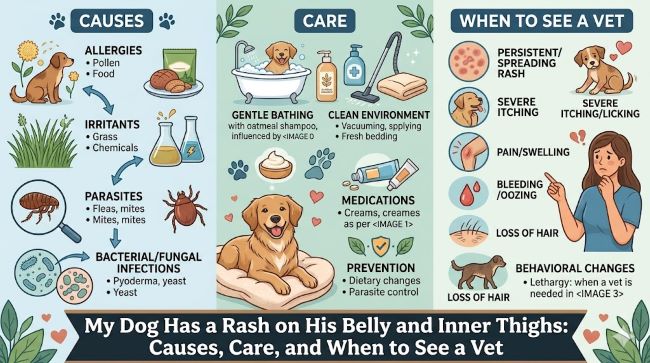
Why the Belly and Inner Thighs?
The belly and inner thigh area is one of the most common places for rashes to appear on dogs, and the anatomy explains a lot. These areas have thin, sparsely haired skin that is in frequent contact with the ground, grass, and other surfaces. That combination of delicate skin and regular environmental exposure makes them a hotspot for irritation and reaction.
Dogs who lie in grass, walk through weeds, or roll on treated lawns are putting their bellies in direct contact with whatever is on the surface. The inner thighs rub together as the dog moves, which means any existing irritation can worsen with activity. The area also stays warmer and sometimes moister than other parts of the body, which creates favorable conditions for bacterial and yeast growth if the skin barrier is already compromised.
Common Causes of a Rash on the Belly and Inner Thighs
Contact dermatitis is one of the most frequent reasons a dog has a rash on his belly and inner thighs. This is a reaction to something the dog’s skin has touched directly, which could be grass, pollen, fertilizers, pesticides, cleaning products on floors, mulch, or even a new laundry detergent used on bedding. Contact dermatitis typically causes redness, small bumps, and itching in the areas that touched the irritant.
Environmental allergies, also called atopic dermatitis, work similarly but involve an immune response to airborne or environmental substances like pollen, mold, dust mites, or grass proteins rather than direct contact. Dogs with atopic dermatitis often develop rashes in the belly, inner thighs, armpits, and paws because those areas have more exposed skin. Seasonal flare-ups during spring and fall are common.
Food allergies or sensitivities are another significant cause of skin rashes in dogs, including in the belly and inner thigh area. When a dog’s immune system reacts to an ingredient in their food, the response often shows up on the skin as redness, itching, and rash. Common food triggers include chicken, beef, dairy, wheat, and corn. Unlike environmental allergies, food-related skin reactions tend to be year-round rather than seasonal. Switching to a food designed for sensitive skin can make a real difference. Formulas like Purina Pro Plan Sensitive Skin and Stomach are specifically developed to reduce dietary triggers and support skin health in dogs prone to these reactions.
Bacterial infections, particularly hot spots or pyoderma, can develop in the belly and inner thigh area, often as a secondary issue when a dog has been scratching or licking at already irritated skin. The warm, moist skin in this region is particularly prone to bacterial overgrowth. Pyoderma typically presents as red, inflamed skin with small pus-filled bumps, crusting, or oozing, and it usually requires antibiotic treatment to clear fully.
Yeast infections are another common secondary issue. Malassezia yeast lives naturally on dog skin but can overgrow when the skin barrier is disrupted or the environment becomes too warm and moist. Yeast rashes often have a distinctive smell and may cause the skin to appear thickened or discolored. The belly and inner thighs, along with the armpits and between the toes, are typical sites.
Mange, caused by microscopic mites, can also cause rashes in the belly and inner thigh area. Sarcoptic mange in particular causes intense itching and a red, crusty rash, often starting on the belly, elbows, and ear margins. Demodex mange is less itchy but causes patchy hair loss and skin irritation. Both require veterinary diagnosis and specific treatment.
Flea allergy dermatitis causes intense itching and a characteristic rash, typically at the base of the tail and hindquarters but sometimes extending to the belly and inner thighs. Even a single flea bite can trigger a significant reaction in an allergic dog. If your dog has fleas or lives in a flea-prone environment, this should be near the top of the list.
What to Look For
When your dog has a rash on his belly and inner thighs, taking a close look at the specific characteristics helps narrow down the cause and gives your vet useful information.
Note the color. Redness alone suggests irritation or early-stage contact reaction. Redness with small raised bumps or pustules points toward a bacterial infection. Darkening or thickening of the skin suggests chronic irritation, often from allergies.
Check whether the skin is dry or moist. Dry, flaky rashes are more consistent with allergic reactions. Moist, oozing, or crusting areas suggest infection. Note whether there is hair loss in the affected area and how much your dog is scratching, licking, or rubbing at the rash, since intensity of itching helps distinguish between causes.
Track when the rash appeared and whether anything in the environment changed around the same time, including new cleaning products, lawn treatments, a change in food, a new walk route, or a change in season.
Home Care Steps
For mild rashes without signs of infection, a few home care steps can provide relief while you monitor the situation.
Rinsing the belly and inner thigh area with cool water after walks removes contact irritants from the skin. A gentle oatmeal bath can soothe irritation and reduce itching. Dog-specific oatmeal shampoos are safe for this area and available at most pet stores. Avoid human shampoos, which can disrupt the skin’s pH balance.
Preventing your dog from licking or scratching the rash is important, since licking introduces bacteria and delays healing. An Elizabethan collar or a recovery suit that covers the belly protects the area while it heals.
If you suspect food-related skin reactions, a dietary change may be worth discussing with your vet. Any transition to a new food should happen gradually over seven to ten days to avoid digestive upset.
When to See a Vet
Home care is appropriate for mild, recent rashes with no signs of infection. But if your dog has a rash on his belly and inner thighs that is spreading, worsening, or has not improved within a few days, a vet visit is the right call.
See a vet if there are pustules, crusting, oozing, or a strong smell, which indicates bacterial or yeast infection requiring prescription treatment. See a vet if there is hair loss in the rash area or if your dog seems unwell beyond the skin symptoms.
Mange requires a vet diagnosis through a skin scraping and cannot be treated without knowing which type is present. Bacterial infections need antibiotics. Yeast infections require antifungal treatment. Dogs with recurrent rashes in the belly and inner thigh area often have an underlying allergy requiring long-term management. Working with your vet to identify and address the root cause is the most effective path to lasting relief.
Key Takeaways
- The belly and inner thighs are common sites for rashes in dogs because the skin is thin, sparsely haired, and in frequent contact with environmental irritants.
- Common causes include contact dermatitis, environmental allergies, food allergies or sensitivities, bacterial infections, yeast infections, mange, and flea allergy dermatitis.
- Pay attention to whether the rash is red and dry, red with pustules, moist and oozing, or accompanied by hair loss, since these characteristics help identify the cause.
- Food-related rashes tend to be year-round, while environmental allergy rashes often worsen seasonally, which can help distinguish between the two.
- Mild rashes can be managed at home with cool water rinses, oatmeal baths, and preventing licking or scratching, but monitor closely for signs of worsening.
- See a vet promptly if the rash is spreading, infected-looking, accompanied by hair loss, or not improving within a few days of home care.
- Bacterial and yeast infections require prescription treatment and will not resolve with home care alone.
- Mange requires a vet diagnosis through a skin scraping before treatment can begin.
- If food sensitivity is suspected, switching to a limited-ingredient or sensitive skin formula gradually, with your vet’s guidance, may reduce skin reactions over time.
- Recurrent rashes in this area often signal an underlying allergy that benefits from long-term management rather than treating each flare-up in isolation.
This article is for general informational purposes only and does not replace veterinary advice. If your dog has a rash that is spreading, infected, or causing significant distress, contact your vet promptly.