Oil of Oregano with Black Seed Oil: Benefits, Uses, and What to Know
Walk through the supplement aisle or scroll through a wellness forum, and you will likely come across the pairing of oil of oregano with black seed oil. Both ingredients have long histories in traditional remedies on their own, and more recently they have been showing up together in a single bottle, marketed as a combined approach to everyday wellness. If you are curious about what this pairing actually is, why people use it, and what to watch for before adding it to your routine, this guide covers the essentials.
This is general information rather than medical advice. If you are considering oil of oregano with black seed oil for a specific health concern, speaking with a doctor or pharmacist first is the best way to make sure it is appropriate for your situation.
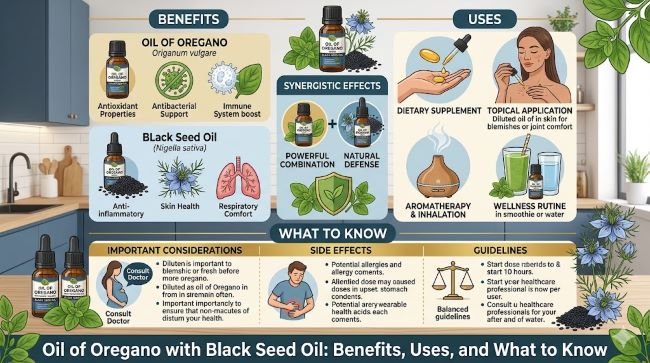
What Is Oil of Oregano?
Oil of oregano is extracted from the leaves and flowers of the oregano plant, most commonly Origanum vulgare, a Mediterranean herb. It is different from the dried oregano you sprinkle on pasta. The oil is far more concentrated and contains compounds like carvacrol and thymol, which are the components most often credited with the oil’s reputation. When people search for oil of oregano with black seed oil, they are usually looking at products that combine this concentrated oregano extract with black seed oil in one formula.
Traditionally, oil of oregano has been associated with supporting the body’s natural defenses and digestive comfort. People often reach for it during seasonal changes, when they want extra support for their immune system, or when dealing with general digestive discomfort. Because the oil is so concentrated, it is usually diluted, either in a carrier oil for topical use or in a capsule or tincture for oral use, rather than used in its pure form.
What Is Black Seed Oil?
Black seed oil comes from the seeds of Nigella sativa, a flowering plant native to parts of Asia and the Middle East. Sometimes called black cumin oil, it has been used in traditional practices for thousands of years and is often referred to with names that translate roughly to “blessed seed,” reflecting how highly it has historically been regarded.
The key compound most associated with black seed oil is thymoquinone, studied for its antioxidant properties. Traditionally, black seed oil has been used to support digestion, calm occasional inflammation, and contribute to overall skin health. Like oregano oil, it is potent, so it is typically used in measured amounts rather than poured freely.
Why Are These Two Oils Often Combined?
The logic behind pairing oil of oregano with black seed oil comes down to complementary traditional uses. Oregano oil is generally associated with antimicrobial and antioxidant support, while black seed oil leans toward anti-inflammatory and digestive support. Combined, the idea is a broader range of supportive compounds in a single product rather than two separate bottles.
This combination has become popular as more people move toward a “natural wellness” approach, looking for traditional remedies used for generations rather than newer synthetic options. Manufacturers position the blend as a multi-purpose addition to a daily routine, covering several wellness goals at once.
Potential Benefits of the Combination
It is worth being clear upfront that most of what is said about this combination comes from traditional use and early research on the individual ingredients, rather than large clinical studies on the combined product itself. With that said, here are the areas most commonly associated with oil of oregano and black seed oil together.
Immune support. Both oils have traditionally been used during cold and flu season. Oil of oregano’s reputation for antimicrobial activity and black seed oil’s antioxidant properties are often cited together as a reason people reach for this combination when they feel run down or want extra support during seasonal transitions.
Digestive comfort. Black seed oil has traditionally been used to soothe the digestive tract, while oil of oregano has a long history of use for general digestive discomfort. Together, they are often marketed toward people dealing with occasional bloating, gas, or general stomach unease.
Antioxidant support. Free radicals are a normal part of everyday life, and antioxidants are compounds that help the body manage them. Both oregano and black seed contain compounds studied for their antioxidant activity, which is part of why this combination is often framed as supporting overall cellular health.
Respiratory comfort. Oil of oregano in particular has a long tradition of use for supporting easier breathing during seasonal changes, and some users pair it with black seed oil for what they describe as a more rounded approach to respiratory wellness.
Skin health. Both oils show up in topical formulations as well as oral supplements. Black seed oil in particular has a long history in skincare, often included in oils and balms aimed at calming the skin and supporting its natural barrier. Anyone building out a broader skincare routine alongside a supplement like this might also be comparing options like the Nivea vs. Garnier debate for everyday moisturizing, since a wellness oil is rarely meant to replace a full skincare routine but can complement one.
How People Typically Use This Combination
Oil of oregano with black seed oil is most commonly sold as softgel capsules, which sidestep the strong taste and potency of the oils in their raw form. Capsules also make dosing more consistent, since you are not measuring drops.
Liquid tinctures are another common format for this pairing. These are usually taken by diluting a small number of drops in water or juice, since both oils are intense and can irritate the mouth or throat if taken undiluted. Some people prefer this format because it allows for more flexible dosing, though it does mean tasting the product directly.
Topical use is less common for the combination specifically, but both oils individually appear in skin-focused products. If using a topical oil blend, check the label for concentration and carrier oils used, since oregano oil in particular can irritate skin at higher concentrations.
Whatever format you choose, following the label’s suggested serving size matters more here than with milder supplements, given how concentrated both ingredients are on their own.
What to Look for When Choosing a Product
Not all oil of oregano and black seed oil products are made the same way, and a few details can help you choose more carefully. First, check where the oils are sourced from and how they are extracted. Cold-pressed black seed oil and oregano oil extracted from the actual plant, rather than synthetic carvacrol, are generally considered closer to traditional formulations. Reading the label closely is especially useful when shopping for oil of oregano with black seed oil, since formulations and ratios between the two oils vary widely between brands.
Second, look at the concentration of active compounds if it is listed, particularly the carvacrol content for oregano oil. Products vary significantly in strength, and a higher concentration is not automatically better, since it also means a stronger effect and a higher chance of irritation if you are sensitive.
Third, consider the carrier oil used in capsules or tinctures, since both oregano and black seed oil are usually diluted before being put into a usable product. Common carriers include olive oil or other plant oils, and if you have allergies to any carrier ingredients, it is worth checking the full label.
Finally, third-party testing is a meaningful signal of quality for any supplement. Products that have been tested by an independent lab for purity and potency give you more confidence that what is on the label matches what is in the bottle.
Safety Considerations and Who Should Be Cautious
Because both oil of oregano and black seed oil are potent, a few safety points are worth keeping in mind.
Pregnant or breastfeeding individuals should speak with a healthcare provider before using either oil, since concentrated herbal oils are generally approached with extra caution during pregnancy. The same goes for anyone taking prescription medications, particularly blood thinners or medications affecting blood sugar, since some traditional uses of these oils overlap with effects that could interact with certain drugs.
People with known allergies to plants in the mint family, which includes oregano, should be cautious with oil of oregano specifically, since cross-reactivity is possible. Similarly, anyone with a known sensitivity to Nigella sativa should avoid black seed oil.
Starting with a lower amount than the label suggests is a reasonable approach for anyone trying this combination for the first time, since it lets you see how your body responds before working up to a full serving. If you experience digestive discomfort, a skin reaction, or any unexpected symptoms, stopping use and consulting a healthcare provider is the sensible next step.
It is also worth noting that supplements like this are not regulated in the same way as medications, so claims on packaging can vary in how well they are supported by research. Treating this combination as a complement to a generally healthy routine, rather than a replacement for medical care, is the most balanced way to approach it.
A Note on Topical and Cosmetic Pairings
Some people who use oil of oregano with black seed oil internally also build out a broader self-care routine that includes skincare and body care products. If coverage for skin concerns is part of that routine, items like the Westmore Beauty body coverage perfector are worth knowing about as a separate category from wellness oils, since cosmetic coverage products and internal wellness supplements serve very different purposes even when someone is using both as part of the same overall self-care approach.
Key Takeaways
- Oil of oregano with black seed oil combines two traditionally used plant oils, each with a long history in natural remedies on their own.
- Oil of oregano contains carvacrol and thymol and is traditionally associated with immune and digestive support, while black seed oil contains thymoquinone and is associated with antioxidant and anti-inflammatory traditional uses.
- The combination is commonly marketed for immune support, digestive comfort, antioxidant support, respiratory comfort, and skin health, though most evidence comes from traditional use and research on the individual ingredients.
- Capsules and diluted tinctures are the most common formats, since both oils are too potent to use undiluted.
- When choosing a product, look at sourcing, extraction method, active compound concentration, carrier oils, and third-party testing.
- Pregnant or breastfeeding individuals, anyone on prescription medication, and people with mint or Nigella sativa allergies should speak with a healthcare provider before use.
- Starting with a smaller amount than the label suggests can help you gauge your body’s response before taking a full serving.
- This combination is best treated as a complement to a healthy routine rather than a substitute for medical advice, and any unexpected reaction should prompt you to stop use and consult a professional.
- Topical and cosmetic products serve a different purpose from internal wellness oils, so it helps to think of skincare, body coverage products, and supplements as separate parts of a broader self-care routine.