Starbucks Bear Cup: The Viral Bearista That Broke the Internet
Few pieces of drinkware have caused as much chaos as the Starbucks bear cup. When it first dropped, customers lined up, sold out stores in minutes, and the cups immediately reappeared on resale sites for absurd prices. If you have seen videos of people fighting over a teddy-bear-shaped glass at a coffee shop, that was this. The Starbucks bear cup, officially called the Bearista Cup, became one of the most talked-about collectibles of the holiday season and has kept that momentum going ever since.
This guide covers the full story: what the Starbucks teddy bear cup actually is, why it went viral, what it costs, how the resale market exploded, and how people are trying to get their hands on one.
What Is the Starbucks Bear Cup?
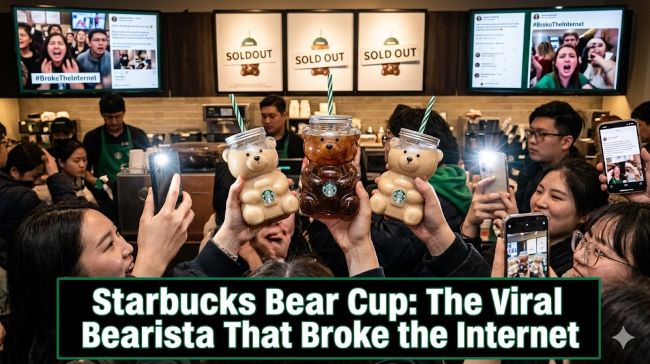
The Starbucks bear cup is a glass cold cup shaped like a teddy bear, officially named the Bearista Cup. Instead of a standard tumbler, the cup takes the form of a seated bear, with the body holding the drink and a removable bear-shaped cap on top. It is both functional drinkware and a collectible novelty item, which is a big part of its appeal.
The first version launched in November 2025 as part of the Starbucks holiday merchandise collection, priced at $29.95. As a glass cold cup, it fit into the broader Starbucks drinkware lineup, but its distinctive bear shape set it apart from anything else on the shelves and turned it into an instant must-have item for collectors and fans. It is far from the only Starbucks product to go viral lately, joining seasonal sensations like the summer berry lemonade refresher in becoming a social media phenomenon.
People refer to it by several names. Some call it the Starbucks teddy bear cup, others say bear cup Starbucks or teddy bear Starbucks cup, and many specifically search for the Starbucks glass bear cup to distinguish it from other novelty drinkware. Whatever you call it, it is the same viral Bearista that took over social media.
Why the Starbucks Bear Cup Went Viral
Plenty of Starbucks merchandise sells well, but the bear cup Starbucks fans wanted reached a different level entirely. A few factors combined to create the frenzy.
The design hit a sweet spot. A teddy-bear-shaped glass is genuinely cute and photogenic, which made it perfect for social media. People wanted it not just to use but to show off, and that visual appeal drove enormous online attention.
Limited supply met huge demand. The cup was a limited-edition holiday item, and when demand massively outstripped supply, the scarcity itself fueled the frenzy. The harder it was to get, the more people wanted one.
It sold out almost instantly. Stores were cleaned out fast, often before many customers even knew the cup had launched. Reports described the Starbucks teddy bear cup selling out in minutes at many locations, which only intensified the demand.
Social media amplified everything. As videos spread of the cups selling out and even of disputes between customers trying to grab one, the teddy bear Starbucks cup became a story in itself, drawing in people who had not even known it existed.
The result was the kind of viral product moment that brands cannot reliably plan for. The teddy bear Starbucks cup went from a holiday merchandise item to a cultural talking point within days of its release. Moments like this also reinforce the company’s wider reputation, the kind of brand strength that makes Starbucks a frequent case study in employer branding and marketing alike.
The Resale Market Explosion
One of the most striking parts of the Starbucks glass bear cup story is what happened on resale sites after it sold out.
With a retail price of about $30 and almost none left in stores, the bear cup Starbucks fans wanted immediately flooded onto eBay and other resale platforms at dramatically marked-up prices. Genuine cups commonly resold in the range of $150 to $200, many times their original cost. During the peak of the frenzy, some listings climbed even higher, with reports of cups listed for several hundred dollars and beyond, and a handful of extreme listings asking absurd amounts that reflected the hype more than any realistic sale price.
This resale explosion had a few side effects. Knockoff versions started appearing, as counterfeiters tried to cash in on the demand, which eventually put some downward pressure on resale prices for genuine cups as the market got flooded with imitations. It also created a buyer-beware situation, with some resale buyers reporting issues with sellers who never shipped or advertised items they did not actually have.
The whole episode became a case study in how a relatively inexpensive piece of branded drinkware can turn into a speculative resale item almost overnight when scarcity and viral demand collide.
How Much Does the Starbucks Bear Cup Cost?
The pricing question has two very different answers depending on whether you are buying from Starbucks or from a reseller.
At retail, the original Starbucks glass bear cup launched at $29.95, a normal price for a Starbucks glass cold cup of that style. That is what it costs when bought directly from Starbucks while supplies last.
On the resale market, the price is a different world entirely. Because the cups sold out so fast, getting one second-hand has meant paying well above retail, frequently $150 to $200 for a genuine cup, and sometimes much more during peak demand. The gap between the retail price and the resale price is exactly what made the Starbucks teddy bear cup such a talked-about flip among resellers.
The takeaway is that the Starbucks glass bear cup is affordable at retail but expensive on resale, which is why so much of the effort around it focuses on getting one directly from Starbucks rather than paying the inflated secondary-market price.
How Starbucks Responded to the Demand
Starbucks did not just let the original frenzy fade. The company took several steps in response to the overwhelming demand for the bear cup.
A holiday giveaway. In December, Starbucks gave away thousands of Bearista Cups, distributing many through its holiday rewards activities, which gave more customers a chance to get one without paying resale prices.
App-based restocks. Rather than repeating the in-store chaos of the launch, Starbucks moved some availability to app-based and online channels. Making the cup available through the app helped reduce the physical store stampedes that marked the original release, since people were not crowding into locations to grab limited stock.
Integration into rewards games. The viral glass Bearista cold cup was folded into Starbucks Rewards promotions, including the holiday Starbucks for Life game, where it appeared as a prize. This tied the cup to customer loyalty activities and gave members another route to winning one.
These moves reflected a brand trying to satisfy demand and reward loyal customers while avoiding a repeat of the disorder that accompanied the first release.
The Bear Cup Returns: New Designs
The story did not end with the original holiday cup. The bear cup Starbucks released proved popular enough to come back with new designs.
A notable return came in the form of a soccer-themed Bearista Cup, designed around the excitement of the global game and the World Cup. This new version featured a sports-themed cap on the familiar bear-shaped glass, refreshing the look while keeping the core design that made the original so popular. It was priced similarly to the original at $29.95.
Availability for the newer release followed a specific pattern. The soccer-themed cup was sold at participating coffeehouses in regions including Canada, Latin America, and the Asia Pacific region, while in the United States it was offered as an online item, with access tied to certain Starbucks Rewards membership tiers rather than broad in-store availability. As with the original, resale activity followed quickly, with the new design appearing on resale sites at marked-up prices soon after launch.
The return with fresh designs signals that the Bearista has become a recurring concept for Starbucks rather than a one-time novelty, with the bear shape serving as a canvas for different themed versions.
How to Get a Starbucks Bear Cup
Given how fast these sell out, actually getting a Starbucks teddy bear cup takes some strategy. A few approaches give you the best shot.
Watch for official announcements. Starbucks typically announces drops and restocks through its app and social media. Following these channels closely means you find out the moment a new release or restock is coming rather than after it sells out.
Use the Starbucks app. Since Starbucks moved some availability to app-based channels specifically to manage demand, having the app ready and being prepared to act quickly when a drop goes live improves your odds.
Be a Rewards member. Some releases and prize opportunities have been tied to Starbucks Rewards membership, sometimes specific tiers, so being a member can provide access that non-members do not have.
Act fast. When a drop happens, these cups go quickly. Being ready to purchase immediately, with your account and payment set up in advance, can make the difference between getting one and missing out.
Consider resale carefully. If you are willing to pay well above retail, the resale market is always an option, but it comes with risks. Buying from reputable sellers, watching for counterfeit listings, and being cautious about sellers with no track record all help avoid the problems some resale buyers have run into.
Is the Starbucks Bear Cup Worth It?
Whether the Starbucks glass bear cup is worth it depends entirely on what you want from it.
At its retail price of around $30, the cup is a reasonably priced, genuinely cute piece of collectible drinkware, and for fans of Starbucks merchandise or anyone who loves the design, it is easy to see the appeal at that price. The novelty bear shape, the collectible nature, and the social media popularity all add to its charm.
At resale prices of $150 or more, the value proposition is much more subjective. You are no longer paying for a cup so much as for the scarcity and hype surrounding it. For dedicated collectors or those determined to own a viral cultural item, that premium may feel worth it. For most people who simply like the design, waiting for an official restock, giveaway, or new release at retail price makes far more sense than paying many times the original cost.
The bottom line is that the Starbucks bear cup is a fun, well-designed collectible that is very much worth it at retail, while the resale market is a different calculation driven by how much someone values exclusivity. Either way, the Bearista has earned its place as one of the most memorable viral product moments in recent Starbucks history. It is also a reminder of how much reach a single coffee chain has, sitting among the biggest names in the consumer services field whose products and merchandise shape everyday culture.
Key Takeaways
- The Starbucks bear cup, officially the Bearista Cup, is a teddy-bear-shaped glass cold cup that launched in November 2025 as part of the holiday collection at a retail price of $29.95.
- It went viral due to its cute, photogenic design, limited supply, near-instant sellouts, and heavy social media attention, including videos of customers competing to buy one.
- After selling out, genuine cups resold on sites like eBay commonly for $150 to $200, with some listings climbing far higher during peak demand.
- Counterfeit versions appeared and eventually pushed down resale prices for genuine cups, while some resale buyers reported problems with unreliable sellers.
- Starbucks responded with a holiday giveaway of thousands of cups, app-based restocks to reduce in-store chaos, and integration into rewards games like Starbucks for Life.
- The bear cup returned with new designs, including a soccer-themed version tied to the World Cup, sold internationally in stores and online for U.S. Rewards members.
- To get one, watch official announcements, use the Starbucks app, be a Rewards member, act fast during drops, and approach the resale market cautiously to avoid counterfeits.
- The Starbucks glass bear cup is well worth it at its roughly $30 retail price, while resale prices reflect scarcity and hype more than the cup itself.