How to Measure a Room for Furniture: A Step-by-Step Guide
You found the perfect couch online. It looks great in the photos, the price is right, and you are ready to buy. Then it arrives, and it barely fits through your front door, or it eats up so much floor space that you cannot open the closet anymore. This happens more often than people think, and almost every time, the fix was a five minute job that got skipped: measuring the room.
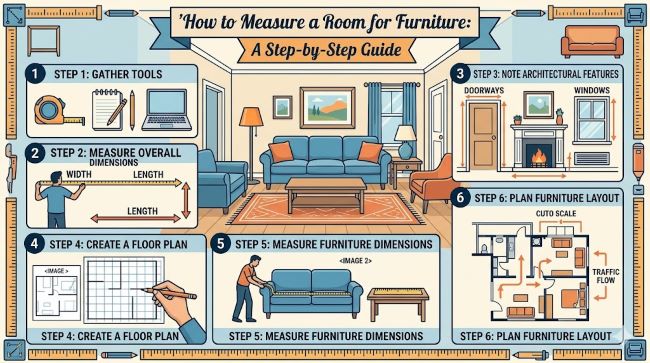
Knowing how to measure a room for furniture properly saves you from returns, awkward layouts, and pieces that look fine in a showroom but wrong in your home. This guide walks through every measurement that actually matters, in the order you should take them, with simple methods that do not require any special tools.
Why Measuring Matters More Than You Think
Furniture shopping is visual. You see a chair or a table and picture it in your space, and your brain is surprisingly bad at judging size from a photo or a showroom floor. A sofa that looks medium-sized in a massive furniture store display can swallow a small living room whole.
On top of that, every piece of furniture interacts with the room around it. A dining table is not just a table, it is a table plus the chairs pulled out plus the walking space around those chairs. A bed is not just a mattress size, it is the bed frame plus nightstands plus enough room to walk around it and open drawers.
Measuring before you buy turns furniture shopping from guesswork into planning. It also speeds up the whole process, because once you know your numbers, you can rule out anything that will not work before you even click on it. Anyone who has wondered how to measure a room for furniture and skipped it once usually does not skip it twice.
What You Need
Learning how to measure a room for furniture does not require special tools. Here is what to grab:
- A tape measure, ideally at least 25 feet long for larger rooms
- A notepad, phone notes app, or a simple sketch app
- Painter’s tape or masking tape, optional but helpful for visualizing
- A second person, helpful but not required
A laser measure is nice if you have one, but a basic tape measure does the job for almost every measurement in this guide.
Step 1: Measure the Overall Room Dimensions
The first step in how to measure a room for furniture is the basics. Measure the length and width of the room, wall to wall, at floor level. Write these down first, since every other measurement will relate back to this.
If the room is not a perfect rectangle, which is common with alcoves, bay windows, or angled walls, measure each section separately and sketch a rough floor plan. It does not need to be to scale or pretty. A simple box shape with numbers written along each wall is enough to work from later.
Multiply the length by the width to get the total square footage. This number alone will not tell you what fits, but it gives you a quick way to compare your room against the dimensions listed for furniture online, many of which mention the recommended room size for that piece.
Step 2: Measure Ceiling Height
Ceiling height matters more than people expect, especially for:
- Tall bookshelves or wardrobes
- Bunk beds or loft beds
- Pendant lights or anything that hangs down
- Tall headboards
Measure from the floor to the ceiling in at least two spots if your home has sloped ceilings, dormers, or any kind of angled roofline in the room. The lowest point in the area where the furniture will sit is the number that matters, not the highest point of the room.
Step 3: Measure Doorways, Hallways, and Stairwells
This step gets skipped constantly, and it is the one most likely to cause a return. A piece of furniture can fit perfectly in the room and still never make it there if it cannot get through the door.
Measure:
- The width and height of every doorway between the entrance of your home and the room, including closet doors if the furniture needs to pass by them
- The width of any hallways, especially if there is a turn
- Stairwell width and the height of the ceiling above the stairs, if the furniture has to go up or down
For anything large like a sofa, mattress, or wardrobe, also measure diagonally across the doorway. Furniture often gets tilted at an angle to clear a doorway, and the diagonal measurement is usually larger than the straight width or height alone. If you are unsure whether something will make the trip, measure the diagonal of the largest doorway it has to pass through and compare that to the diagonal depth of the furniture piece.
Step 4: Map Out Doors, Windows, and Outlets
Doors and windows affect where furniture can go, even if the furniture itself fits in the room.
For each door, note:
- Which way it swings open
- How far it swings into the room
- Whether anything placed nearby would block it from opening fully
A door that swings 90 degrees into a corner where you planned to put a dresser means either the dresser moves or the door gets blocked. Same goes for closet doors, especially sliding or bifold doors that need clear space to operate.
For windows, measure the height from the floor to the bottom of the window sill if you are planning to place furniture underneath it, like a bed, desk, or low bookshelf. You want to make sure the furniture height does not block the window or interfere with curtains.
Mark the location of electrical outlets too, particularly if you are placing furniture like a bed with reading lamps, a media console, or a desk that needs power nearby.
Step 5: Measure Wall Space for Each Piece of Furniture
For every wall where furniture will go, measure the full length of that wall, then subtract anything that interrupts it, like doorways, windows that go to the floor, radiators, or built-in features.
This gives you the usable wall length for each piece. A sofa that is 84 inches wide needs a wall section that is at least 84 inches of clear, uninterrupted space, plus a little extra on each side so it does not look jammed into a corner.
If you are placing furniture against more than one wall, like a sectional in a corner, measure both walls from the corner point so you know exactly how much of each wall the piece will use.
Step 6: Plan Walking Space and Clearances
This is the step that separates a room that works from a room that feels cramped, even when everything technically fits.
General clearance guidelines that work well in most homes:
- Main walkways, like the path from the entrance to the rest of the house, should have at least 36 inches of clear width
- Secondary walkways, like the space between a coffee table and a sofa, work well at 14 to 18 inches
- Dining chairs need about 36 inches behind them to push back and stand up comfortably
- Bed sides, the space to walk around a bed and use nightstands, work best at 24 to 30 inches per side
- Closet and drawer access, leave at least 36 inches in front of any dresser, wardrobe, or closet so drawers and doors can open fully
When you are sketching your floor plan, draw these clearance zones as empty space first, almost like reserving them, before placing furniture in the remaining areas. It is much easier to fit furniture around required clearances than to squeeze clearances in after the furniture is placed.
Measuring Different Rooms: What Changes
The basic process for how to measure a room for furniture stays the same everywhere, but a few details shift depending on the room.
Living rooms. Focus on the main seating wall first, since the sofa or sectional usually anchors everything else. Measure the distance from that wall to the opposite wall or to the TV placement, since seating distance from a television affects comfort and screen size choices. Coffee tables should leave enough clearance on every side, so measure the full footprint of the seating arrangement before adding a table in the middle.
Bedrooms. The bed almost always goes first, so measure the wall where it will sit and confirm there is room on both sides for nightstands plus the clearance mentioned earlier. If you have a dresser, measure the wall space for it separately, and check that the drawers can open fully without hitting the bed or a door.
Dining rooms. Table size needs to account for chairs pushed in and pulled out. A table that fits the room when chairs are tucked in might leave no room to sit down once everyone pulls out. Measure the table’s footprint with chairs in the pulled-out position and compare that to your usable floor space.
Home offices. Desks need depth for the chair to roll back, plus space behind for movement if the desk faces a wall. If you are adding shelving, measure wall height carefully, since ceiling slopes in converted spaces like attics can limit how tall a bookshelf can stand upright.
Entryways. These are often the tightest spaces in a home, so measuring becomes critical. A bench, console table, or shoe rack needs to leave enough clearance for the front door to swing open and for people to walk through comfortably, even with the furniture in place.
Whatever room you are working on, the same core question applies: does the furniture fit the space, and does the space still function once the furniture is there? Knowing how to measure a room for furniture properly answers both questions before you spend any money.
Once you know your room’s numbers, the next step is making sure you have accurate measurements for the furniture you are considering.
Step 7: Measure the Furniture Itself, Not Just the Room
For furniture you already own and are moving, measure:
- Width, depth, and height at the widest points, which are not always the same as the base
- Arm height on sofas and chairs, which can affect whether they fit under windows
- The depth of any pieces that recline, swivel, or extend, measured in their fully extended position
For furniture you are buying, the listing usually gives dimensions, but double check whether the depth listed includes things like chair arms, headboard thickness, or extended leaves on a table. Reclining sofas in particular need significant extra depth when reclined, often 10 to 20 inches more than the measurement for the sofa sitting upright.
Step 8: Use Tape or Paper to Visualize the Layout
Numbers on paper are useful, but seeing the actual footprint on your floor makes a huge difference. Use painter’s tape to mark out the outline of larger pieces directly on the floor where you plan to put them.
This simple step catches problems that measurements alone sometimes miss, like a dining table that technically fits the wall length but leaves an awkward sliver of space on one side, or a sofa placement that blocks a light switch you use every day.
If you would rather not tape up your floor, cutting pieces of cardboard or paper to scale and laying them out works the same way, just with less commitment.
Common Measuring Mistakes to Avoid
Even people who know how to measure a room for furniture make a few mistakes that come up again and again:
- Forgetting baseboards and trim. These can eat up an inch or two along every wall, which adds up when you are working with tight clearances.
- Measuring at the wrong height. Walls are not always perfectly straight, especially in older homes. Measure at the height where the furniture will actually sit, not just at the floor.
- Ignoring furniture in motion. Recliners, sofa beds, and extending tables need their expanded measurements considered, not just their resting size.
- Not accounting for rugs. A rug under a furniture arrangement adds visual weight and can make a tight layout feel even tighter, even though it does not change the actual measurements.
- Skipping the doorway check. As covered earlier, this is the single most common reason furniture gets returned after delivery.
Putting It All Together
Once you have measured the room, the doorways, the walls, and the furniture itself, you have everything you need to shop with confidence. This whole process of how to measure a room for furniture takes maybe twenty minutes the first time and gets faster every time after that. Keep your measurements saved in your phone so you can pull them up while browsing, whether you are in a store or scrolling online at home.
A little time spent measuring upfront means fewer surprises on delivery day, a layout that actually leaves room to move around, and furniture that looks as good in your home as it did in the listing. Once the fit is sorted, interior design proportion is what makes the room feel right.
Key Takeaways
- Measure the overall room length, width, and ceiling height before shopping for any furniture.
- Always measure doorways, hallways, and stairwells, including diagonal measurements for large items like sofas and mattresses.
- Map out door swings, window sill heights, and outlet locations so furniture placement does not block anything important.
- Measure the usable wall length for each piece, subtracting doors, windows, and other interruptions.
- Plan walking space and clearances first, using guidelines like 36 inches for main walkways and 24 to 30 inches around beds.
- Get accurate furniture dimensions, including extended or reclined positions for pieces that move.
- Use painter’s tape or paper cutouts to visualize the actual footprint before committing to a layout.
- Avoid common mistakes like forgetting baseboards, measuring at the wrong height, and skipping the doorway check.