Kfzundlandtechnikmaaske
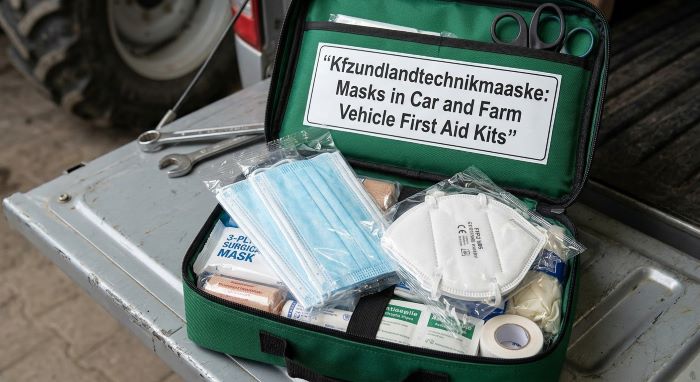
If you searched for kfzundlandtechnikmaaske, you are probably trying to figure out which masks belong in a vehicle first aid kit in Germany. The word blends three German terms: “Kfz” (Kraftfahrzeug, meaning motor vehicle), “Landtechnik” (agricultural machinery such as tractors), and “Maske” (mask). Put together, it points to one question that many drivers, fleet managers, and farmers ask: what masks do I need in my vehicle, and is it the law?
The short answer is that the German first aid kit standard, DIN 13164, was updated in 2022 to include two medical face masks. But the rules for drivers are less strict than many people think. This guide explains the standard, the law, the fines, and what makes sense for cars, trucks, and farm vehicles.
What Does Kfzundlandtechnikmaaske Mean?
German loves long compound words, and search terms often join words without spaces. Here is how the term breaks down:
| Part | German meaning | English meaning |
|---|---|---|
| Kfz | Kraftfahrzeug | Motor vehicle (car, van, truck, bus) |
| und | und | and |
| Landtechnik | Landtechnik | Agricultural machinery, tractors, farm vehicles |
| Maske | Maske | Mask |
So a kfzundlandtechnikmaaske search usually covers masks for road vehicles and farm machines. In practice, most people mean the medical masks that now come in a standard car first aid kit (Kfz-Verbandkasten).
The DIN 13164:2022 Update
DIN 13164 is the German standard that defines what goes into a car first aid kit. The German standards body revised it during the COVID-19 pandemic. According to first aid supplier Fitzner, the new version has been valid since February 1, 2022, and kits made under the old version could still be sold until January 31, 2023.
The update made three main changes:
- Added: two medical mouth and nose masks that meet the European standard EN 14683.
- Reduced: the number of triangular cloths went from two to one.
- Removed: the small sterile dressing cloth, leaving one medium dressing cloth.
The masks are meant to protect both the person giving first aid and the injured person. Even after the pandemic, the masks stayed in the standard, since they help reduce the spread of germs in any close contact emergency.
Which Mask Type Is Required?
The standard calls for medical masks under EN 14683, Type I. These are the common surgical style masks, sometimes called “OP Masken” in German. They are not the same as FFP2 respirators.
| Mask type | Standard | Main purpose | In the DIN kit? |
|---|---|---|---|
| Medical mask Type I | EN 14683 | Reduces spread of droplets from the wearer | Yes, two pieces |
| Medical mask Type II or IIR | EN 14683 | Higher filter level, used in clinics | Not required |
| FFP2 respirator | EN 149 | Protects the wearer from particles and dust | Not required |
This difference matters for farm work, which we cover below.
Full Contents of a DIN 13164:2022 Kit
Here is the full list of what a standard car first aid kit (Verbandkasten B) should contain under the 2022 version, based on Fitzner’s breakdown:
| Item | Quantity |
|---|---|
| Adhesive plaster roll | 1 |
| Wound plasters | 4 |
| Finger dressings | 2 |
| Fingertip dressings | 2 |
| Plaster strips (1.9 cm and 2.5 cm) | 2 and 4 |
| Sterile dressing packs, small | 1 |
| Sterile dressing packs, medium | 2 |
| Sterile dressing pack, large | 1 |
| Sterile dressing cloth, medium | 1 |
| Sterile wound compresses | 6 |
| Elastic fixing bandages (6 cm and 8 cm) | 2 and 3 |
| Triangular cloth | 1 |
| Single use gloves (EN 455) | 4 |
| Rescue blanket | 1 |
| Skin cleansing wipes | 2 |
| Medical masks (EN 14683 Type I) | 2 |
| First aid scissors | 1 |
| Instruction leaflet | 1 |
When you check a kfzundlandtechnikmaaske kit, look for the two sealed masks and the “DIN 13164:2022” label on the box.
Is the Mask Legally Required for Drivers?
This is where many articles get it wrong. In Germany, the duty to carry a first aid kit comes from § 35h of the road vehicle licensing rules (StVZO). That rule says the kit must match DIN 13164. However, several German consumer and legal news sites have reported that the StVZO had not been updated to require the 2022 version specifically.
What that means in practice:
- Manufacturers must now build kits to the 2022 standard, so new kits come with masks.
- Drivers who still have an older kit without masks were, according to these reports, not fined just for missing masks.
- Your kit must still be complete for its own standard version and within its shelf life.
The easy and safe solution is to add two sealed EN 14683 masks to an older kit, or simply buy a new 2022 kit. Masks cost very little, and it removes any doubt during a police check or vehicle inspection.
Rules can change, so if you need a binding answer for a business fleet, check with your local authority or a legal adviser. This article is general information, not legal advice.
Fines for a Missing or Expired Kit
If you drive a car, truck, or bus without a kit, you can be fined. According to Bussgeldkatalog.de, the warning fine for a missing or expired kit is 5 euros for most drivers and 15 euros for bus drivers, with no penalty points. Buses with more than 22 passenger seats must carry a second kit.
During the TÜV main inspection (Hauptuntersuchung), a missing or expired kit is noted as a defect. That can delay your inspection sticker until you fix it.
| Situation | Typical result |
|---|---|
| No kit in a car or truck | Warning fine of about 5 euros |
| No kit in a bus | Warning fine of about 15 euros |
| Expired kit | Can be treated like a missing kit |
| Kit missing at TÜV inspection | Noted as a defect |
What About Landtechnik and Tractors?
Here is the part that makes a kfzundlandtechnikmaaske search different from a normal car kit search. According to Bussgeldkatalog.de, agricultural and forestry tractors are among the vehicles that do not have to carry a first aid kit under § 35h StVZO. Motorcycles and very slow vehicles are also exempt.
But “not required by road law” does not mean “not needed.” Farms are workplaces with many injury risks, from machinery and tools to animals and chemicals. Many farm owners keep a first aid kit in tractor cabs, workshops, and service vans anyway. Workplace safety rules for businesses with employees may also require first aid materials at work sites, so farm employers should check the rules that apply to them.
Tips for farm vehicles:
- Keep a DIN 13164 kit in the cab. It fits most tractor cabs and covers basic injuries.
- Store it in a dry, dust protected place. The law for cars says the box must protect contents from dust, moisture, and fuels, and the same idea makes sense on a farm.
- Add extra gloves. Farm injuries often involve dirt and oil.
- Know the mask difference. The medical masks in the kit are for first aid, not for dust, spray, or grain work.
Medical Masks Versus Work Masks on Farms
A common mistake is to think the two medical masks in the kit can also protect against field dust or crop spraying. They can’t. Medical masks under EN 14683 mainly stop droplets from the wearer. For dust, mold spores, or fine particles in barns and fields, workers usually need respirators such as FFP2 or FFP3 under EN 149. For chemical spraying, the product label and safety data sheet often name specific protective equipment.
So a smart kfzundlandtechnikmaaske setup for a farm has two parts:
- The two medical masks inside the first aid kit, for helping injured people.
- Separate work respirators stored in the cab or workshop, for daily tasks.
How Long Does a Kit Last?
First aid kits have expiry dates because some materials age. Plasters lose their stickiness, and sterile items are only guaranteed sterile for a set time. Fitzner says a kit generally lasts about five years, while other sources mention about four years from purchase. The masks also carry their own expiry date.
Check your kit:
- Once a year, for example when you change to winter tires.
- After every use, to replace what you took out.
- Before the TÜV inspection, to avoid a defect note.
Using expired sterile materials on an open wound can raise the risk of infection, so replace old items rather than keep them “just in case.”
Where to Store the Kit
In a car, the kit is often in the trunk, under a seat, or in a side compartment. In a van or truck, keep it within easy reach of the driver. In a tractor, use a fixed holder in the cab so it doesn’t slide around or get buried under tools.
Wherever you keep it, make sure everyone who drives the vehicle knows where it is. In an emergency, seconds matter.
Buying the Right Kit
When shopping for a kfzundlandtechnikmaaske kit, use this checklist:
- The box says DIN 13164:2022.
- It contains two sealed EN 14683 Type I masks.
- The expiry date is several years away.
- The box closes firmly and protects against dust and moisture.
- It fits where you plan to store it.
You can buy kits at car parts stores, pharmacies, petrol stations, online shops, and first aid suppliers. Prices are usually low, often under 20 euros for a standard car kit.
Upgrading an Old Kit
If your kit was made under the 2014 version of DIN 13164, you have two options:
| Option | What to do | Pros | Cons |
|---|---|---|---|
| Add masks | Buy two sealed EN 14683 masks and put them in the kit | Cheap and quick | Other items may still be old |
| Replace the kit | Buy a new DIN 13164:2022 kit | Everything is fresh and up to date | Costs a little more |
If your old kit is near its expiry date anyway, replacing it is the better choice.
First Aid Basics to Remember
A kit only helps if you know how to use it. In Germany, anyone getting a driving license must complete a first aid course. Many experts recommend a refresher every few years.
In an accident:
- Secure the scene with hazard lights and a warning triangle.
- Wear a safety vest.
- Call 112 for emergency help.
- Put on gloves and, if close contact is needed, a medical mask.
- Give first aid within your training.
- Use the rescue blanket to keep the injured person warm.
Quick Facts
- DIN 13164:2022 has been valid since February 1, 2022.
- Kits under the old standard could be sold until January 31, 2023.
- New kits include two EN 14683 Type I masks.
- Cars, trucks, and buses must carry a kit; tractors and motorcycles are exempt.
- The usual fine for a missing kit is about 5 euros.
Frequently Asked Questions
What is a kfzundlandtechnikmaaske? It is a search term combining “Kfz” (motor vehicle), “Landtechnik” (farm machinery), and “Maske” (mask). It usually refers to the medical masks in vehicle first aid kits.
Do I need masks in my car first aid kit? New kits under DIN 13164:2022 include two masks. Reports say drivers with older kits were not fined just for missing masks, but adding two masks is cheap and safe.
Do tractors need a first aid kit? Under § 35h StVZO, agricultural and forestry tractors are exempt, but carrying a kit is still a good idea, and workplace rules may apply.
Can I use the kit masks for farm dust? No. Medical masks are for first aid. Use FFP2 or FFP3 respirators for dust and particles.
How often should I replace my kit? Check the expiry date. Most kits last about four to five years.
Final Thoughts
The term kfzundlandtechnikmaaske may look confusing, but the idea is simple. Every vehicle first aid kit made under DIN 13164:2022 includes two medical masks, and keeping a complete, in date kit protects you and others. For cars, trucks, and buses, the kit is required by law. For tractors and farm machines, it is not legally required on the road, but it is still a smart choice for daily farm safety.
Key Takeaways
- Kfzundlandtechnikmaaske combines “Kfz,” “Landtechnik,” and “Maske,” and usually refers to masks in vehicle first aid kits.
- DIN 13164:2022 added two EN 14683 Type I medical masks to car first aid kits.
- The update also reduced triangular cloths to one and removed the small dressing cloth.
- Cars, trucks, and buses must carry a kit under § 35h StVZO; tractors and motorcycles are exempt.
- A missing or expired kit usually costs a 5 euro warning fine, or 15 euros for buses.
- Medical masks are for first aid; farm dust and spraying need FFP2 or FFP3 respirators.
- Check your kit every year and replace it after about four to five years.