Best Indoor Electric Heaters for Large Rooms: 10 Models That Heat Big Spaces
Big rooms are hard to heat. Open living areas, finished basements, garages turned into home gyms, and rooms with high ceilings all lose warmth fast. A small desk heater will barely make a dent. You need a unit built to move heat across a wide space, and you need to understand what a plug-in heater can and cannot do.
This guide lists the best indoor electric heaters for large rooms by name, explains how each heating type works, and shows you how to size a heater correctly. It also covers safety and running costs, so you can stay warm without surprises on your electric bill.
The 1,500-Watt Reality Check
Before looking at models, there is one fact every buyer should know. Almost every plug-in electric heater sold in the United States tops out at 1,500 watts. That limit exists because a standard 120-volt household circuit can only safely handle so much continuous load.
A 1,500-watt heater produces about 5,100 BTUs of heat. Under normal conditions, that is enough to heat roughly 150 square feet as a primary heat source, or up to several hundred square feet as a supplement to central heating. Some manufacturers claim coverage of 1,000 square feet or more. Those claims assume a well-insulated room with some existing heat, not a cold room starting from scratch.
So how do the best indoor electric heaters for large rooms handle big spaces? They distribute heat more effectively. A heater with a strong fan, a smart thermostat, or infrared technology spreads its 1,500 watts more evenly, so the whole room feels warmer instead of just the spot right in front of the unit. For truly large spaces, you may need two heaters on separate circuits or a hardwired 240-volt unit.
Types of Electric Heaters Explained
Infrared heaters warm people and objects directly, much like sunlight. They feel warm almost instantly and work well in drafty rooms, since they do not rely only on heating the air. Many large-room models combine infrared elements with a fan to circulate warm air too.
Oil-filled radiators heat oil sealed inside metal fins. The oil holds heat and releases it slowly, so the room stays warm even after the heater cycles off. They are silent and produce gentle, even heat, but they take 20 to 30 minutes to warm up.
Ceramic heaters pass air over heated ceramic plates, and a fan blows the warm air into the room. They heat up quickly and are lightweight, but they work best in small to medium spaces unless they have a powerful fan.
Fan-forced and vortex heaters use strong air circulation to push heat through the entire room. Vornado’s vortex technology, for example, creates a whole-room air circulation pattern rather than a direct blast.
Micathermic heaters combine convection and radiant heat using thin mica panels. They are slim, quiet, and heat up faster than oil-filled radiators.
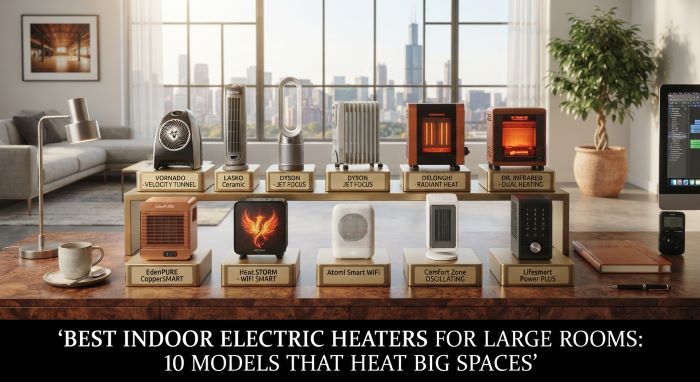
Comparison Table: 10 Heaters at a Glance
| Heater | Heating Type | Max Wattage | Supplemental Coverage | Noise | Approx. Price | Best For |
|---|---|---|---|---|---|---|
| Dr Infrared DR-968 | Infrared + ceramic with blower | 1,500W | up to 1,000 sq ft (mfr. claim) | Quiet | around $120 | Best overall for big rooms |
| De’Longhi Dragon TRD40615E | Oil-filled radiator | 1,500W | around 450 sq ft | Silent | around $130 | Bedrooms and offices |
| Dyson Purifier Hot+Cool HP07 | Ceramic + fan, HEPA filter | 1,500W | around 400 sq ft | Moderate | around $570 | Year-round heat, cool, and purify |
| Lasko 755320 | Ceramic tower, oscillating | 1,500W | around 300 sq ft | Moderate | around $65 | Budget pick, use in pairs |
| Vornado VH200 | Vortex fan-forced | 1,500W | around 250 sq ft | Moderate | around $70 | Even wall-to-wall warmth |
| Vornado MVH | Vortex fan-forced | 1,500W | Small to medium rooms | Moderate | $40 to $55 | Second heater for open spaces |
| Dreo Atom One | Ceramic, oscillating | 1,500W | Small to medium rooms | Quiet | $50 to $80 | Low noise, modern design |
| Honeywell HZ-789 | 360 degree surround ceramic | 1,500W | Medium rooms | Moderate | $60 to $90 | Center-of-room placement |
| Duraflame 3D Infrared Fireplace Stove | Infrared with flame effect | 1,500W | up to 1,000 sq ft (mfr. claim) | Quiet | $200 to $300 | Living rooms and ambiance |
| Amazon Basics Oil-Filled Radiator | Oil-filled radiator | 1,500W | Small to medium rooms | Silent | $50 to $70 | Budget silent heat |
Coverage figures assume the heater supplements existing heat. Prices change with seasonal sales, so check current listings before you buy.
1. Dr Infrared DR-968
The Dr Infrared DR-968 is frequently named the top choice for large spaces. It combines infrared quartz tubes with a PTC ceramic element and a high-pressure blower fan. The infrared warms people and objects while the fan circulates warm air across the room.
It runs at 1,500 watts, costs around $120, and the manufacturer rates it for up to 1,000 square feet as a supplemental heater. It includes a remote, a digital thermostat, a 12-hour timer, and tip-over and overheat protection. It is also notably quiet for its power level. For most people, it is the best indoor electric heater for large rooms at a reasonable price.
2. De’Longhi Dragon Oil-Filled Radiator (TRD40615E)
The De’Longhi Dragon is a premium oil-filled radiator with a distinctive fin design that directs heat upward and outward. It produces silent, steady heat and keeps warming the room after it cycles off, thanks to the oil reservoir.
It costs around $130 and covers roughly 450 square feet as a supplement. It has an adjustable thermostat and multiple heat settings. It is ideal for bedrooms, living rooms, and home offices where noise matters, since it makes no fan sound at all.
3. Dyson Purifier Hot+Cool HP07
The Dyson HP07 is a three-in-one device that heats, cools, and purifies the air. Its bladeless design uses Air Multiplier technology to project warm air across the room, and a HEPA filter captures dust, pollen, and allergens.
It runs at 1,500 watts and costs around $570. It is expensive, but it replaces three appliances and runs year-round. It suits homeowners who want one sleek device for all seasons and value air purification alongside heat.
4. Lasko 755320 Ceramic Tower Heater
The Lasko 755320 is a budget-friendly ceramic tower with wide oscillation that sweeps warm air across the room. It costs around $65, making it one of the most affordable options for larger spaces.
It has a digital thermostat, a remote, and an eight-hour timer. It covers around 300 square feet effectively. Place two in a very large room for better coverage at a lower combined price than many single premium heaters.
5. Vornado VH200 Whole Room Vortex Heater
The Vornado VH200 uses vortex air circulation to heat an entire room evenly instead of creating a hot spot in front of the unit. It costs around $70 and is known for its durability and five-year warranty.
It has two heat settings plus a fan-only mode and an automatic climate control feature. It is compact but punches above its size, which makes it a strong choice when you want consistent temperature from wall to wall.
6. Vornado MVH Vortex Heater
The Vornado MVH is a smaller, simpler version of Vornado’s vortex design. It has three heat settings and the same whole-room circulation approach. It costs less than the VH200 and is a practical option for a second heater in a large open space.
7. Dreo Atom One Space Heater
The Dreo Atom One is a compact, quiet ceramic heater with a strong fan and wide-angle oscillation. It heats up in seconds and has a digital thermostat that maintains temperature precisely.
It is popular for its low noise level and modern design. Use it in pairs or as a targeted heater in part of a larger space.
8. Honeywell HZ-789 Digital Surround Heater
The Honeywell HZ-789 uses a 360-degree surround heat design, meaning it pushes warm air in all directions rather than just forward. That makes it useful in the center of a room where you want heat spreading outward evenly.
It includes a digital thermostat, programmable settings, and an energy-saving eco mode. It is a solid mid-priced option from a trusted brand.
9. Duraflame 3D Infrared Electric Fireplace Stove
If you want heat and atmosphere, the Duraflame 3D Infrared Electric Fireplace Stove delivers both. It uses infrared heat with a realistic 3D flame effect. The flame can run with or without heat, so you can enjoy the look year-round.
It heats up to around 1,000 square feet as a supplemental heat source, according to the manufacturer. It works well in living rooms and cabins where you want a cozy focal point.
10. Amazon Basics 1500W Oil-Filled Radiator
The Amazon Basics oil-filled radiator is a no-frills, budget option that delivers the same silent, lasting heat as more expensive radiators. It has adjustable thermostat control, three heat settings, and tip-over protection.
It is a great value pick for anyone who wants oil-filled comfort without paying premium brand prices.
How to Size a Heater for Your Room
Start by measuring your room’s square footage. Multiply length by width. For supplemental heating, a common rule is 10 watts per square foot. A 1,500-watt heater can therefore support roughly 150 square feet on its own, or more when your central heat is also running.
Adjust for these factors:
- Ceiling height: Rooms with ceilings above eight feet hold more air and need more heating power.
- Insulation: Poorly insulated rooms, older homes, and rooms with many windows lose heat faster.
- Climate: Colder regions need more heating capacity.
- Existing heat: If the room gets some warmth from central heating, a single heater goes much further.
For open-concept spaces over 500 square feet, consider placing two heaters on opposite sides of the room, each plugged into a separate circuit.
Running Costs: What to Expect on Your Bill
A 1,500-watt heater uses 1.5 kilowatt-hours of electricity per hour at full power. At the U.S. average electricity rate of roughly 16 to 18 cents per kilowatt-hour, that works out to about 24 to 27 cents per hour.
Running one heater for eight hours a day costs around $2 per day, or $60 per month. Heaters with thermostats cycle on and off once the room reaches the set temperature, which lowers the real cost significantly. Using the eco mode or a lower setting cuts costs further.
The best indoor electric heaters for large rooms save money by allowing zone heating. You heat the room you are using instead of the whole house, then turn down your central thermostat.
Heating Your Whole Home More Efficiently
Space heaters work best as part of a broader plan. If rooms stay cold despite running your furnace, check for drafty windows, gaps around doors, and poor attic insulation. Sealing leaks often makes a bigger difference than any heater.
It also helps to look at other major home systems that affect comfort and energy use. An old, inefficient water heater, for example, can drive up energy bills and struggle to keep up with demand during winter. If yours is more than 10 to 15 years old, planning a water heater replacement before the coldest months hit can prevent an emergency breakdown and lower your overall utility costs alongside your space heating strategy.
Safety Rules You Should Always Follow
Space heaters cause thousands of home fires every year, most of them preventable. Follow these rules every time.
- Plug heaters directly into a wall outlet. Never use an extension cord or power strip.
- Keep at least three feet of clearance around the heater from furniture, curtains, bedding, and paper.
- Choose models with tip-over protection and overheat protection.
- Look for a certification label from UL, ETL, or CSA.
- Never leave a heater running when you leave the house or go to sleep, unless the model is designed for unattended operation.
- Keep heaters away from water, unless the unit is rated for bathroom use.
- Place heaters on a flat, hard, level surface, not on rugs or carpets.
- Keep children and pets away from hot surfaces.
Features That Matter for Large Rooms
When shopping for the best indoor electric heaters for large rooms, prioritize these features:
A digital thermostat keeps temperature steady and prevents wasted energy. Oscillation spreads heat across a wider area. A remote control lets you adjust settings from across a large room. Timers let you schedule the heater to run only when needed. Quiet operation matters in bedrooms and offices. An eco mode adjusts power automatically to maintain temperature efficiently.
Best Picks by Room Type
Different large spaces have different needs. Here is how to match a heater to the room.
- Open-plan living rooms: The Dr Infrared DR-968 or Duraflame 3D fireplace stove spreads heat widely and adds comfort.
- Bedrooms and home offices: The De’Longhi Dragon or Amazon Basics oil-filled radiator runs silently.
- Finished basements: Infrared heaters work well since they warm objects and people directly, even in cool, damp air.
- Garage workshops and home gyms: Look for heaters rated for garage use, or consider a hardwired 240-volt unit.
- Rooms with allergy sufferers: The Dyson HP07 heats and filters the air at the same time.
In drafty rooms with high ceilings, infrared models tend to be the best indoor electric heaters for large rooms, since they do not depend entirely on warming air that rises out of reach.
Placement Tips for Better Heat
Where you put the heater changes how warm the room feels. Place it near the coldest part of the room, often by a window or exterior wall, so it counters the draft directly. Point oscillating models toward the main seating area rather than toward walls or corners.
Ceiling fans help too. Set the fan to spin clockwise on low speed in winter. This pushes warm air that collects near the ceiling back down into the living space. Pairing a fan with the best indoor electric heaters for large rooms can make a big room feel several degrees warmer without using more power.
Close doors to unused areas so heat stays where you need it. Draw curtains at night to trap warmth, and open them on sunny days to let natural heat in.
Noise Levels and Sleep
Noise matters more than many shoppers expect. Fan-forced and ceramic heaters produce a steady hum, which some people find soothing and others find distracting. Oil-filled radiators are silent, which makes them ideal for bedrooms. If you are sensitive to light while sleeping, look for models with a dimmable or switch-off display.
Smart Features Worth Considering
Some newer heaters connect to Wi-Fi and work with voice assistants like Alexa and Google Assistant. You can turn them on from your phone before you get home, set schedules, and monitor energy use. Smart plugs can add basic scheduling to older heaters too, though you should only use smart plugs rated for high-wattage appliances. When comparing the best indoor electric heaters for large rooms, smart scheduling is a small feature that can lead to real savings, since the heater only runs when someone is actually in the room.
When a Plug-In Heater Is Not Enough
If your large room stays cold even with two heaters running, you may need a more permanent solution. Hardwired 240-volt wall heaters and baseboard heaters produce more heat than plug-in models. Ductless mini-split heat pumps are another option, and they are far more efficient than resistance heaters. They also provide air conditioning in summer.
These options cost more upfront and need professional installation, but they make sense for rooms you use daily throughout winter. For everyone else, the best indoor electric heaters for large rooms offer an affordable, flexible way to add warmth where you need it most.
Key Takeaways
- The Dr Infrared DR-968 is a top pick for large spaces, combining infrared heat with a powerful blower fan for around $120.
- Most plug-in heaters are capped at 1,500 watts, so large rooms often need two heaters on separate circuits or a hardwired solution.
- Oil-filled radiators like the De’Longhi Dragon and Amazon Basics model offer silent, long-lasting heat.
- Budget picks like the Lasko 755320 and Vornado VH200 cost around $65 to $70 and circulate heat well.
- A 1,500-watt heater costs roughly 24 to 27 cents per hour to run at full power.
- Always plug heaters directly into the wall, keep three feet of clearance, and choose models with tip-over and overheat protection.
- For rooms used daily all winter, consider a hardwired heater or ductless mini-split for better efficiency.