Best Skill Tree Arc Raiders Build: Perks and Progression That Win
Surviving the surface in Arc Raiders is as much about how you build your character as how you shoot. The skill tree shapes everything, from how far you can sprint to how much loot you haul out and how you handle a firefight. Sink your points into the wrong skills and you will feel slow, exposed, and out of stamina at the worst moments. Spend them well and you become a nimble, efficient raider who gets in, grabs the goods, and gets out alive. This guide covers the best skill tree Arc Raiders setup, the standout perks, and how to progress for your playstyle.
How the skill tree works
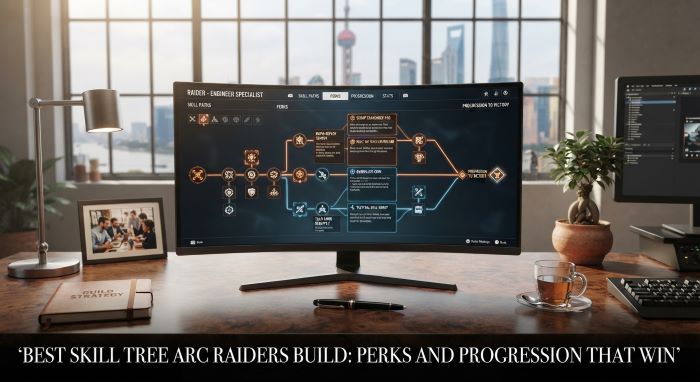
Before diving into builds, it helps to understand the structure. Arc Raiders splits its progression into three distinct skill trees, each with its own focus and a set of skills to unlock. You earn points as you play and spend them to climb each tree, with many skills offering multiple ranks that grow stronger as you invest.
The three branches are Conditioning, Mobility, and Survival. Each one supports a different approach to raiding, and the best skill tree Arc Raiders players build usually blends branches rather than dumping everything into one. Understanding what each tree does is the first step to spending your points wisely instead of guessing.
The three skill trees explained
Here is a breakdown of the three branches and what each one brings to your raids.
- Conditioning: The combat-focused tree. It covers breaching, managing stamina under pressure, and using heavy gear effectively. This is where aggressive players and team breachers invest.
- Mobility: The movement and escape tree. It handles sprinting, dodging, and stamina for getting around. Widely considered the most important tree early on because your starting stamina is low.
- Survival: The looting tree. It boosts carry capacity, looting efficiency, and access to exclusive containers and hidden loot. This is where scavengers and farmers thrive.
Knowing these roles helps you match your points to how you actually play. The strongest approach starts with Mobility for nearly everyone, then branches into Conditioning or Survival based on your goals.
Why Mobility comes first
If there is one rule for the best skill tree Arc Raiders progression, it is to invest in Mobility early. Your character starts with limited stamina, which makes moving, dodging, and escaping harder than it should be. The Mobility tree fixes that, and it pays off in every single raid regardless of your playstyle.
The single most impactful skill in the game lives here: Marathon Runner. Across its ranks, it reduces the stamina cost of movement, letting you sprint farther and recover faster. This one skill transforms how the game feels, so it is almost always the first priority. Effortless Roll is another Mobility standout, improving your dodge and survivability in fights. For the best skill tree Arc Raiders build, these movement skills form the foundation everything else rests on.
Key skills worth prioritizing
Across the three trees, some skills stand out as clearly worth your early points. Here are the top perks to target as you plan your points.
- Marathon Runner (Mobility): The best skill in the game, cutting movement stamina costs across all ranks. Rush this first.
- Effortless Roll (Mobility): Improves dodging, which is critical for surviving close encounters.
- Youthful Lungs (Mobility): Supports stamina, a great early pickup alongside Marathon Runner.
- Proficient Pryer (Conditioning): Reduces breach time by up to 30 percent, speeding up how fast you open doors and containers.
- Security Breach (Survival): Unlocks exclusive loot that other players cannot access, a big edge for farmers.
- Fight or Flight and Back On Your Feet (capstones): Powerful later skills for aggressive solo and PvP play.
- Gentle Pressure (Conditioning): Useful for coordinated team breaching.
Prioritizing these skills gives you the biggest impact per point. The most effective builds are not about unlocking everything, but about grabbing the high-value skills in the right order.
Recommended builds by playstyle
Different players want different things, so the best skill tree Arc Raiders setup depends on how you like to raid. Here are recommended builds for the main playstyles.
Beginner build
If you are new, keep it simple. A balanced 2-1-1 split works well, leaning into Mobility first. Prioritize Marathon Runner and Youthful Lungs to fix your stamina, then spread a few points into Conditioning and Survival for flexibility. This gives you a well-rounded raider while you learn the maps and mechanics.
Solo PvP build
For solo players who fight other raiders, lean heavily into Mobility and Conditioning. Movement keeps you alive and lets you reposition, while combat skills help you win duels. Target capstone skills like Fight or Flight and Back On Your Feet for their strong payoffs in one-on-one fights. This is the ideal build for aggressive lone wolves.
Loot farming build
If your goal is hauling out as much loot as possible, go Survival-heavy with a Mobility baseline. Survival skills like Security Breach unlock exclusive loot and boost your carry capacity, while enough Mobility keeps you fast enough to escape with your haul. This build maximizes what you take home each run.
Squad breaching build
Playing with a team focused on breaching? Go Conditioning-focused. Skills like Proficient Pryer speed up breaches, and Gentle Pressure helps with team coordination. Pair it with a Mobility baseline so you can still move and escape. This is the best skill tree Arc Raiders setup for organized groups.
Build comparison
Here is a quick snapshot of the recommended builds.
| Build | Primary tree | Key skills | Best for |
|---|---|---|---|
| Beginner | Mobility | Marathon Runner, Youthful Lungs | Learning the game |
| Solo PvP | Mobility + Conditioning | Fight or Flight, Back On Your Feet | Fighting other raiders |
| Loot farming | Survival | Security Breach | Maximizing loot |
| Squad breaching | Conditioning | Proficient Pryer, Gentle Pressure | Team play |
Understanding skill ranks and points
One thing that trips up newer players is how skill ranks work. Many skills are not a single unlock but have multiple ranks, each costing points and each adding a bit more power. Marathon Runner, for example, gets stronger with every rank you invest, reducing stamina costs further each time. This means you often get more value from maxing one crucial skill than from spreading points across several minor ones.
Points are a limited resource, especially early on, so treat them as an investment. Ask whether one more rank in a top skill like Marathon Runner would help you more than opening a new, weaker skill. Usually, deepening your best skills early beats collecting shallow ones. As you accumulate more points over time, you can afford to branch out, but in the beginning, focus wins.
How to earn skill points faster
To build the setup you want, you need points, and those come from playing and progressing. Surviving raids, completing objectives, and extracting successfully all feed your progression. That creates an important loop: the Mobility skills that help you survive and escape also help you earn more points, which lets you unlock more skills. This is another reason Mobility comes first, since it accelerates everything else.
Playing it safe and extracting with loot, rather than dying deep in a raid, keeps your progression moving. A dead raider earns far less than one who escapes with a full bag. So even if you love aggressive play, learning to disengage and extract protects both your loot and your steady climb through the skill trees. Consistency, not just kills, builds a strong character over time.
Adapting your build as you progress
Your ideal setup is not fixed. Early on, everyone benefits from the same Mobility foundation, but as you gain points and learn the game, your build should evolve to match how you actually play. A player who started cautious might lean into Survival for farming, while someone who discovered they love fighting might pour points into Conditioning.
Pay attention to where you struggle. If you keep running out of stamina, add Mobility. If you die in firefights, strengthen Conditioning. If you cannot carry enough loot, invest in Survival. Treat your build as a living plan you adjust based on real experience, and do not be afraid to respec if the game allows it. The strongest raiders refine their setup over time rather than locking it in on day one.
Common mistakes to avoid
Even experienced players waste points. Steer clear of these pitfalls when planning the best skill tree Arc Raiders build.
- Ignoring Mobility early. Skipping stamina skills makes every raid harder. Start with Mobility.
- Spreading too thin. Dabbling in all three trees at once leaves you weak everywhere. Commit to a focus after your Mobility baseline.
- Chasing capstones too soon. Powerful end-of-tree skills require investment. Build toward them rather than rushing.
- Ignoring your playstyle. A farming build for a PvP player, or vice versa, feels bad. Match your tree to how you actually play.
- Forgetting to respec. If your build is not working, adjust it rather than pushing through.
Avoiding these keeps your progression efficient and your raids smoother. The most effective players build with intention, not by scattering points at random.
How to plan your progression
The best skill tree Arc Raiders progression follows a simple logic. Start by fixing your biggest weakness, which for almost everyone is stamina, so Mobility comes first. Once you can move and escape reliably, commit to a focus that matches your playstyle, whether that is combat, farming, or team support. Then build toward the powerful capstone skills that reward deeper investment.
Think of it as layers. Mobility is the base everyone needs, your chosen tree is the specialization on top, and capstones are the finishing touch. Follow that order and you avoid the trap of a scattered, ineffective build.
Pairing skills with your gear and playstyle
Your skills do not exist in a vacuum. They work best when they match the gear you carry and the maps you run. A stealthy scavenger who avoids fights leans on Mobility and Survival, packing light so they can move fast and escape with loot. An aggressive raider who seeks fights pairs Conditioning skills with heavier weapons and armor, using stamina management to stay in the fight longer.
Think about how your skills, gear, and approach reinforce one another. A breaching skill matters little if you never open containers, and extra carry capacity is wasted if you die before extracting. The best raiders build a coherent kit where every choice supports the same goal, whether that is speed, combat, or loot.
The bottom line
Your skill tree defines your raider, and smart choices make the difference between struggling and thriving. The best skill tree Arc Raiders build starts with Mobility, especially Marathon Runner, to fix your stamina and unlock reliable movement. From there, specialize based on how you play: Conditioning for combat and breaching, Survival for loot farming, or a blend for versatility. Prioritize high-value skills, build toward capstones, and match your tree to your goals. Do that, and you will move faster, hit harder, and haul more out of every raid on the surface.
Key Takeaways
- Arc Raiders has three skill trees: Conditioning for combat and breaching, Mobility for movement, and Survival for looting.
- The best skill tree Arc Raiders progression starts with Mobility for nearly everyone, since low starting stamina holds you back.
- Marathon Runner in the Mobility tree is the single most impactful skill, reducing movement stamina costs across all ranks.
- Other top skills include Effortless Roll, Youthful Lungs, Proficient Pryer for faster breaching, and Security Breach for exclusive loot.
- Recommended builds vary by playstyle: a balanced 2-1-1 for beginners, Mobility plus Conditioning for solo PvP, Survival-heavy for farming, and Conditioning for squad breaching.
- Avoid common mistakes like ignoring Mobility early, spreading points too thin, and rushing capstone skills before you can support them.
- Plan progression in layers: a Mobility baseline first, then a specialization matched to your playstyle, then powerful capstones.