How Patient Portal Messages Become Evidence When Care Goes Wrong
Can the messages you sent your doctor through MyChart be used later if something went wrong with your care? Yes, and they show up in these cases more often than patients realize. Portal messages, their timestamps, the audit trail behind them, and the notes a clinician wrote in response are all part of the medical record. All of it is fair game in a malpractice investigation.
The rules shifted a few years ago. Since the federal rule on information blocking took effect, patients have a right to see their own records almost as fast as clinicians write them. That transparency cuts both ways.
Everything you type into that little message box is documented, discoverable, and hard to walk back. Below are the situations where portal messages tend to matter most.
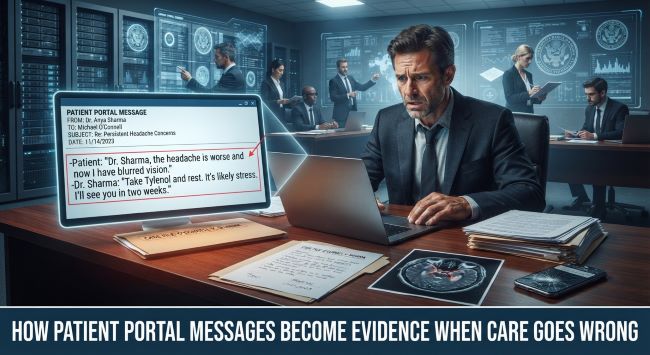
The Symptom You Reported That Never Made It Into the Chart
Delayed-diagnosis cases often turn on a symptom the patient described in a portal message that never appears in the clinician’s note. You wrote about chest tightness over the weekend. The reply told you to come in the next day. The follow-up note doesn’t mention chest tightness at all.
That gap is the case. The portal thread proves the symptom was reported, when it was reported, and to whom. If the workup didn’t match what you described, the message is the paper trail that shows it.
The Test Result You Saw Before Anyone Called You
Labs and imaging results often land in the portal within minutes or hours of finalization. Patients now see abnormal findings before their physician has read them, let alone called. That creates a strange new middle ground where the patient knows something is wrong and the clinician hasn’t acted yet.
If harm results from that delay, the portal timestamps become central. When was the result released? When did the ordering clinician open it? When did the callback happen, if it happened at all? Every one of those moments is logged.
The Message That Got a Non-Answer
Portal messaging is not a substitute for a visit, and health systems usually say so on their patient-facing pages. Response windows of one to three business days are typical, and some systems now bill insurance for medical-advice messages that require real clinical work. Reasonable enough, until an urgent problem gets triaged like a routine one.
If you sent a message describing worsening symptoms and got a template reply pointing you to a scheduling line, and the delay led to harm, the exchange itself becomes evidence. Not because a portal message is a good way to handle an emergency, but because it shows what the system knew and how it responded.
The Audit Trail Nobody Warns You About
What you see in MyChart is the patient-facing view. The full record behind it includes an audit trail: who opened your chart, when, from what workstation, and what they changed. In a malpractice review, that trail often tells a story the printed chart doesn’t.
A few things the audit log commonly reveals:
- Late edits. A note amended days after the fact, especially after an adverse event, looks very different from a contemporaneous entry.
- Unopened results. A critical lab that sat in an inbox for a week without being viewed is documented down to the second.
- Delegated messaging. Messages patients believe came from their physician were sometimes drafted and sent by staff, and the metadata will show it.
The Message You Sent That Now Cuts Against You
Portal messages work in both directions, and defense counsel reads them too. A cheerful “feeling much better, thanks!” sent two weeks after a procedure can complicate a claim that symptoms began right away. A missed follow-up you declined in writing can shift some responsibility back onto you. That’s not a reason to stop using the portal. It’s a reason to write in it the way you’d write in a document you might read aloud in a deposition. Be specific about symptoms, dates, and what you were told.
Avoid guessing at diagnoses or minimizing pain you’re still having. If a phone conversation happened, send a short follow-up message summarizing what was said, so there’s a written record of the verbal one.
What to Do If You Think Something Went Wrong
Before you request records, download or screenshot your portal messages exactly as they appear to you now, with dates and times visible. Then request the complete designated record set in writing, not a printed summary. Ask specifically for the audit trail, message metadata, and any amendments. Health systems don’t usually volunteer these, and a portal export is not the same thing as the full chart.
If the pattern looks serious, talk to a medical malpractice attorney before you send any more messages through the portal about what happened. Continuing to communicate with the treating clinician about a possible claim can muddy the record you’re trying to preserve. Pause, request the full file, and get a professional review of the timeline. Those are usually the right first three steps.