Best Arroz Negro Near Me: Finding This Ink-Black Rice Dish Done Right
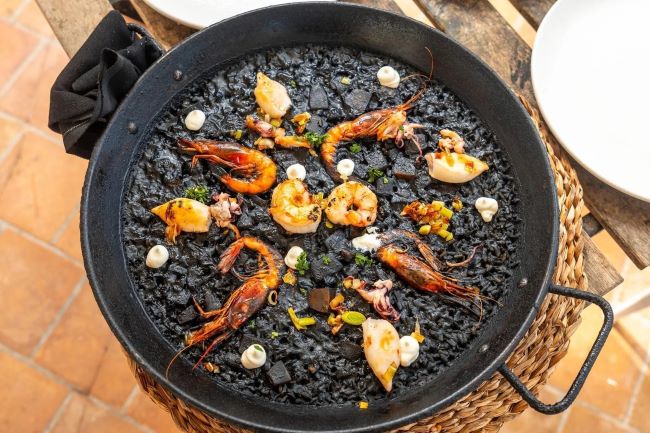
The first time you see arroz negro on a plate, the color catches you off guard. Jet black rice, often topped with seafood and a smear of white aioli. It looks dramatic. The flavor, though, is what people come back for: deeply savory, briny, and rich in a way that’s hard to describe until you’ve tasted it. If you’ve been searching for the best arroz negro near me, this guide will walk you through what the dish actually is, what makes a proper version, and where to find it.
What Arroz Negro Is
Arroz negro is black rice cooked with squid ink. It’s a Spanish dish with roots in Valencia and Catalonia, closely related to the paella family but distinct from it in flavor profile and appearance. The ink is what turns the rice black and also what gives it that concentrated oceanic taste.
The base technique is similar to making a sofrito-style rice: onion, garlic, tomato, and sometimes peppers are cooked down in olive oil, then rice and stock are added along with the squid ink. Seafood goes in toward the end, typically squid or cuttlefish (the source of the ink), sometimes shrimp, mussels, or clams. The rice absorbs the ink-infused stock and turns uniformly black.
Unlike risotto, arroz negro is not stirred constantly. The rice sits and absorbs. There’s usually a thin crust that forms on the bottom of the pan, called socarrat in the paella tradition, and in a properly made arroz negro that crust is considered the best part.
Aioli (or allioli in Catalan) is the traditional accompaniment. The cool, garlicky creaminess cuts through the intensity of the ink and balances the dish.
Where to Search for Arroz Negro Near You
When looking for the best arroz negro near me, Spanish restaurants are the obvious starting point. More specifically, restaurants specializing in Valencian or Catalan cuisine are most likely to serve it, since it’s a regional dish from that part of Spain.
Tapas bars and Spanish wine bars in larger cities often rotate arroz negro through their menu. It’s not an everyday item at every Spanish spot, so calling ahead or checking current menus online is worth doing.
Beyond Spanish restaurants:
- Mediterranean restaurants with a Spanish or Basque influence sometimes carry it
- Seafood restaurants with a European focus occasionally serve it as a specialty item
- Look for Spanish-specific food events, pop-ups, or weekend specials in cities with active food scenes
Google Maps search terms that work: “Spanish restaurant” plus your city, then check menus. Yelp has a “Spanish” cuisine filter. When in doubt, call and ask directly.
What Sets a Good Arroz Negro Apart
The rice texture. Arroz negro should be cooked al dente, not mushy. The grains should absorb the ink fully and hold their shape. If the rice is porridge-soft, the kitchen either used too much liquid or the wrong type of rice. Spanish short-grain varieties like Bomba or Calasparra are the right tool. They absorb more liquid than standard short-grain rice without falling apart.
The color. It should be uniformly black. Patchy or grey-ish rice means the ink wasn’t distributed properly during cooking or there wasn’t enough of it.
The seafood quality. Since arroz negro is a seafood dish at its core, the quality of the squid or cuttlefish matters. Rubbery, overcooked squid is a red flag. It should be tender and slightly sweet.
The socarrat. A genuine arroz negro near me result should ideally have some of the crispy bottom layer. Not all restaurants achieve this or even try for it, but it’s a marker of someone cooking the dish properly rather than just going through the motions.
Fresh aioli. Pre-made or bottled aioli tastes noticeably different from fresh. Good arroz negro is served with aioli made in-house, thick and garlicky, not the thin emulsified kind that comes from a jar.
The Squid Ink Question
Squid ink is safe to eat and has a long culinary history in Mediterranean cooking. It’s also used in pasta, risotto, and bread in Spanish and Italian cuisines. The flavor is subtly briny and metallic, adding depth without being overpowering.
One thing to know before ordering: arroz negro will stain your lips and teeth black while you’re eating it. This is completely normal and washes off, but it’s worth keeping in mind if you’re on a date.
The ink also has some nutritional properties. It contains iron, antioxidants, and compounds that have been studied for potential antimicrobial effects, though the amounts in a serving of rice are modest.
Pairing Arroz Negro
The traditional drink alongside arroz negro is a dry Spanish white wine. Albariño from Galicia is a classic match: its crisp acidity and slight salinity mirror the oceanic quality of the dish. A cava (Spanish sparkling wine) also works well.
If you prefer red, a light-bodied Spanish red like a young Garnacha from Aragón won’t overpower the delicate seafood. Heavier reds tend to clash with the brininess.
This dish pairs naturally with other Spanish seafood preparations. If your table is sharing, caldereta de cordero offers a nice contrast as a meat option alongside the seafood-forward arroz negro.
Arroz Negro vs. Paella: Understanding the Difference
People often confuse arroz negro with black paella, and the confusion is understandable. Both use squid ink and both belong to the same family of Valencian rice dishes. The key differences come down to proportion and intent.
In a standard seafood paella, the rice is the vehicle and the seafood is the centerpiece. With arroz negro, the ink is what drives the dish. The ink-to-rice ratio is higher, the sofrito base is deeper, and the whole preparation is designed to deliver a concentrated oceanic flavor rather than a light, saffron-forward result. They’re siblings, not the same dish.
If you find a restaurant serving both on the menu, ordering arroz negro tells you more about how seriously the kitchen takes Spanish rice cooking. It’s a harder dish to execute well, and places that offer it are usually committed to doing it properly. That’s useful context when you’re trying to find the best arroz negro near me in an unfamiliar city.
Key Takeaways
- Arroz negro is a Spanish black rice dish cooked with squid ink, originating from Valencia and Catalonia, with a deeply savory oceanic flavor profile and a uniform jet-black color
- The best arroz negro near me results will come from Spanish restaurants specializing in Valencian or Catalan cuisine, or from quality tapas and Mediterranean spots with rotating seasonal menus
- Quality markers include al dente Bomba or Calasparra rice, uniformly black color, tender squid, a socarrat crust on the bottom of the pan, and fresh house-made aioli on the side
- The dish stains your lips and teeth while eating: this is normal and temporary
- Pair arroz negro with Albariño or cava for a traditional Spanish white wine match
- Call ahead to confirm availability since arroz negro is not a daily menu fixture at every Spanish restaurant
- The socarrat (crispy bottom layer) is considered the best part: if you’re at a table where the server scrapes the bottom of the pan before serving, that’s a good sign