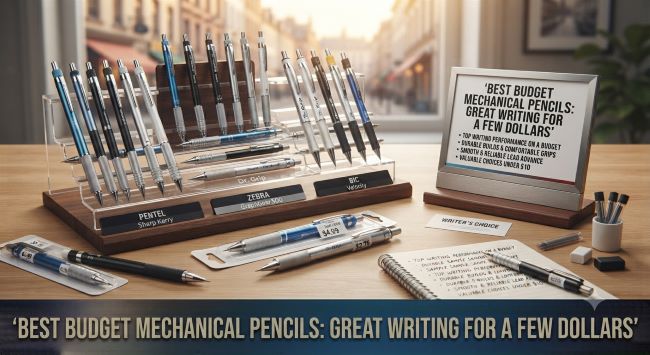
Best Budget Mechanical Pencils: Great Writing for a Few Dollars
Mechanical pencils are one of the rare products where spending more buys diminishing returns almost immediately. A handful of pencils costing a few dollars each write as well as, and sometimes better than, models costing ten times more, because the core mechanism is simple and mature. For students, artists, engineers, and anyone who just prefers a pencil that never needs sharpening, the best budget mechanical pencils deliver genuinely excellent writing without the premium price. Here is the guide to the standout affordable picks, the specs that actually matter, and how to choose the right one.
Why Budget Mechanical Pencils Punch Above Their Price
The mechanical pencil is a solved problem. The clutch mechanism that advances lead has been refined for decades, and the manufacturing is cheap enough that even inexpensive pencils use reliable mechanisms. What separates a two-dollar pencil from a twenty-dollar one is usually materials (metal versus plastic bodies), grip refinement, and brand cachet, not writing performance.
This means the best budget mechanical pencils compete directly with premium models on the thing that matters most: how they write. The premium models buy you a nicer feel in the hand and a more durable body, which are real but secondary benefits.
The Specs That Actually Matter
Before the picks, the features worth understanding:
Lead size. The main choice, measured in millimeters:
- 0.5mm: the most popular all-purpose size, fine enough for detailed work and neat writing.
- 0.7mm: slightly thicker, more break-resistant, good for everyday writing and heavier hands.
- 0.3mm: very fine, for detailed technical drawing and small writing, but more prone to breaking.
- 0.9mm and up: thick and durable, good for sketching and people who press hard.
Lead hardness (HB, 2B, etc.). Standard HB suits most writing; softer leads (B, 2B) for darker lines and sketching; harder leads (H, 2H) for fine technical work.
Grip. Rubberized, knurled metal, or contoured grips reduce fatigue during long writing sessions. This is where comfort lives.
Body material and weight. Metal bodies feel more substantial and durable; plastic bodies are lighter and cheaper. Preference varies by hand.
Mechanism. Standard push-button (click the top to advance lead) is universal. Some pencils add shake-to-advance or auto-advance features.
The Best Budget Mechanical Pencils
The standout affordable performers among the best budget mechanical pencils, all widely available:
Pentel P205 (and the P200 series). The classic drafting pencil that has anchored this category for decades. Simple, reliable, lightweight, with a fixed sleeve for precise line work. A favorite of students and engineers, and remarkably cheap.
Uni Kuru Toga. The clever pencil with a mechanism that rotates the lead as you write, keeping the point consistently sharp and preventing the flat-edge problem. A genuine innovation available at a budget price, especially beloved by students who write a lot.
Pentel GraphGear 500. A step up in feel with a metal knurled grip and drafting-style precision, still inexpensive. Excellent for technical work and neat writing.
Zebra M-301 and M-701. Stainless steel bodies at budget prices, durable and substantial-feeling for the money.
BIC Xtra-Precision and Xtra-Smooth. The everyday disposable-tier pencils that write far better than their price suggests, sold in multipacks for pennies each. The default for anyone needing many pencils without caring about longevity.
Paper Mate ClearPoint. A comfortable rubber grip and reliable mechanism at a friendly price, popular for everyday writing.
Pentel Twist-Erase series. Notable for large, twist-advance erasers, solving the common complaint that mechanical pencil erasers are tiny and useless.
Matching the Pencil to the Use
The best budget mechanical pencils for you depend on what you do with them:
| Use | Best Pick Type |
|---|---|
| Everyday writing | Uni Kuru Toga, Paper Mate ClearPoint |
| Note-taking (lots of writing) | Uni Kuru Toga (stays sharp) |
| Technical/drafting | Pentel P205, GraphGear 500 |
| Sketching and art | 0.7mm or 0.9mm, softer lead |
| Heavy-handed writers | 0.7mm or 0.9mm for break resistance |
| Buying in bulk | BIC multipacks |
| Big eraser needs | Pentel Twist-Erase |
Lead and Eraser Notes
Two accessories affect the experience as much as the pencil itself. Quality lead matters: cheap lead breaks and smears, while good lead (from the same brands that make the pencils) writes smoothly and resists breaking, and it costs very little. Buying a tube of quality lead is worth it regardless of how budget the pencil is. And erasers on most mechanical pencils are small and wear out fast, so keeping a separate quality eraser on hand solves the biggest frustration of the format, which is exactly why the Twist-Erase line built its reputation on a bigger eraser.
Beyond Writing: Creative Uses
Mechanical pencils are not just for notes and equations. Their consistent fine lines make them excellent for detailed creative work, from sketching to intricate coloring and design. Anyone who enjoys detailed hands-on projects, whether technical drawing or the fine linework in adult coloring, benefits from a good pencil, and pairing the best budget mechanical pencils with detailed projects like the ones in Christmas Coloring Pages shows how a precise, affordable tool serves creative relaxation just as well as it serves a math class.
The bottom line on the best budget mechanical pencils is simple and a little liberating: this is a category where you do not need to spend much to get excellent results. A three-dollar Kuru Toga or a classic P205 writes as well as anything, and buying a couple of different models to find your preferred lead size and grip costs less than a single premium pencil while teaching you exactly what you like.
Key Takeaways
- Mechanical pencils show diminishing returns fast; the best budget mechanical pencils write as well as models costing ten times more.
- Premium pencils buy nicer materials, grip refinement, and durability, not better writing performance.
- Lead size is the main choice: 0.5mm for all-purpose, 0.7mm for durability, 0.3mm for fine detail, 0.9mm+ for sketching.
- Standout picks include the Pentel P205, Uni Kuru Toga (self-sharpening rotation), GraphGear 500, Zebra M-301, and BIC multipacks.
- The Uni Kuru Toga’s rotating mechanism keeps the point sharp and is ideal for heavy note-takers.
- Quality lead matters as much as the pencil, and it costs very little, so buy good lead regardless of the pencil’s price.
- Keep a separate quality eraser on hand, or choose a Twist-Erase model, since built-in erasers are small.
- Match the pencil to your use, and buy a couple of models cheaply to find your preferred size and grip.