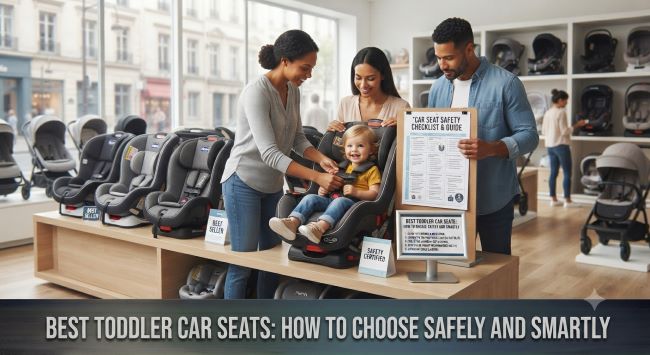
Best Toddler Car Seats: How to Choose Safely and Smartly
Choosing a car seat is the one baby-gear decision where the stakes are genuinely serious, and the one most clouded by marketing and jargon. Convertible, all-in-one, LATCH, tether, expiration dates: the vocabulary alone sends new parents into a spiral. The good news is that the best toddler car seats are not necessarily the most expensive, and the decision comes down to a manageable set of factors once you understand what matters for safety. Your pediatrician and the seat’s manual are the final authorities on your specific child.
A Note Before You Buy
Car seat safety is not the place for guesswork. This article is a general overview, not a substitute for your car seat’s manual, your vehicle’s manual, or professional guidance. Certified Child Passenger Safety Technicians (CPSTs) offer free car seat checks in most areas, and using one is the single best thing you can do to confirm correct installation, since many seats are installed with errors. When safety guidance from an official source conflicts with anything here, follow the official source.
Understanding the Seat Types
For toddlers specifically, three seat categories are relevant:
Convertible car seats. These convert from rear-facing (for infants and young toddlers) to forward-facing (for older toddlers), then are done. They are the workhorse of the toddler years, and many parents move to one after the infant bucket seat is outgrown.
All-in-one car seats. These do everything: rear-facing, forward-facing, and eventually booster mode, in a single seat that lasts from infancy through the booster years. Convenient and cost-effective, though they can be bulky and sometimes compromise slightly on any single stage.
Forward-facing car seats with harness. Dedicated forward-facing seats for toddlers who have outgrown rear-facing limits, used before the booster stage.
The safety consensus, backed by pediatric guidance, is to keep children rear-facing as long as possible, up to the seat’s maximum height and weight, because rear-facing is dramatically safer in a crash. Many of the best toddler car seats now accommodate rear-facing well into the toddler years.
The Safety Features That Actually Matter
Cutting through the marketing, these features on the best toddler car seats genuinely affect safety:
- Five-point harness. Non-negotiable for the toddler years. Straps over both shoulders, both hips, and between the legs distribute crash forces properly.
- Side-impact protection. Reinforced structure and padding around the head and torso. Increasingly standard on the best toddler car seats.
- Steel-reinforced or energy-absorbing frame. Adds crash protection.
- Anti-rebound bar or load leg (on some seats) further limits movement in a crash.
- Easy-adjust harness height, ideally no-rethread, which lets you raise the harness as your child grows without uninstalling the seat.
- Clear recline indicators and level lines that help you install at the correct angle.
- A high rear-facing weight and height limit, to keep your child rear-facing longer.
Installation: Where Most Mistakes Happen
The best toddler car seats provide no protection if installed wrong, and installation errors are extremely common. The essentials:
- Choose LATCH or seatbelt installation, not both. Both systems are safe when used correctly, but combining them is not approved unless the manual specifically allows it.
- The seat should not move more than one inch side to side or front to back at the belt path when properly installed.
- Use the tether for forward-facing seats. The top tether significantly reduces head movement in a crash and is frequently skipped.
- Check the recline angle for rear-facing seats, using the seat’s built-in indicators.
- Harness height matters: at or below the shoulders for rear-facing, at or above the shoulders for forward-facing.
- The chest clip sits at armpit level, and the harness should be snug enough that you cannot pinch a horizontal fold in the strap at the shoulder.
Get a free CPST inspection to confirm all of this. It is worth the trip.
What to Consider When Comparing
Beyond safety basics, these practical factors separate the best toddler car seats for your specific situation:
Fit in your vehicle. Car seats vary in footprint, and a seat that fits one car may not fit another, especially in smaller vehicles or across a back row with multiple seats. Check dimensions against your car.
Ease of cleaning. Toddlers are messy. Machine-washable, easy-remove covers matter more than parents expect.
Weight and portability if you move the seat between cars or travel.
Ease of adjustment, since a seat you can adjust quickly gets used correctly more often.
Expiration date. Car seats expire, typically 6 to 10 years from manufacture, because materials degrade. Check this especially on hand-me-down seats, and never use a seat that has been in a crash.
Coordinating With Your Other Gear
A car seat is one piece of a larger baby-gear system, and thinking about how the pieces work together saves money and hassle. Travel systems that pair a car seat with a stroller frame are popular for the infant stage, and as your child grows into the best toddler car seats covered here, revisiting the stroller side of the setup often makes sense too. Comparing options like those in Best Baby Strollers 2025 alongside your car seat choice helps you build a system that works together rather than a collection of mismatched pieces.
Budget and Value
Reassuringly, price does not equal safety. Every car seat sold in the US meets the same federal safety standards, so a moderately priced seat that fits your car and child and installs correctly protects better than an expensive one installed wrong. Higher-priced seats buy convenience features, plusher materials, extended rear-facing limits, and sometimes extra side-impact engineering, but the safety floor is set by standards every seat meets.
The practical strategy for choosing among the best toddler car seats: buy a seat that fits your vehicle, matches your child’s size with room to grow, has the features you will actually use, and comes from a reputable brand. Then get it checked by a CPST. Do that, and you have made the decision well regardless of what you spent.
Key Takeaways
- Consult your car seat manual, vehicle manual, and a certified CPST; this guide is a general overview, not personalized safety advice.
- Toddler-relevant types are convertible, all-in-one, and forward-facing harness seats; all-in-one seats last longest.
- Keep children rear-facing as long as the seat’s height and weight limits allow, since rear-facing is significantly safer.
- Essential safety features: five-point harness, side-impact protection, no-rethread harness, and high rear-facing limits.
- Use either LATCH or seatbelt (not both unless approved), and confirm the seat moves less than one inch at the belt path.
- Always use the top tether for forward-facing seats, and set the chest clip at armpit level.
- Check vehicle fit, cleaning ease, and expiration dates (6-10 years); never use a seat that has been in a crash.
- Price does not equal safety, since all US seats meet the same federal standards; a well-fitted, correctly installed seat is what matters.