Kodak PIXPRO FZ45: A Complete Review
The Kodak PIXPRO FZ45 occupies a specific and genuinely useful niche in the current camera market: a simple, affordable point-and-shoot digital camera in a market segment that’s been almost entirely overtaken by smartphone photography, appealing specifically to buyers wanting a basic dedicated camera for a particular purpose — whether that’s a first camera for a child, a backup or travel camera, or simply a straightforward device for people who prefer a dedicated camera’s physical controls and form factor over using their phone for casual photography.
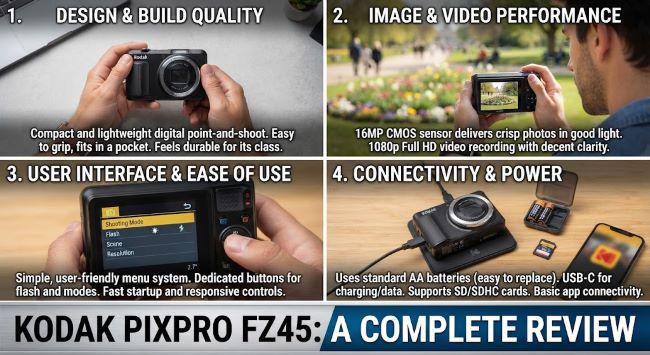
Key Specifications
The PIXPRO FZ45 features a 16-megapixel CCD sensor, a 4x optical zoom lens, a 2.7-inch LCD screen for composing and reviewing shots, and runs on standard AA batteries rather than a proprietary rechargeable battery pack, a notable practical difference from most current cameras that’s worth understanding before purchase, covered in more detail below. The camera shoots both still photos and basic video, with image stabilization features intended to help reduce blur from hand movement during shooting.
Image Quality: What to Realistically Expect
It’s important to set accurate expectations for this specific camera category before purchasing. The FZ45 uses a relatively small CCD sensor typical of budget point-and-shoot cameras in this price tier, meaning image quality, while perfectly serviceable for casual snapshots, social sharing, and general everyday photography use, won’t match the image quality produced by even a mid-range modern smartphone camera, let alone a genuine mirrorless or DSLR camera with a substantially larger sensor.
In good, well-lit conditions, the FZ45 produces reasonably sharp, accurately colored images suitable for casual use, printing standard photo sizes, and general sharing purposes. In lower light conditions, like most cameras using a small sensor in this budget category, image quality degrades noticeably, with increased visible noise (graininess) and reduced sharpness compared to its daylight performance, a limitation worth understanding clearly if low-light or indoor photography without flash is a significant part of your intended use case.
Who the FZ45 Is Best Suited For
A first camera for children. The FZ45’s simple control layout, affordable price point that makes potential damage or loss less financially significant than with an expensive device, and straightforward AA battery operation (avoiding the need to manage charging a proprietary battery) make it a commonly recommended option specifically for parents buying their child’s first dedicated camera.
Casual travelers wanting a simple backup camera. For travelers who primarily rely on their smartphone but want a lightweight, inexpensive backup option, or who specifically prefer not to risk their primary phone in certain situations (water activities, adventure travel with higher damage risk), the FZ45 provides basic photographic capability without significant financial risk if something goes wrong with the device during travel.
Budget-conscious buyers wanting a dedicated camera. For users who specifically prefer the experience and physical controls of a dedicated camera over smartphone photography, but don’t have the budget or specific need for a more capable (and correspondingly more expensive) mirrorless or DSLR system, the FZ45 represents a genuinely accessible entry point into dedicated camera ownership.
Situations specifically benefiting from AA battery operation. Since the FZ45 runs on standard AA batteries rather than a proprietary rechargeable pack, this can be a genuine practical advantage in situations where charging access is limited or unpredictable (extended outdoor activities, certain travel situations), since standard AA batteries are universally available for purchase nearly anywhere, unlike a dead proprietary battery pack that requires the specific matching charger to restore.
Who Might Prefer a Different Option
Users prioritizing the highest possible image quality at this price point. Given how dramatically smartphone camera technology has advanced, particularly in mid-range and flagship phones, many users specifically prioritizing image quality above all else will likely find even their existing smartphone outperforms the FZ45 in most shooting conditions, making the camera’s appeal more about the dedicated-device experience and specific use cases (like the ones outlined above) than about pursuing maximum possible image quality.
Users wanting advanced manual controls or RAW image capture. The FZ45 is firmly positioned as a simple, accessible point-and-shoot rather than an enthusiast or semi-professional tool, meaning users wanting genuine manual exposure control, RAW file capture for extensive post-processing, or interchangeable lens flexibility should look toward more advanced (and correspondingly more expensive) camera categories entirely.
Users prioritizing video capabilities specifically. While the FZ45 does shoot basic video, users with video as a primary or significant priority will generally find better-suited options either among more video-focused dedicated cameras or, in many cases, simply through their smartphone’s video capabilities, which have generally advanced further relative to budget point-and-shoot video capability than smartphone still photography has relative to budget camera still image quality.
How It Compares to Smartphone Photography
This comparison is worth addressing directly, since it’s the most relevant practical comparison for most potential buyers in 2025 specifically. A modern smartphone, even a mid-range model, will generally outperform the FZ45 in most standard shooting conditions, particularly in lower light, due to the smartphone’s combination of computational photography processing and, in many cases, a larger or more advanced sensor than this budget camera category typically uses. The FZ45’s continued appeal comes not from competing on raw image quality with smartphones, but from the specific practical advantages covered above: affordability, simplicity, AA battery operation, and suitability as a dedicated, lower-stakes device for children or specific travel and backup use cases.
Editing and Getting the Most From Your Photos
Since budget point-and-shoot cameras like the FZ45 don’t shoot RAW files and have more limited in-camera processing than premium cameras or modern smartphones, applying some thoughtful editing to your JPEG output afterward can meaningfully improve your final images. For tools and techniques specifically aimed at giving casual photography a more polished, intentional look after the fact, analog film Lightroom presets covers an approach worth exploring for adding character and visual interest to images from simpler cameras like this one, helping bridge some of the gap between this budget device’s straightforward output and a more deliberately stylized final result.
Key Takeaways
- The Kodak PIXPRO FZ45 is a budget point-and-shoot digital camera with a 16-megapixel CCD sensor, 4x optical zoom, and notably runs on standard AA batteries rather than a proprietary rechargeable battery pack
- Image quality is serviceable for casual use in good lighting but degrades noticeably in lower light, and won’t match even a mid-range modern smartphone’s camera performance in most shooting conditions
- The camera is best suited for specific use cases: a first camera for children, a low-stakes backup camera for travel, or for buyers who simply prefer a dedicated camera’s physical controls and form factor over smartphone photography
- AA battery operation is a genuine practical advantage in situations with limited or unpredictable charging access, since standard batteries are universally available compared to a dead proprietary battery pack
- Users wanting maximum image quality, manual controls, RAW capture, or strong video capabilities should look toward more advanced and correspondingly more expensive camera categories
- The camera’s appeal in 2025 comes from specific practical advantages (affordability, simplicity, battery type) rather than competing directly with smartphone cameras on raw image quality
- Thoughtful post-processing, including preset-based editing approaches, can help meaningfully improve the final look of images from simpler budget cameras like this one