Free CNA Classes Near Me: Where to Find Them and How They Work
Becoming a Certified Nursing Assistant (CNA) is one of the fastest, most accessible entry points into healthcare, and the good news for cost-conscious aspiring CNAs is that genuinely free training programs exist through several different channels. Understanding how these free options work, what’s typically required to qualify, and where to find them near you can save you anywhere from a few hundred to over a thousand dollars compared to paying full tuition at a private CNA training program.
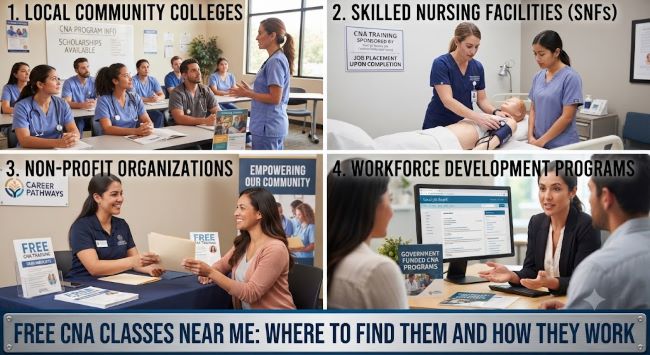
How Free CNA Classes Typically Work
Free CNA training programs aren’t free in the sense that no one pays for them — rather, the cost is covered by a sponsoring organization rather than the student directly. Understanding who’s sponsoring the program helps you understand the requirements and trade-offs involved:
Employer-sponsored training. This is the most common path to genuinely free CNA training. Nursing homes, assisted living facilities, hospitals, and home health agencies frequently sponsor CNA training for new hires, covering the full cost of the program (often including the certification exam fee) in exchange for a commitment to work for the facility for a specified period after certification, typically six months to two years. If you leave before fulfilling the commitment, some programs require repayment of training costs on a prorated basis.
Community college and workforce development programs. Some states and local workforce development boards fund free or significantly subsidized CNA training as part of broader healthcare workforce initiatives, particularly in regions facing nursing assistant shortages. Eligibility often depends on income level, unemployment status, or residency requirements.
Red Cross and similar nonprofit programs. The American Red Cross and other nonprofit healthcare training organizations occasionally offer free or low-cost CNA training, sometimes through grant funding tied to specific community health initiatives.
State-funded workforce programs. Many states offer free or low-cost vocational training through their workforce development or unemployment services systems, particularly for individuals who are unemployed, underemployed, or receiving certain public assistance benefits. Programs like WIOA (Workforce Innovation and Opportunity Act) funding can cover CNA training costs for qualifying individuals.
High school CNA programs. Some high schools, particularly those with career and technical education (CTE) tracks, offer CNA certification programs to students at no cost as part of their regular curriculum, allowing students to graduate already certified.
Where to Find Free CNA Classes Near You
Local nursing homes and long-term care facilities. Call directly and ask whether they offer sponsored CNA training for new hires. This is often the fastest and most reliable path to genuinely free training, since facilities actively recruiting for CNA positions frequently advertise this benefit directly on their job postings.
Indeed and other job boards. Search “CNA training provided” or “free CNA classes” combined with your location. Many healthcare facility job postings specifically advertise sponsored training as a recruitment incentive.
Your state’s CareerOneStop website (careeronestop.org). This Department of Labor resource helps identify WIOA-funded training programs and local American Job Center locations that can connect you with funded CNA training options based on your eligibility.
Local community colleges. Even if their standard CNA program isn’t free, community colleges often partner with workforce development boards or specific employers to offer subsidized or sponsored cohorts — ask their continuing education or workforce development department directly about current funding options.
State health department or board of nursing websites. Many states maintain lists of approved CNA training programs, and some explicitly note which ones offer free or subsidized options through state workforce initiatives.
Red Cross chapter websites. Search your local Red Cross chapter for current CNA training offerings and whether any free or reduced-cost cohorts are currently running.
Eligibility Requirements to Watch For
Employment commitment. Employer-sponsored programs almost always require a post-certification work commitment. Read this commitment carefully, including what happens if you need to leave early (illness, relocation, family circumstances) and whether repayment is prorated or charged in full.
Income or unemployment status. State-funded workforce programs often have specific income thresholds or require current unemployment or underemployment status to qualify.
Age and education requirements. Most CNA programs require you to be at least 16-18 depending on the state, with a high school diploma or GED (though some programs allow concurrent enrollment for high school students still completing their diploma).
Background check and health requirements. All CNA programs, free or paid, require a background check (given the vulnerable populations CNAs work with) and often proof of certain immunizations or a health screening before clinical training begins.
Residency requirements. Some state and local workforce programs require proof of residency within the specific funding jurisdiction.
What Free CNA Training Typically Includes
A genuine CNA training program, whether free or paid, must meet state-mandated minimum hour requirements (typically 75-150 hours combined classroom and clinical instruction, varying significantly by state) covering topics including basic nursing skills, infection control, patient rights, communication, nutrition, and hands-on clinical practice under supervision. Free programs sponsored by reputable employers or institutions should meet the same state certification requirements as paid programs — verify that any program you’re considering is state-approved before enrolling, regardless of cost.
Weighing Employer-Sponsored Training Against Other Options
Employer-sponsored free CNA training is an excellent option if you’re already confident you want to work in that specific facility or type of care setting, since the trade-off (a work commitment) aligns naturally with your actual career plans. If you’re less certain about your specific employment preferences or want more flexibility to choose where you work immediately after certification, a workforce development-funded program without an employment commitment attached, even if it requires more application paperwork to access, may be the better fit despite requiring more upfront research to find.
Key Takeaways
- Free CNA classes near me are typically funded by one of several sources: employer sponsorship (most common, requires a post-certification work commitment), state workforce development programs (WIOA funding), community college partnerships, or nonprofit organizations like the Red Cross
- Employer-sponsored training usually requires working for that facility for six months to two years after certification, with potential repayment obligations if you leave early
- CareerOneStop.org is the most useful starting point for identifying state-funded workforce training options based on your specific eligibility
- Calling local nursing homes and long-term care facilities directly to ask about sponsored training is often the fastest path to a genuinely free program
- All legitimate CNA programs, free or paid, must meet state-mandated minimum training hours and result in eligibility to sit for the state certification exam — verify any program’s state approval before enrolling
- Eligibility requirements vary by program type: employment commitments for employer-sponsored training, income or unemployment status for workforce programs, and standard age/education/background check requirements across all options
- Choose between employer-sponsored and independently-funded free training based on how confident you are in your specific post-certification employment plans