Best Chicha Morada Near Me: Peru’s Purple Corn Drink Explained
Most people who try chicha morada for the first time aren’t sure what to expect. Purple corn makes a drink that looks almost like grape juice but tastes like nothing else you’ve had: sweet, fruity, slightly spiced, with a natural earthiness from the corn itself and a deep magenta color that stains anything it touches. It’s one of Peru’s most beloved beverages, present at nearly every Peruvian meal, and once you’ve had a well-made version alongside ceviche or lomo saltado you understand immediately why it belongs there. If you’ve been searching for the best chicha morada near me, this guide explains what makes it special and where to find it.
What Chicha Morada Is
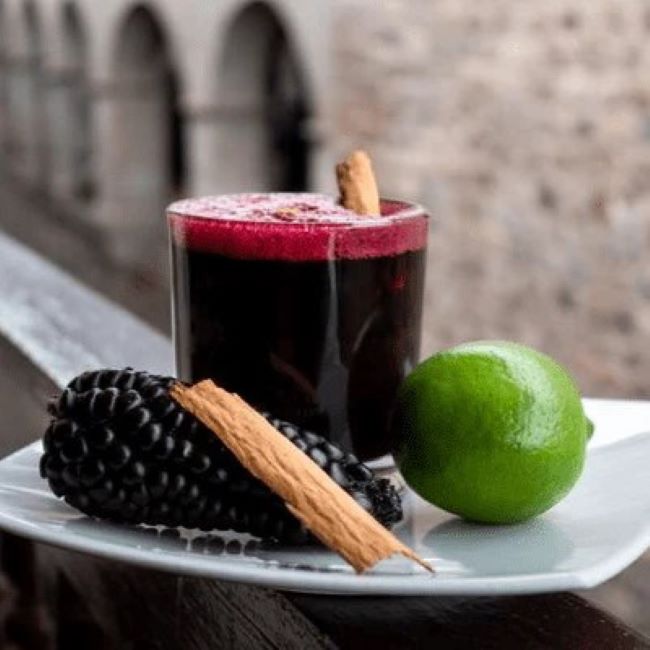
Chicha morada is made by simmering dried purple corn (maíz morado) in water with pineapple skin and core, quince or apple, cinnamon sticks, cloves, and sometimes star anise. The liquid is strained, cooled, sweetened with sugar, and finished with fresh lime juice. It’s served cold, often over ice, and sometimes with small pieces of diced fruit (apple, pineapple) floating in the glass.
The purple corn gives the drink both its color and its character. Maíz morado is native to Peru and has been cultivated in the Andes for thousands of years. It’s naturally high in anthocyanins, the same antioxidant pigments that give blueberries and purple cabbage their color. These compounds turn a vivid reddish-purple when dissolved in liquid and give chicha morada its unmistakable appearance.
The spice combination of cinnamon and cloves adds warmth without making the drink taste like mulled wine. The pineapple and quince contribute fruity acidity that balances the sweetness of the corn. The lime juice at the end brightens everything. A well-made chicha morada near me has a layered flavor: sweet up front, spiced in the middle, tart at the finish, with the earthy corn note running underneath all of it.
What Chicha Morada Is Not
It’s worth clarifying one thing before you start searching. Chicha morada is a non-alcoholic beverage. It should not be confused with chicha de jora, the fermented corn drink that has been made in the Andes for centuries and contains alcohol. Chicha morada is a refreshment: no fermentation, no alcohol, safe for any diner.
The distinction matters because some searches for chicha morada near me surface information about fermented chicha, which is a different product with a very different preparation and flavor profile.
Where to Find Chicha Morada Near You
Peruvian restaurants. This is where chicha morada near me belongs first in the search. It appears on virtually every Peruvian restaurant’s beverage menu. If a restaurant identifies as Peruvian and doesn’t carry chicha morada, that’s a notable omission.
Latin American restaurants with Peruvian influence. Some broader Latin American restaurants carry chicha morada as a specialty beverage, particularly in cities with significant Peruvian populations.
Peruvian bakeries and food markets. Some Peruvian grocery stores and delis sell chicha morada in bottles, both commercially made and house-prepared. The house-prepared version from a Peruvian market is often better than commercial bottled products.
Latin American beverage shops and juice bars. In cities with diverse Latin American communities, specialty drink shops sometimes carry chicha morada alongside horchata, tamarind agua fresca, and other regional beverages.
Bottled and canned versions. Commercial chicha morada is available at Latin American grocery stores in bottles and as a powder concentrate. These are convenient but noticeably thinner and less complex than a freshly made version.
US cities where finding chicha morada near me at a Peruvian restaurant is straightforward: Los Angeles, Miami, New York, Paterson (New Jersey), Houston, and the DC metro area all have multiple Peruvian restaurants where it appears on every table.
Search approach: Google Maps filtered for “Peruvian restaurant” in your area. Chicha morada is such a standard beverage at Peruvian restaurants that you don’t need to search for it independently: find the restaurant and the drink will be there.
What a Properly Made Version Tastes Like
The color. Deep reddish-purple, almost jewel-like. A pale or thin-looking chicha morada was either made with insufficient corn or diluted too much. The color should be vivid and consistent throughout the glass with no separation.
The spice balance. Cinnamon should be present but not dominant. The drink shouldn’t taste like cinnamon water. It should taste like purple corn with cinnamon and clove as supporting notes in the background.
The sweetness level. Moderately sweet, not aggressively so. Chicha morada should be refreshing, and excessive sugar makes it cloying rather than thirst-quenching. A properly calibrated version has sweetness that supports the other flavors without overwhelming them.
The lime finish. The tartness from fresh lime juice should be clearly present, adding brightness that lifts the whole drink. Chicha morada without lime acidity tastes flat and heavy. Bottled versions often lack this because lime juice doesn’t preserve well: it’s one of the reasons freshly made is so much better.
The corn depth. Underneath all the other flavors, there should be a faint earthiness and natural sweetness from the corn itself. This is subtle but distinguishable from a version made with artificial purple coloring or grape juice base (which some shortcuts attempt).
The fruit pieces. Many restaurants add small diced apple or pineapple to the glass before serving. This isn’t just decorative: the fruit pieces soak up the chicha morada and become an added treat at the bottom of the glass.
Chicha Morada in the Context of a Peruvian Meal
In Peru, chicha morada is the default table drink the way water or iced tea might be elsewhere. It’s ordered reflexively alongside ceviche, lomo saltado, arroz con leche, papa a la huancaína, or any other Peruvian preparation. The combination works because the drink’s acidity and spiced sweetness complement the bold flavors of Peruvian cooking rather than competing with them.
The pairing with ceviche is particularly well-considered. The tartness of the lime in the chicha echoes the citrus of the ceviche’s leche de tigre, while the sweetness provides contrast to the heat of the ají. It’s one of those pairings that evolved alongside the food and makes sense once you experience it.
For a broader Peruvian beverage experience alongside chicha morada near me, pisco sour is the other defining Peruvian drink and appears at the same restaurants. Ordering both across a meal gives you the full picture of what Peru does with drinks.
For other Peruvian dishes to build a full table around your chicha morada, rocoto relleno is a stuffed pepper dish from Arequipa that pairs naturally with the sweetness of the drink.
Making Chicha Morada at Home
Dried purple corn (maíz morado) is available at most Latin American grocery stores and online. The process is simple: simmer the dried corn with pineapple core, quince or apple, cinnamon sticks, and cloves in water for about forty-five minutes until the liquid turns deep purple. Strain, sweeten while warm so the sugar dissolves, cool completely, and finish with fresh lime juice before serving over ice.
The home version is substantially better than any commercial product and takes less than an hour of active time. It keeps refrigerated for about four days, improving slightly as the flavors meld.
Key Takeaways
- Chicha morada is a non-alcoholic Peruvian beverage made by simmering dried purple corn (maíz morado) with pineapple, quince, cinnamon, and cloves, then straining, sweetening, and finishing with fresh lime juice
- It is not fermented and contains no alcohol: it should not be confused with chicha de jora, the fermented Andean corn drink
- The best chicha morada near me will be found at any Peruvian restaurant, where it’s a standard beverage that appears on virtually every table
- Quality markers include deep reddish-purple color, balanced sweetness, clear spice notes without cinnamon dominance, bright lime finish, and faint natural earthiness from the corn
- Freshly made versions from Peruvian restaurants or home preparation are significantly better than bottled commercial products, primarily because fresh lime juice degrades quickly
- It pairs naturally with all Peruvian food, with the ceviche pairing being particularly well-suited: the drink’s tartness and sweetness complement the citrus and heat of the dish
- Home preparation is simple: dried purple corn is available at Latin American grocery stores and the process takes under an hour