Best Arroz con Leche Boliviano Near Me: What Sets the Bolivian Version Apart
Rice pudding exists across Latin America, but calling all versions the same thing would be like saying all bread is the same bread. Each country has its own approach: different spice balance, different texture, different serving temperature. Arroz con leche boliviano has its own character, and once you know what it is, the search for the best arroz con leche boliviano near me becomes a much more specific mission. This guide covers what makes Bolivia’s version distinct, where to look for it, and what separates a proper bowl from a generic one.
What Arroz con Leche Boliviano Is
The base is the same across Latin America: rice simmered in whole milk with sugar until the starch releases and the mixture thickens into a creamy pudding. What differs between countries is the spicing, the thickness, the sweetness level, and whether it’s eaten warm or cold.
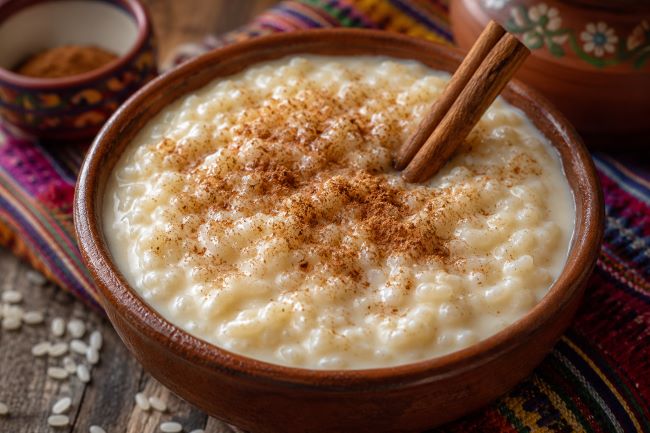
The Bolivian version is typically warmly spiced with cinnamon and cloves, sometimes with a hint of lemon or orange zest. The texture leans toward the thicker side: arroz con leche boliviano near me should be substantial and creamy rather than loose and soup-like. Some versions include raisins, which add bursts of sweetness and a slight chew throughout the pudding.
One detail that distinguishes the Bolivian preparation from, say, the Peruvian or Argentine versions is the finish: many Bolivian recipes dust the top with ground cinnamon just before serving, creating a visible spice layer on the surface that releases fragrance when you stir it. It’s a small touch but one that signals a cook who knows the dish.
Arroz con leche boliviano is typically served warm as a dessert but also appears as a breakfast or afternoon snack in Bolivia. In restaurants outside Bolivia it usually shows up as a dessert, often listed alongside other traditional sweets.
Where to Find It
Bolivian restaurants are the primary destination for the best arroz con leche boliviano near me. The challenge is that Bolivian cuisine is underrepresented in restaurant scenes outside the US cities with established Bolivian communities.
Cities worth searching:
Washington DC metro area (especially Arlington, Virginia). The DC suburb of Arlington has one of the largest Bolivian communities in the US. Multiple Bolivian restaurants in the area serve traditional desserts including arroz con leche.
Providence, Rhode Island. A significant Bolivian population supports traditional food businesses in Providence. This is one of the better cities outside the DC area for finding authentic Bolivian cooking.
New York and New Jersey. Bolivian restaurants exist in Queens and in parts of New Jersey. The density is lower than in DC but options are there.
Miami. The broad Latin American restaurant scene in Miami includes some Bolivian spots, particularly in areas like Doral and Hialeah where South American communities concentrate.
Search approaches: Google Maps filtered for “Bolivian restaurant” in your city is the starting point. Beyond that, searching Facebook for Bolivian community groups in your area and asking directly tends to surface information that isn’t on any review platform. Bolivian home cooks sometimes sell prepared food through community networks, and arroz con leche boliviano is exactly the kind of dish that travels well.
What Makes a Proper Version
The cinnamon. It should be present and noticeable, both in the pudding itself and as a surface dusting. Arroz con leche boliviano without cinnamon flavor is missing its defining spice.
The thickness. The pudding should hold its shape briefly when spooned into a bowl before settling. It should not be pourable like a thin sauce. A spoon drawn through a proper bowl should leave a track. If the pudding is watery or thin, either the rice wasn’t cooked long enough or too much liquid was used.
The rice texture. Individual grains should still be identifiable but very soft, having released most of their starch into the milk. The grains shouldn’t be crunchy or al dente. But they also shouldn’t have completely dissolved: that produces a porridge rather than a rice pudding.
The sweetness level. Bolivian arroz con leche near me tends toward moderate sweetness rather than intensely sugary. It should taste of milk and spice with a background sweetness, not of sugar with a background of milk. If the first thing you notice is pure sweetness, the balance is off.
Temperature. Served warm is traditional and shows the dish was made to order or recently prepared. Cold arroz con leche boliviano exists and is acceptable, but the spice fragrance is more pronounced when warm.
The raisins. Not every version includes them, but when present they should be plump, having rehydrated during the cooking process. Shriveled, hard raisins in pudding indicate they went in too late or weren’t cooked with the rice.
How It Compares to Other Latin American Versions
Peruvian arroz con leche is often served with a layer of purple mazamorra (corn pudding) alongside it, making the combined dessert called arroz con leche y mazamorra. The Peruvian version tends to be sweeter and less spiced than the Bolivian one.
Argentine arroz con leche is often simpler in spicing, sometimes flavored only with vanilla and a little cinnamon, with a texture that can be looser than the Bolivian version.
Chilean arroz con leche uses more cinnamon as a finish but is typically less thick.
The Bolivian approach strikes a balance: warmly spiced, properly thick, not aggressively sweet. For someone who finds some Latin American rice puddings too thin or too sugary, the Bolivian version often hits the right note.
Pairing and Context
Arroz con leche boliviano is a dessert that works alongside savory Bolivian dishes as a meal closer. If you’re at a Bolivian restaurant, ending with arroz con leche after dishes like salteñas, silpancho, or picante de pollo is the natural progression.
It also pairs well with coca tea (mate de coca) or a mild herbal infusion, which is common in Bolivian dining culture.
For other Bolivian dishes worth exploring in the same meal, queso humacha is another traditional preparation that appears at Bolivian restaurants and gives you a broader sense of the cuisine before you reach the dessert course.
Key Takeaways
- Arroz con leche boliviano is rice simmered in whole milk with cinnamon, cloves, sugar, and sometimes raisins or citrus zest, served warm with a cinnamon dusting on top
- The Bolivian version is thicker, more warmly spiced, and less sweet than many other Latin American rice puddings
- The best arroz con leche boliviano near me will come from dedicated Bolivian restaurants, with the DC metro area (especially Arlington, VA) and Providence, RI being the strongest US markets
- Quality markers include visible cinnamon presence in flavor and surface dusting, a thick spoonable consistency, soft but identifiable rice grains, and warm serving temperature
- Bolivian community Facebook groups often surface local home cooks and small food businesses that aren’t on Google Maps or Yelp
- Compare to other regional versions: Bolivian arroz con leche tends to be spicier and thicker than Peruvian, Argentine, or Chilean preparations
- Straightforward to make at home: long-grain white rice, whole milk, cinnamon stick, cloves, sugar, and patience to simmer until thick