What Do Rolly Pollies Eat? A Complete Guide to Their Diet
Rolly pollies — also known as pill bugs, armadillos bugs, doodle bugs, and by their scientific names Armadillidium vulgare or similar species — are not actually insects at all. They’re terrestrial isopods, crustaceans more closely related to shrimp and crabs than to any bug. This distinction matters because it shapes their diet in interesting ways: they eat more like tiny aquatic decomposers than like typical garden insects, and they provide a function in the soil ecosystem that most people don’t fully appreciate. This guide covers what rolly pollies eat in the wild, in the garden, and in captivity.
What Rolly Pollies Eat in the Wild
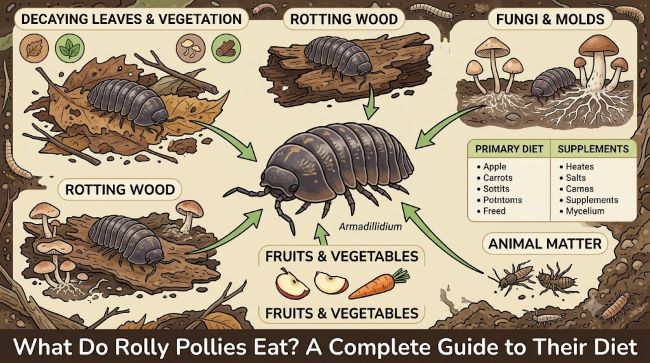
Rolly pollies are detritivores: organisms that feed on decaying organic matter. Their primary diet consists of decomposing plant material at various stages of breakdown.
Decaying leaves. This is the staple of the rolly polly diet. They feed heavily on fallen leaves that have begun to soften and break down. The partial decomposition makes the leaf material more accessible to them since their mouthparts can’t easily process very fresh, tough plant material.
Rotting wood. Soft, decaying wood is another primary food source. Rolly pollies consume wood that has already been worked on by fungi and bacteria, processing it further and contributing to decomposition.
Dead plant matter generally. Any plant material in the process of decomposing is fair game: dead stems, spent flowers, decomposing roots, fallen fruit.
Fungi and mold. Rolly pollies actively seek out and consume fungi, including mold growing on decomposing material. This positions them as important consumers in the decomposer food web.
Animal feces. This sounds unpleasant but it’s ecologically important: rolly pollies consume the droppings of other animals, which are rich in nutrients and partially processed organic material.
Their own feces. Rolly pollies engage in coprophagy (eating their own droppings), which allows them to recover nutrients — particularly copper — from material that passed through their gut the first time. Copper is an essential element in their blood (their blood uses copper-based hemocyanin rather than iron-based hemoglobin) and they recirculate it by re-consuming their waste.
Occasionally, living plant material. While rolly pollies prefer dead material, they will nibble on seedlings, tender roots, and living plant parts when decaying material is scarce. This makes them a very minor nuisance in gardens with dense populations, but they’re not typically significant plant pests.
Calcium-rich materials. Rolly pollies need calcium to build and maintain their exoskeleton. They actively seek out calcium-rich materials including crushed eggshells, chalk, and cuttlebone. This is worth knowing for anyone keeping them in captivity or gardening in calcium-poor soil.
Are Rolly Pollies Good for the Garden?
Yes, in most garden contexts rolly pollies are beneficial. Their decomposition activity breaks down organic matter and speeds the cycling of nutrients back into the soil. They’re active composters at a small scale, and their activity improves soil structure and fertility.
A very large population in a garden can occasionally cause problems for seedlings or very tender plants, but this is unusual and is far outweighed by their decomposition benefits in most situations. The rare cases where rolly pollies are problematic typically involve newly germinated seeds or very young seedlings, which can be protected with physical barriers if needed.
They also serve as an important food source for birds, toads, and other insectivores in the garden ecosystem.
What to Feed Rolly Pollies in Captivity
Keeping rolly pollies as pets or as a bioactive vivarium component (they’re popular in terrariums with reptiles and amphibians for their cleaning function) requires replicating their natural diet in an enclosed environment.
Primary foods:
Dried leaves. The foundation of their captive diet. Oak, maple, magnolia, and other deciduous leaves that have been dried (and ideally partially aged) are excellent. Avoid leaves from walnut or black walnut trees, which contain juglone that can be toxic to many invertebrates.
Cork bark and decaying wood. Pieces of cork bark or soft rotting wood provide both food and cover.
Vegetables and fruits. Rolly pollies readily eat cucumber slices, zucchini, apple pieces, strawberries, squash, and other soft vegetables and fruits. These provide moisture alongside nutrition. Avoid citrus and onion family vegetables.
Protein sources. Occasionally providing protein sources like dried mealworms, fish flakes (unseasoned), or small pieces of dried shrimp supports healthy molting and reproduction.
Calcium supplementation. This is critical in captivity. Add crushed eggshells, cuttlebone, or reptile-grade calcium powder to the enclosure. Without sufficient calcium, molting failures and exoskeleton problems occur.
Leaf litter. A deep bed of mixed leaf litter in the enclosure serves as both food and habitat, replicating their natural forest floor environment most closely.
What to avoid feeding rolly pollies in captivity:
Citrus fruits (acidic and potentially harmful), onions and garlic, spicy or seasoned foods, processed human foods, and any plant material that has been treated with pesticides. Pesticide-exposed plant matter is dangerous even after the plant has died and dried.
How Much and How Often to Feed Them
In captivity, rolly pollies don’t need to be fed on a strict schedule. Maintaining a deep leaf litter substrate provides an ongoing food source. Supplement with fresh vegetables and calcium sources two to three times per week, removing uneaten perishable food before it becomes moldy (though they will eat the mold that develops, excessive moisture from rotting food causes other problems in the enclosure).
In a bioactive vivarium with good leaf litter maintenance and calcium supplementation, a rolly polly colony largely sustains itself with minimal additional feeding.
Rolly Pollies and Moisture
Because rolly pollies are technically crustaceans rather than insects, they breathe through gills rather than spiracles. Their gills must remain moist to function. This is why you find them in damp, humid environments: under logs, in leaf litter, in garden beds with good moisture. In captivity, maintaining humidity in part of their enclosure is essential.
They can tolerate drier areas briefly but need access to moisture at all times. A moisture gradient in the enclosure (wet on one side, drier on the other) allows them to regulate their own humidity needs.
Key Takeaways
- Rolly pollies are detritivores that primarily eat decaying plant material: dead leaves, rotting wood, fungi, and decomposing organic matter of all kinds
- They engage in coprophagy (eating their own feces) to recover copper, which is essential to their biology since their blood uses copper-based hemocyanin
- Rolly pollies are generally beneficial in gardens, speeding decomposition and nutrient cycling: they rarely damage healthy established plants and typically only nibble on very young seedlings
- In captivity, their diet should include dried deciduous leaves as the staple, supplemented with soft vegetables and fruits, occasional protein, and consistent calcium supplementation (crushed eggshells, cuttlebone)
- Calcium is critical: without adequate calcium, rolly pollies experience molting failures and exoskeleton problems
- Avoid feeding them citrus, onion family vegetables, and any plant material that may have been treated with pesticides
- Because they breathe through gills rather than spiracles, they require consistently moist environments: a humidity gradient in captivity allows them to self-regulate