Zero Waste Lifestyle: A Practical Guide to Reducing What You Throw Away
The phrase sounds extreme, almost impossible. A zero waste lifestyle conjures images of a year’s worth of trash fitting in a single jar, and that picture scares most people off before they start. But the real goal is not perfection. It is sending less to the landfill than you did last month, and then a little less the month after that. Done right, it saves money, declutters your home, and shrinks your environmental footprint, all without turning your life upside down.
This guide takes the pressure off and focuses on what actually works. It covers what the idea really means, simple ways to cut waste at home and in your daily routine, the swaps that make the biggest difference, and how it all connects to bigger environmental issues. Whether you want to make one change or rebuild your habits from the ground up, there is a realistic starting point here for you.
What a Zero Waste Lifestyle Really Means
Let us clear up the term first. A zero waste lifestyle is an approach to living that aims to send as little as possible to landfills and incinerators by rethinking how we consume and dispose of things. The word zero is aspirational, a direction to head in rather than a finish line most people will ever cross.
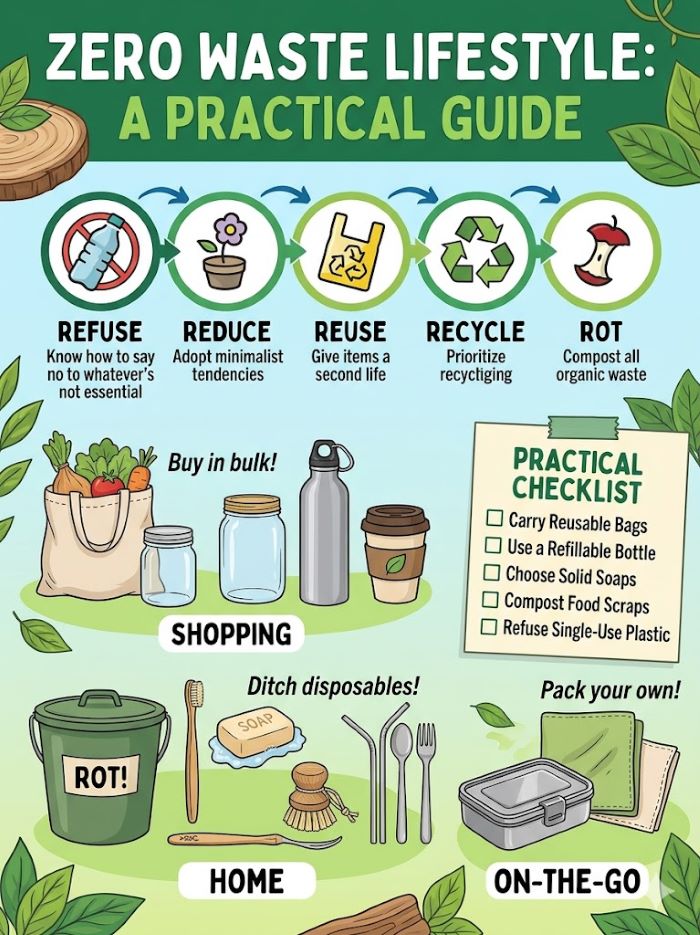
At its heart, going zero waste means questioning the throwaway culture that surrounds us. Instead of buying something, using it once, and tossing it, you look for ways to refuse what you do not need, reduce what you do, and reuse and repurpose the rest. The familiar mantra of reduce reuse recycle captures part of this, though the modern version expands it into five steps: refuse, reduce, reuse, recycle, and rot, with rot meaning composting organic material.
The order matters. Refusing and reducing come first because the most sustainable item is the one you never bring home. Recycling, which many people treat as the main solution, actually sits near the bottom of the list, since it uses energy and only works for certain materials. A true zero waste lifestyle treats recycling as a backup, not the goal. The aim is to need less stuff in the first place, which is both better for the planet and easier on your wallet.
Why It Matters: Waste and Climate Change
Reducing waste is not just about tidy bins. It connects directly to some of the largest environmental challenges we face, including climate change. Landfills are a significant source of methane, a potent greenhouse gas released when organic waste breaks down without oxygen. Cutting what you send there has a real effect.
The link runs deeper than landfills, too. Every product you buy carries a hidden footprint from the resources extracted, the energy used to manufacture it, and the fuel burned to ship it. When you reduce consumption, you shrink all of that upstream impact, not just the trash at the end. This is why reducing waste is one of the more accessible ways individuals can respond in daily life.
Poor waste management compounds the problem. When waste is not handled well, it pollutes land and water, harms wildlife, and wastes the energy and materials that went into making those products. Good waste management, by contrast, recovers value through recycling and composting and keeps harmful materials out of the environment. Understanding this bigger picture helps the small daily choices feel less trivial, since they add up across millions of households and connect to the broader environmental picture.
How to Reduce Waste at Home
Home is where the biggest gains live, since it is where most of your daily consumption happens. Learning how to reduce waste at home is mostly about spotting the disposable items you use without thinking and replacing them with lasting alternatives.
Start by paying attention for a week. Notice what fills your trash and recycling, since you cannot fix what you have not identified. For most households, the biggest culprits are food packaging, food waste, single-use kitchen items, and paper products. Once you see your patterns, you can target the worst offenders first rather than trying to change everything at once.
The kitchen is usually the heart of household waste, so it is the best place to begin. Buy in bulk using your own containers where possible, plan meals to avoid food spoilage, and store food properly to make it last. Swap disposable items for reusable ones, a theme we will return to with specific examples. The bathroom is the next frontier, where bar soaps, refillable products, and longer-lasting tools replace a surprising amount of plastic packaging. Tackling these two rooms covers most of what an average home throws away, and the habits you build there spread naturally to the rest of the house.
Practical Tips to Reduce Waste at Home
Beyond the big picture, specific actions make the difference, so here are concrete how to reduce waste at home tips you can apply right away.
In the kitchen, keep reusable produce bags and shopping totes by the door so you never forget them. Store leftovers in glass containers rather than wrapping them in plastic. Freeze food scraps for stock, and use the whole vegetable when you can. In the bathroom, switch to a bar of soap and a refillable shampoo, and choose a safety razor over disposable ones. Throughout the house, repair items instead of replacing them, and buy secondhand when you need something new to you.
A few more how to reduce waste at home tips focus on shopping smarter. Choose products with minimal or recyclable packaging, favor durable goods over cheap disposable ones, and resist impulse buys that end up unused. Borrowing or renting tools you rarely need keeps them out of your home and eventual trash. These tips are not about doing everything at once. Pick two or three that fit your routine, make them automatic, then add more. Steady, sustainable change beats a dramatic overhaul you abandon in a month.
How to Reduce Waste Daily
The home swaps build the foundation, but your daily routine outside the house matters just as much. Knowing how to reduce waste daily comes down to a handful of habits you repeat so often they become second nature.
The biggest daily wins come from single-use items you can easily replace. Carry a reusable bottle, a coffee cup, and a set of utensils so you never need disposable versions on the go. Say no to straws, plastic cutlery, and unnecessary bags when you are out. Bring your own container for takeout or leftovers when you eat out. These small refusals, repeated every day, prevent a startling amount of trash over a year.
Building these habits is easier with a system. Keep a small kit of reusables in your bag or car so you are always prepared, since the main reason people fall back on disposables is simply not having an alternative on hand. Learning the daily habits is really about removing friction, making the sustainable choice the convenient one. Once carrying your kit becomes automatic, the daily choices stop feeling like effort and start feeling normal. That shift, from conscious decision to ingrained habit, is what makes the change stick for the long term.
The Reusable Water Bottle: A Simple Starting Point
If you want one easy first step, a reusable bottle is hard to beat. Disposable plastic bottles are one of the most common forms of single-use waste, and switching to a refillable bottle eliminates a steady stream of them from your life.
A good stainless steel or glass water bottle lasts for years, keeps drinks cold or hot, and saves money fast compared to buying bottled water. The math is striking: someone who buys a bottle of water daily can spend hundreds of dollars a year on something a single reusable bottle replaces. Beyond the savings, you avoid contributing to the enormous volume of plastic bottles that end up in landfills and oceans.
The trick is to keep your bottle with you so refilling becomes automatic. Leave it by your keys, refill it before you head out, and the habit takes care of itself. This one swap is a perfect example of how a tiny change ripples outward, cutting waste, saving money, and easing the demand for new plastic all at once.
Ditching Paper Towels and Plastic Bags
Two of the most wasteful items in the average home are disposable kitchen towels and single-use shopping bags, and both have easy, lasting replacements.
Paper towels are designed to be used once and thrown away, which makes them a constant source of household waste. Swapping them for washable cloth towels, rags, and napkins handles almost every job they did. Keep a stack of cloths in the kitchen and a basket for used ones, then wash and reuse. You will be surprised how rarely you reach for them once the cloth versions are within easy reach. For the occasional truly messy job, a single roll can last a household months instead of days.
Plastic bags are the other big offender, from grocery bags to produce bags to sandwich bags. Reusable shopping totes and produce bags replace the disposable kind at the store, while reusable silicone bags and containers handle food storage at home. The key here, as with the towels, is keeping the reusable versions accessible, since convenience drives the habit. Stash totes in your car and by the door so you are never caught without one. These two swaps alone noticeably shrink most households’ trash, and they cost very little to start.
Composting With a Compost Bin
Food scraps and organic waste make up a huge share of what households throw away, and most of it does not belong in the trash at all. A compost bin turns those scraps into rich soil instead of methane-producing landfill waste, which is why composting is one of the highest-impact habits in a zero waste lifestyle.
Setting up a system is simpler than many people expect. You can keep a small countertop bin for daily scraps and a larger outdoor bin or tumbler for the actual composting. Add fruit and vegetable scraps, coffee grounds, eggshells, and yard trimmings, while avoiding meat, dairy, and oily foods in most home systems. Over time, the material breaks down into compost you can use in a garden or for houseplants.
No outdoor space is not a dealbreaker. Apartment dwellers can use a small indoor bin with a bokashi or worm system, or drop scraps at a community composting site or farmers market collection point. Many cities now offer curbside compost pickup as well. Whatever your setup, diverting food waste this way is one of the single most effective things you can do, since it tackles the heaviest and most climate-relevant portion of household trash.
Smarter Waste Reduction Strategies
Beyond specific swaps, a few broader strategies guide effective waste reduction. The first is to shift your mindset from disposing to refusing, since the most powerful move is preventing waste before it enters your home. Every freebie, sample, and impulse purchase you decline is waste you never have to manage.
Buying intentionally is the second strategy. Before purchasing, ask whether you truly need the item, whether a durable or secondhand version exists, and how it will eventually be disposed of. This kind of thinking naturally leads to less clutter and less effort down the line, because you simply own fewer disposable things. Choosing quality over quantity means items last longer and get replaced less often.
The third strategy is to close the loop where you can. Repair what breaks, repurpose what you no longer need, donate usable items rather than trashing them, and compost organic matter. Real progress is less about better trash sorting and more about a different relationship with stuff, one where you bring less in and keep what you have in use longer. These strategies reinforce each other, and together they move you steadily toward sending almost nothing to the landfill.
Best Solutions for Waste Management
Individual habits matter, but they work best alongside good systems. The best solutions for waste management combine personal action with community infrastructure and smarter product design.
At the household level, the best approach follows the same priority order as the five Rs: refuse and reduce first, then reuse, then recycle and compost what remains. Sorting your recycling correctly, knowing what your local program actually accepts, and composting organic waste are the practical backbone of handling waste at home. Many people unintentionally contaminate recycling by tossing in items that are not accepted, which can spoil an entire batch, so learning your local rules is one of the most useful things you can do.
At the community and policy level, effective waste management includes accessible recycling and composting programs, deposit-return schemes for bottles, and producer responsibility laws that push companies to design less wasteful packaging. Real progress ultimately requires both individuals and systems to change, since no amount of personal effort can fully offset products designed to be thrown away. Supporting better policies and buying from companies that minimize packaging extends your impact far beyond your own bin. Strong systems at every level are what turn individual good intentions into meaningful environmental results.
Staying Realistic and Avoiding Burnout
A word of caution, because the biggest threat to lasting change is burnout from chasing perfection. The image of fitting a year of trash in a jar is inspiring to some and paralyzing to most. You do not need to get there.
The goal is progress, not purity. Making a few solid swaps that you keep forever beats attempting a total overhaul that you quit in frustration. It is also worth remembering that individual action, while genuinely valuable, is only part of the picture, so do not carry the weight of the whole planet on your personal habits. Do what you reasonably can, advocate for better systems, and let go of guilt over the things outside your control.
Celebrate the wins. A trash can that fills more slowly, money saved on disposables, a home with less clutter, and the small satisfaction of a habit that has become automatic are all real victories. A sustainable zero waste lifestyle is one you can actually maintain, which means it has to fit your real life, budget, and energy. Gentle, consistent progress is what creates lasting change, both for you and for the environment.
Frequently Asked Questions
Is a zero waste lifestyle actually achievable? True zero is nearly impossible for most people, but dramatically reducing your waste is very achievable. The goal is meaningful reduction, not perfection.
What is the easiest first step? Switching to a reusable bottle, shopping bags, and a coffee cup. These small swaps replace common single-use items with almost no effort once they become routine.
Does reducing waste save money? Often yes. Reusable items, buying less, cooking at home, and avoiding disposables all cut spending over time, even if some swaps cost a little upfront.
Do I need a backyard to compost? No. Countertop bins, worm or bokashi systems, community drop-off sites, and curbside compost programs all work for apartments and small spaces.
Is recycling enough on its own? No. Recycling sits near the bottom of the priority list because it uses energy and only works for some materials. Refusing and reducing have a much larger impact.
How does cutting waste help the planet? Less waste means less landfill methane and a smaller footprint from manufacturing and shipping the products you would otherwise buy, all of which contribute to warming.
What if I can only make a few changes? That is completely fine. A few changes you keep forever beat a dramatic overhaul you abandon. Steady, realistic progress is what lasts.
Key Takeaways
- A zero waste lifestyle aims to send as little as possible to landfills by rethinking consumption, and the word zero is a direction to head in rather than a strict finish line.
- Going zero waste follows five steps: refuse, reduce, reuse, recycle, and rot, expanding the classic reduce reuse recycle mantra, with refusing and reducing mattering most.
- Reducing waste connects directly to climate change, since landfills release methane and every product carries a footprint from its manufacture and shipping.
- Learning how to reduce waste at home starts with noticing what fills your bins, then targeting the kitchen and bathroom, where most household waste comes from.
- The most useful how to reduce waste at home tips include reusable produce bags, glass storage, bar soaps, repairing instead of replacing, and choosing minimal packaging.
- Knowing how to reduce waste daily means carrying a small kit of reusables so the sustainable choice becomes the convenient, automatic one.
- A reusable water bottle is the easiest starting swap, replacing a steady stream of disposable plastic bottles while saving money fast.
- Swapping paper towels for cloths and plastic bags for reusable totes and containers noticeably shrinks most households’ trash at very low cost.
- A compost bin diverts food scraps from the landfill into useful soil, tackling the heaviest and most climate-relevant part of household waste, and it works even in apartments.
- Effective waste reduction and the best solutions for waste management combine personal habits with community programs and better product design, since strong systems at every level turn good intentions into real results, best pursued realistically to avoid burnout.