Recent Innovative Marketing Examples Campaigns 2025: What’s Working Now
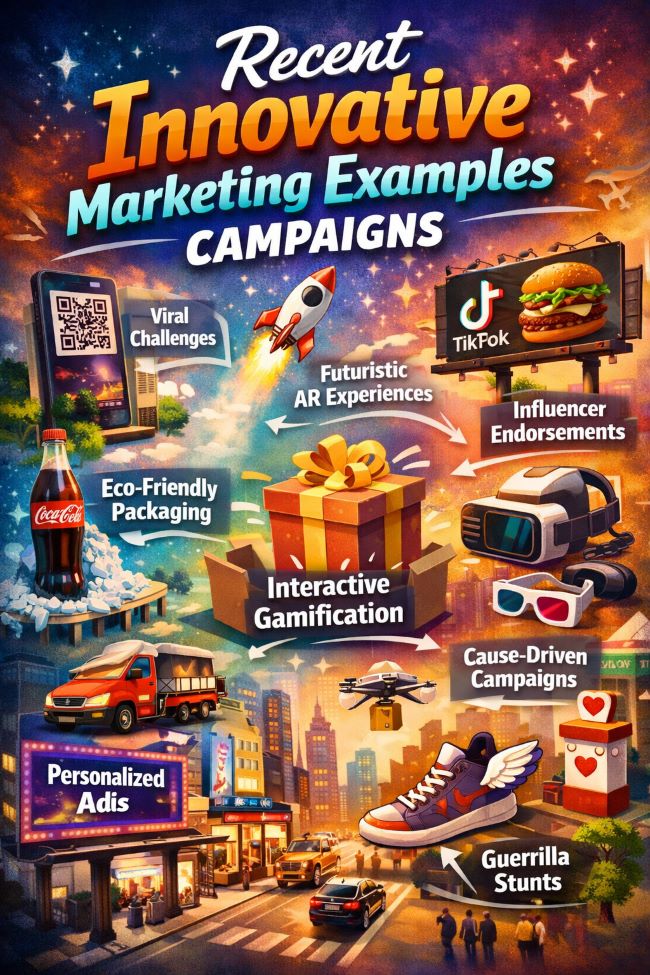
Marketing in 2025 looks different from just a few years ago. The tactics that dominated the early 2020s are hitting diminishing returns. Recent innovative marketing examples campaigns 2025 show that success now comes from brands thinking differently about customer engagement, authenticity, and connection.
The challenge facing marketers is clear: attention is scarcer than ever. People scroll past polished ads constantly. They ignore traditional promotions. They trust recommendations from people they know more than brand messaging. Winning in this environment requires rethinking the entire approach. The brands doing it well share common traits. They create experiences rather than just promotions. They build community rather than audiences. They demonstrate values through actions, not slogans.
The Shift in Marketing Philosophy
Before diving into specific recent innovative marketing examples, understanding the broader shift matters. Marketing moved from interruption to invitation. Brands stopped trying to force attention and started creating things people wanted to find.
This philosophical change explains why innovative marketing campaigns 2025 examples look so different from previous years. They’re less about big budgets and more about creative thinking. Less about reach and more about resonance. Less about what brands want to say and more about what customers actually want to experience.
The most successful brands in 2025 position themselves as facilitators rather than sellers. They create spaces where customers gather. They solve problems in unexpected ways. They create culture rather than consume it.
Community-First Marketing
One major pattern in recent innovative marketing examples involves building communities that exist independent of any individual product. Brands create forums, events, and experiences that bring people together around shared interests.
This approach works because people seek belonging. They want to be part of something. Smart brands recognize this and create communities where that belonging happens to align with their business.
A fitness brand might create a community around specific training methods. A beverage company might foster a community around sustainability. A technology company might build communities around skill development. The brand becomes secondary to the community purpose.
The value for brands comes later. Community members become loyal customers not because of marketing messages but because they’re invested in the community. They recommend brands to friends who share their values. They provide feedback that improves products. They create content that attracts others.
User-Generated Content as Centerpiece
Recent innovative marketing campaigns 2025 increasingly revolve around content created by customers rather than professionals. Brands set up frameworks, provide tools, and get out of the way.
This strategy works because user-generated content feels authentic. It shows real people using products in real situations. It carries credibility that brand-created content struggles to achieve.
Smart brands make user-generated content creation easy. They provide hashtags. They create challenges. They reward participation. They feature content on their channels. This removes friction from sharing while making participants feel valued.
The creative gold emerges from millions of people interpreting the same theme differently. A single product gets presented in hundreds of unique ways. That diversity and creativity captures attention in ways uniform brand messaging never could.
Hyper-Personalization Through Data
Marketing in 2025 uses customer data to create experiences that feel personal. Not creepy targeted ads, but genuinely thoughtful customization.
Brands analyze purchase history, browsing behavior, and stated preferences to serve relevant content. They anticipate needs. They suggest products someone probably actually wants. They reach out with timing that makes sense rather than random interruptions.
This approach increases engagement because customers recognize that brands understand them. Marketing messages feel less like broadcasts and more like conversations. The effectiveness comes from relevance and timing rather than volume.
Sustainability as Marketing Foundation
Environmental and social responsibility isn’t just good citizenship in 2025. It’s central to marketing strategy for many brands. Customers increasingly consider values when making purchase decisions.
Innovative marketing campaigns 2025 examples showcase authentic commitment to sustainability. Brands don’t just talk about values. They demonstrate them through supply chain transparency, carbon reduction, and social investment.
The marketing power comes from authenticity. Customers detect when brands make token gestures versus actual commitments. The most effective campaigns show progress toward goals with honesty about setbacks. They invite customers into the journey rather than claiming they’ve already arrived.
AI and Personalization Integration
Artificial intelligence enables personalization at scale. Brands use AI to analyze vast amounts of data and serve relevant experiences to millions of people simultaneously.
In recent innovative marketing examples, AI personalizes everything from email subject lines to product recommendations to content suggestions. The technology works invisibly. Customers experience customized journeys that feel natural rather than automated.
The key to successful AI-driven marketing involves maintaining human judgment. AI handles scale and data processing. Humans handle strategy and creative decisions. The combination produces results neither could achieve alone.
Experiential Marketing Innovations
Brands create experiences people want to attend. Pop-up events, immersive installations, live demonstrations. These experiences generate word-of-mouth that advertising struggles to match.
Recent innovative marketing examples 2025 show brands creating Instagram-worthy moments intentionally. They design experiences people want to photograph and share. They make attendance feel like belonging to something exclusive.
The investment in experiential marketing pays off through social amplification. People tell their networks about experiences far more than they discuss advertising they saw. One amazing event reaches thousands through organic sharing.
Narrative and Storytelling Focus
Rather than product features, successful 2025 marketing emphasizes narratives and stories. Brands tell stories about customers, origins, values, or journeys.
Stories stick in memory better than facts. They create emotional connection. They communicate values without preaching. They invite people into something larger than consumption.
Innovative marketing campaigns 2025 examples use multiple formats to tell stories. Videos, podcasts, written narratives, visual sequences. The story remains consistent while the format adapts to different channels and audiences.
Interactive and Gamified Experiences
Marketing that invites participation works better than marketing that asks for passive consumption. Brands incorporate games, quizzes, challenges, and interactive elements that engage customers actively.
Gamification increases engagement metrics dramatically. People spend more time with branded content when it’s interactive. They’re more likely to return. They’re more likely to share with others.
The psychology works because games are inherently motivating. They present clear goals, provide feedback, and reward progress. When brands tap into these psychological principles, participation increases without requiring payment or major incentives.
Micro-Influencer Partnerships
Rather than paying mega-influencers with huge followings, brands partner with micro-influencers who have smaller but highly engaged audiences.
Micro-influencers typically have stronger relationships with followers. Their recommendations carry more weight. Their audiences trust their judgment in a way that doesn’t exist for mega-influencers promoting dozens of unrelated products.
Recent innovative marketing examples show brands building long-term partnerships with micro-influencers rather than one-off paid posts. These partnerships produce authentic content because influencers genuinely use and believe in products.
Omnichannel Consistency
Successful brands in 2025 maintain consistent experiences across channels. A customer might encounter a brand on social media, visit a physical store, browse a website, receive an email. Each touchpoint feels coherent.
This consistency builds familiarity and trust. Customers encounter the same values, tone, and visual identity everywhere. The experience feels intentional rather than scattered.
Recent innovative marketing campaigns 2025 use omnichannel strategies to reach customers through their preferred channels while maintaining consistent messaging and experience quality.
Privacy-First Marketing
Consumer concern about data privacy forces brands to rethink marketing approaches. Third-party cookies disappear. Regulations tighten. Customers expect transparency.
Forward-thinking brands embrace privacy-first marketing. They collect data transparently. They give customers control over data use. They focus on first-party data relationships rather than creepy tracking.
This approach builds trust. Customers willingly share information when they understand how it’s used and benefit from the personalization it enables.
Purpose-Driven Campaigns
Marketing that connects to larger purpose resonates. Brands take positions on issues they care about. They contribute to causes. They demonstrate values through actions and support.
Customers increasingly want to support brands aligned with their values. Purpose-driven campaigns attract these customers. They create differentiation in crowded markets. They build stronger loyalty because the relationship involves something larger than product features.
The key involves authenticity. Customers detect when brands adopt causes superficially. Authentic purpose-driven marketing reflects genuine commitment, not trend chasing.
Integration of Technology and Humanity
The most successful innovative marketing campaigns 2025 examples integrate technology and humanity. Technology handles scale, analysis, and delivery. Human creativity and judgment handle strategy, empathy, and cultural relevance.
Brands using AI for personalization but maintaining human judgment over creative direction tend to outperform brands that fully automate either direction.
This balance prevents marketing from feeling robotic while maintaining the efficiency that technology provides. Customers sense when a brand invests in understanding them versus merely targeting them with algorithms.
Emerging Trends Worth Watching
Several trends emerging in 2025 signal where marketing heads next. Virtual and augmented reality create immersive brand experiences. Voice commerce grows as smart speakers proliferate. Shoppable livestreams combine entertainment with frictionless commerce. Blockchain technology enables transparency in supply chains and product authenticity.
Brands experimenting with these technologies now build expertise before they become mainstream. Early adopters gain competitive advantages through familiarity with new channels and capabilities.
The Measurement Challenge
One theme across recent innovative marketing examples involves improving how brands measure success. Traditional metrics like impressions and clicks matter less. Brands focus on engagement depth, customer lifetime value, and sentiment.
Measurement frameworks in 2025 account for longer customer journeys. A single touchpoint rarely converts. Marketing success comes from orchestrating experiences across channels and time. Smart brands measure cumulative impact rather than individual interaction value.
Key Takeaways
- Recent innovative marketing examples campaigns 2025 prioritize authenticity, community, and customer participation over traditional brand messaging.
- Recent innovative marketing examples show a shift from interruption-based advertising toward invitation-based marketing that people actively choose to engage with.
- Community-first strategies build customer loyalty by creating spaces where people gather around shared interests rather than products.
- Innovative marketing campaigns 2025 examples leverage user-generated content because it feels authentic and carries credibility that brand-created content lacks.
- Hyper-personalization using customer data creates marketing experiences that feel relevant rather than intrusive.
- Authenticity regarding sustainability and social responsibility increasingly determines brand preference and customer loyalty.
- AI enables personalization at scale when paired with human judgment about strategy and creative direction.
- Experiential marketing creates memorable moments people share organically, generating word-of-mouth amplification.
- Storytelling and narrative approaches communicate values and build emotional connections more effectively than feature-focused messaging.
- Interactive and gamified marketing experiences increase engagement and encourage customer participation and sharing.
- Micro-influencer partnerships with smaller but highly engaged audiences produce more authentic endorsements than mega-influencer campaigns.
- Omnichannel consistency across touchpoints builds familiarity and trust through coherent brand experience.
- Privacy-first marketing builds customer trust by respecting data boundaries and transparency.
- Purpose-driven campaigns connecting to larger values create stronger customer relationships when driven by authentic commitment.
- The integration of technology and human judgment produces better results than either approach alone.
- Brands experimenting with emerging technologies like AR, voice commerce, and blockchain build expertise before mainstream adoption.
- Success in 2025 marketing comes from understanding customer needs deeply, not from having the biggest budget or widest reach.
The Shift in Marketing Philosophy
Before diving into specific recent innovative marketing examples, understanding the broader shift matters. Marketing moved from interruption to invitation. Brands stopped trying to force attention and started creating things people wanted to find.
This philosophical change explains why innovative marketing campaigns 2025 examples look so different from previous years. They’re less about big budgets and more about creative thinking. Less about reach and more about resonance. Less about what brands want to say and more about what customers actually want to experience.
The most successful brands in 2025 position themselves as facilitators rather than sellers. They create spaces where customers gather. They solve problems in unexpected ways. They create culture rather than consume it.
Community-First Marketing
One major pattern in recent innovative marketing examples involves building communities that exist independent of any individual product. Brands create forums, events, and experiences that bring people together around shared interests.
This approach works because people seek belonging. They want to be part of something. Smart brands recognize this and create communities where that belonging happens to align with their business.
A fitness brand might create a community around specific training methods. A beverage company might foster a community around sustainability. A technology company might build communities around skill development. The brand becomes secondary to the community purpose.
The value for brands comes later. Community members become loyal customers not because of marketing messages but because they’re invested in the community. They recommend brands to friends who share their values. They provide feedback that improves products. They create content that attracts others.
User-Generated Content as Centerpiece
Recent innovative marketing campaigns 2025 increasingly revolve around content created by customers rather than professionals. Brands set up frameworks, provide tools, and get out of the way.
This strategy works because user-generated content feels authentic. It shows real people using products in real situations. It carries credibility that brand-created content struggles to achieve.
Smart brands make user-generated content creation easy. They provide hashtags. They create challenges. They reward participation. They feature content on their channels. This removes friction from sharing while making participants feel valued.
The creative gold emerges from millions of people interpreting the same theme differently. A single product gets presented in hundreds of unique ways. That diversity and creativity captures attention in ways uniform brand messaging never could.
Hyper-Personalization Through Data
Marketing in 2025 uses customer data to create experiences that feel personal. Not creepy targeted ads, but genuinely thoughtful customization.
Brands analyze purchase history, browsing behavior, and stated preferences to serve relevant content. They anticipate needs. They suggest products someone probably actually wants. They reach out with timing that makes sense rather than random interruptions.
This approach increases engagement because customers recognize that brands understand them. Marketing messages feel less like broadcasts and more like conversations. The effectiveness comes from relevance and timing rather than volume.
Sustainability as Marketing Foundation
Environmental and social responsibility isn’t just good citizenship in 2025. It’s central to marketing strategy for many brands. Customers increasingly consider values when making purchase decisions.
Innovative marketing campaigns 2025 examples showcase authentic commitment to sustainability. Brands don’t just talk about values. They demonstrate them through supply chain transparency, carbon reduction, and social investment.
The marketing power comes from authenticity. Customers detect when brands make token gestures versus actual commitments. The most effective campaigns show progress toward goals with honesty about setbacks. They invite customers into the journey rather than claiming they’ve already arrived.
AI and Personalization Integration
Artificial intelligence enables personalization at scale. Brands use AI to analyze vast amounts of data and serve relevant experiences to millions of people simultaneously.
In recent innovative marketing examples, AI personalizes everything from email subject lines to product recommendations to content suggestions. The technology works invisibly. Customers experience customized journeys that feel natural rather than automated.
The key to successful AI-driven marketing involves maintaining human judgment. AI handles scale and data processing. Humans handle strategy and creative decisions. The combination produces results neither could achieve alone.
Experiential Marketing Innovations
Brands create experiences people want to attend. Pop-up events, immersive installations, live demonstrations. These experiences generate word-of-mouth that advertising struggles to match.
Recent innovative marketing examples 2025 show brands creating Instagram-worthy moments intentionally. They design experiences people want to photograph and share. They make attendance feel like belonging to something exclusive.
The investment in experiential marketing pays off through social amplification. People tell their networks about experiences far more than they discuss advertising they saw. One amazing event reaches thousands through organic sharing.
Narrative and Storytelling Focus
Rather than product features, successful 2025 marketing emphasizes narratives and stories. Brands tell stories about customers, origins, values, or journeys.
Stories stick in memory better than facts. They create emotional connection. They communicate values without preaching. They invite people into something larger than consumption.
Innovative marketing campaigns 2025 examples use multiple formats to tell stories. Videos, podcasts, written narratives, visual sequences. The story remains consistent while the format adapts to different channels and audiences.
Interactive and Gamified Experiences
Marketing that invites participation works better than marketing that asks for passive consumption. Brands incorporate games, quizzes, challenges, and interactive elements that engage customers actively.
Gamification increases engagement metrics dramatically. People spend more time with branded content when it’s interactive. They’re more likely to return. They’re more likely to share with others.
The psychology works because games are inherently motivating. They present clear goals, provide feedback, and reward progress. When brands tap into these psychological principles, participation increases without requiring payment or major incentives.
Micro-Influencer Partnerships
Rather than paying mega-influencers with huge followings, brands partner with micro-influencers who have smaller but highly engaged audiences.
Micro-influencers typically have stronger relationships with followers. Their recommendations carry more weight. Their audiences trust their judgment in a way that doesn’t exist for mega-influencers promoting dozens of unrelated products.
Recent innovative marketing examples show brands building long-term partnerships with micro-influencers rather than one-off paid posts. These partnerships produce authentic content because influencers genuinely use and believe in products.
Omnichannel Consistency
Successful brands in 2025 maintain consistent experiences across channels. A customer might encounter a brand on social media, visit a physical store, browse a website, receive an email. Each touchpoint feels coherent.
This consistency builds familiarity and trust. Customers encounter the same values, tone, and visual identity everywhere. The experience feels intentional rather than scattered.
Recent innovative marketing campaigns 2025 use omnichannel strategies to reach customers through their preferred channels while maintaining consistent messaging and experience quality.
Privacy-First Marketing
Consumer concern about data privacy forces brands to rethink marketing approaches. Third-party cookies disappear. Regulations tighten. Customers expect transparency.
Forward-thinking brands embrace privacy-first marketing. They collect data transparently. They give customers control over data use. They focus on first-party data relationships rather than creepy tracking.
This approach builds trust. Customers willing share information when they understand how it’s used and benefit from the personalization it enables.
Purpose-Driven Campaigns
Marketing that connects to larger purpose resonates. Brands take positions on issues they care about. They contribute to causes. They demonstrate values through actions and support.
Customers increasingly want to support brands aligned with their values. Purpose-driven campaigns attract these customers. They create differentiation in crowded markets. They build stronger loyalty because the relationship involves something larger than product features.
The key involves authenticity. Customers detect when brands adopt causes superficially. Authentic purpose-driven marketing reflects genuine commitment, not trend chasing.
The Integration of Technology and Humanity
The most successful innovative marketing campaigns 2025 examples integrate technology and humanity. Technology handles scale, analysis, and delivery. Human creativity and judgment handle strategy, empathy, and cultural relevance.
Brands using AI for personalization but maintaining human judgment over creative direction tend to outperform brands that fully automate either direction.
Emerging Trends Worth Watching
Several trends emerging in 2025 signal where marketing heads next. Virtual and augmented reality create immersive brand experiences. Voice commerce grows as smart speakers proliferate. Shoppable livestreams combine entertainment with frictionless commerce. Blockchain technology enables transparency in supply chains.
Brands experimenting with these technologies now build expertise before they become mainstream.
Key Takeaways
- Recent innovative marketing examples campaigns 2025 prioritize authenticity, community, and customer participation over traditional brand messaging.
- Recent innovative marketing examples show a shift from interruption-based advertising toward invitation-based marketing that people actively choose to engage with.
- Community-first strategies build customer loyalty by creating spaces where people gather around shared interests rather than products.
- Innovative marketing campaigns 2025 examples leverage user-generated content because it feels authentic and carries credibility that brand-created content lacks.
- Hyper-personalization using customer data creates marketing experiences that feel relevant rather than intrusive.
- Authenticity regarding sustainability and social responsibility increasingly determines brand preference and customer loyalty.
- AI enables personalization at scale when paired with human judgment about strategy and creative direction.
- Experiential marketing creates memorable moments people share organically, generating word-of-mouth amplification.
- Storytelling and narrative approaches communicate values and build emotional connections more effectively than feature-focused messaging.
- Interactive and gamified marketing experiences increase engagement and encourage customer participation and sharing.
- Micro-influencer partnerships with smaller but highly engaged audiences produce more authentic endorsements than mega-influencer campaigns.
- Omnichannel consistency across touchpoints builds familiarity and trust through coherent brand experience.
- Privacy-first marketing builds customer trust by respecting data boundaries and transparency.
- Purpose-driven campaigns connecting to larger values create stronger customer relationships when driven by authentic commitment.
- The integration of technology and human judgment produces better results than either approach alone.
- Brands experimenting with emerging technologies like AR, voice commerce, and blockchain build expertise before mainstream adoption.