AI Transformation Is a Problem of Governance: Why Leadership Matters Most
Meta Description: Understand why AI transformation is a problem of governance. Learn how organizational leadership, policy, and decision-making frameworks determine AI success or failure.
The technology isn’t the problem. The data isn’t the problem. The algorithms work fine. When AI transformation is a problem of governance, you’re looking at a deeper issue that most organizations avoid discussing until it’s too late. The real bottleneck isn’t artificial intelligence itself. It’s how organizations make decisions about implementing AI, who gets a voice in those decisions, and what frameworks guide the deployment process.
This insight changes everything about how to approach AI implementation. Organizations that treat AI as a technology problem spend millions on tools and infrastructure only to find their investments deliver minimal value. Organizations that treat AI as a governance problem ask harder questions upfront and build structures that actually work.
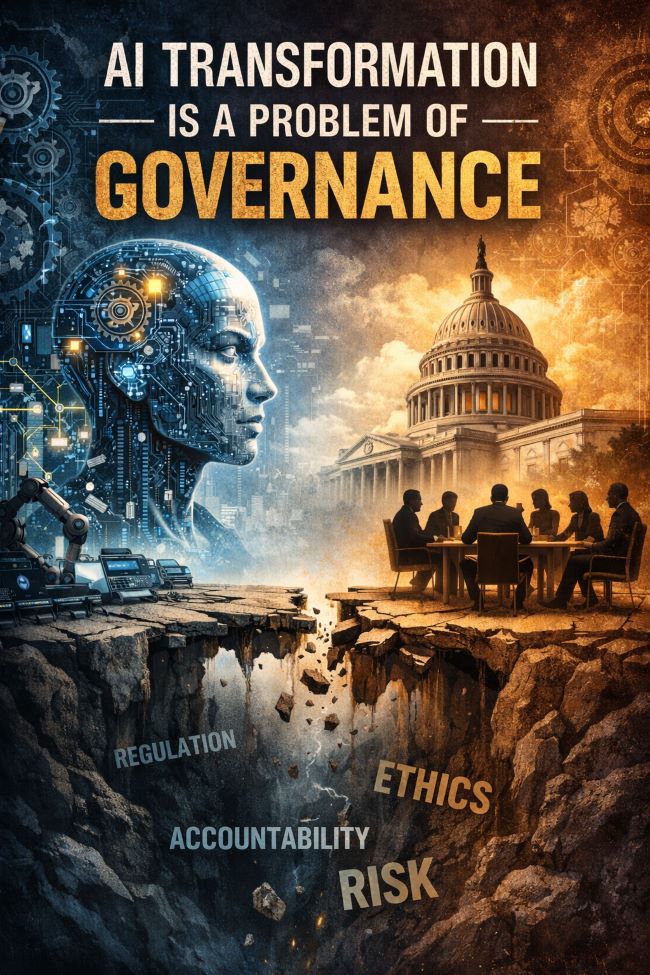
What Governance Means in AI Context
When we talk about AI transformation, governance refers to the decision-making structures, accountability frameworks, and policy systems that guide how AI gets developed, deployed, and used within an organization. It’s about who decides what, how those decisions get made, and what happens when things go wrong.
Governance covers several domains. Technical governance addresses how AI systems get built and maintained. Business governance determines which problems AI solves and what outcomes matter. Ethical governance establishes boundaries on what’s acceptable. Legal governance ensures compliance with regulations. Strategic governance aligns AI efforts with organizational goals.
Most organizations address none of these properly. They hire data scientists, buy tools, and hope for the best. This approach fails because the technology only works if the governance structures support it. You can have perfect algorithms operating within a broken governance system and still get poor results.
The Central Governance Challenge
AI transformation is a problem of governance because organizations haven’t figured out how to make decisions about AI at scale. Traditional decision-making processes don’t work for AI because the technology moves faster than organizations make decisions, affects more parts of the business than executives anticipated, and creates risks that didn’t exist before.
Consider a basic decision: should we use AI to make hiring recommendations? Technology people say it’s feasible. Business people say it could save time. Legal people worry about discrimination. HR people fear alienating managers. Finance people ask about ROI. Who decides? How do they decide? What information do they use? What happens if the AI discriminates despite protections?
These questions require governance structures. Without clear governance, organizations either freeze (paralyzed by fear) or rush forward (ignoring risks). Neither serves the organization well.
Why Leadership Matters
Technology teams can build sophisticated AI systems. But whether those systems get deployed, how they get deployed, and what they optimize for depends entirely on leadership decisions. AI transformation fails when leadership doesn’t understand their role in governance.
Leaders often outsource AI decisions to technical experts. This happens because AI sounds technical, so it must be a technical decision. In reality, deploying an AI system is fundamentally a business and organizational decision. It affects how work gets done, who benefits, who bears risks, and what values the organization prioritizes.
Effective leaders in AI transformation understand technology enough to ask good questions but don’t pretend to be technical experts. They focus on governance: decision rights, accountability, transparency, and escalation paths. They build processes that get the right people in the room when choices need to happen.
Organizational Structure and Decision Rights
One of the first governance questions concerns decision rights. Who decides whether to proceed with AI initiatives? In most organizations, this remains ambiguous. Finance might approve budgets without understanding implications. Technology might proceed without business input. Business stakeholders might push for AI without considering risks.
Clear decision rights establish who makes different types of decisions. Who decides whether to pursue a particular AI project? Who approves the approach? Who reviews results? What happens if outcomes don’t match expectations? These clarifications prevent chaos later.
Some organizations establish AI councils or steering committees. These bodies bring together perspectives from technology, business, legal, ethics, and other domains. The committee structure alone doesn’t guarantee good decisions, but it ensures decisions don’t happen in silos.
Accountability Frameworks
AI transformation is a problem of governance because accountability often disappears. When an AI system fails or causes harm, who’s responsible? The data scientists who built it? The business leaders who approved it? The executives who set strategy? The board?
Without clear accountability frameworks, organizations lack incentives to build safe, effective systems. If failure creates no consequences, why invest in quality? If success creates no rewards, why excel?
Effective governance establishes clear accountability. Someone owns the outcome of every AI initiative. That person has the authority to make decisions, access to resources, and responsibility for results. They face consequences for failures and recognition for successes.
This clarity changes behavior. When someone owns a decision, they take it seriously. They ask harder questions. They demand better information. They plan for failure. They build accountability structures for their team.
Transparency and Explainability
Organizations implementing AI often face pressure to explain decisions made by AI systems. Regulators require explanations. Customers demand clarity. Employees question automated decisions. Yet many organizations can’t explain their own systems, let alone explain them to others.
Governance frameworks addressing transparency establish requirements before systems get built. What explanations will people need? How detailed? Who gets access to explanations? What happens when someone challenges an AI decision?
These questions create governance requirements that guide technical work. Transparency isn’t just something you add afterward. It’s built into how you develop, test, and deploy systems.
Policy Development and Implementation
Governance requires policies. What types of decisions can AI make without human review? What decisions require human input? What decisions must humans make without AI influence? These policy questions guide how AI gets used.
Some organizations create blanket policies like “AI makes no decisions affecting individuals” or “AI makes all routine decisions without review.” Effective governance creates nuanced policies reflecting the actual risks and benefits of different use cases.
Policy development involves multiple stakeholders. Technology people contribute expertise about what’s possible. Business people contribute understanding of impacts. Legal and ethics people contribute perspective on risks. HR people contribute knowledge about how changes affect employees.
Policies created collaboratively tend to work better than policies imposed from above. People understand the reasoning and feel ownership over implementation.
Risk Management and Governance
Every AI system creates risks. Models might be biased. Systems might fail. Data might be inadequate. Organizations might use AI for inappropriate purposes. Governance structures establish how organizations identify, assess, and manage these risks.
Effective risk management doesn’t prevent all risks. It makes tradeoffs deliberately. The organization decides which risks are acceptable and which require mitigation. This decision-making approach beats the current reality where risks remain unknown until they materialize.
Risk governance includes processes for identifying emerging risks. As organizations learn what their AI systems do in the real world, new risks appear. Governance structures allow rapid response when risks emerge.
Scaling Decision-Making
As organizations implement more AI initiatives, governance challenges multiply. Early initiatives might work fine with informal decision-making. When you have dozens of projects, informal processes break down. Projects conflict. Standards get ignored. Quality varies wildly.
Governance enables scaling. Standardized processes, clear decision rights, and established policies let organizations manage many initiatives simultaneously. Governance doesn’t eliminate variation, but it ensures variation happens for good reasons rather than through chaos.
Alignment with Organizational Values
AI transformation should advance organizational values, not undermine them. Yet many organizations deploy AI in ways contradicting stated values. They claim to value employees while automating jobs without planning. They claim to value customers while using AI in ways erode trust.
Governance ensures AI decisions align with values. This requires making values explicit, reviewing AI initiatives against them, and making tradeoffs consciously. When values and AI push in different directions, the organization makes deliberate choices rather than drifting.
Regulatory Compliance and Governance
Regulators increasingly require governance around AI. The EU’s AI Act establishes governance requirements for high-risk AI systems. Other regulations follow. Organizations ignoring governance now face compliance problems later.
Governance developed proactively for sound business reasons usually satisfies regulatory requirements. Governance bolted on afterward to meet compliance requirements rarely works as well. When organizations govern for good reasons, meeting regulations becomes straightforward.
Building Governance Structures
Creating effective governance requires several elements. First, establish the governance group. Who participates? Representatives from which functions? How often do they meet?
Second, define decision processes. What types of decisions does the group make? What information do they need? How long do decisions take? What happens when consensus doesn’t exist?
Third, create supporting policies. What are the organization’s AI principles? What policies guide development? What standards apply to deployed systems?
Fourth, establish measurement. How do you know governance is working? What metrics matter? How do you get feedback from stakeholders?
Finally, plan for evolution. Governance structures created today won’t work perfectly tomorrow. Organizations need mechanisms for updating governance as they learn.
Common Governance Failures
Many organizations struggle with governance because they get specific elements wrong. Some create governance structures with no real authority. The committee meets but can’t actually approve or deny anything. This theater doesn’t improve decisions.
Others create governance requiring consensus. When multiple stakeholders must agree, nothing happens. Organizations need decision processes that include input but don’t paralyze through consensus requirements.
Some create governance that’s purely reactive. They audit projects after launch rather than guiding them during development. This approach catches problems too late.
Others create governance owned entirely by one function. If IT owns governance, business perspectives get minimized. If business owns governance, technical realities get ignored. Effective governance requires true collaboration.
The Path Forward
AI transformation is a problem of governance because technology alone doesn’t determine outcomes. The same technology produces excellent results in one organization and disastrous results in another. The difference comes down to governance.
Organizations ready to transform with AI should start with governance questions. What decision-making structures do you need? What policies guide AI development? How do you ensure accountability? How do you handle transparency? What risks matter most?
These questions might sound slow compared to building AI systems. They’re not. Time spent creating governance upfront saves vastly more time than fixing governance failures later.
Key Takeaways
- AI transformation is a problem of governance because technology success depends on organizational decision-making structures, accountability frameworks, and policy systems.
- Governance in AI context covers technical, business, ethical, legal, and strategic domains. Most organizations address none of these adequately.
- Leadership plays a central role in AI transformation governance by establishing decision rights, accountability, and oversight structures.
- Clear decision rights prevent silos where technology, business, and legal teams operate independently without coordination.
- Accountability frameworks ensure someone owns outcomes of every AI initiative and faces consequences for failures or recognition for successes.
- Transparency and explainability requirements built into governance shape how systems get developed rather than being added afterward.
- Policy development involving multiple stakeholders creates governance that stakeholders understand and support.
- Risk management governance establishes how organizations identify, assess, and manage AI-related risks deliberately.
- Effective governance enables scaling. As organizations implement more AI initiatives, standardized processes and clear frameworks become essential.
- AI transformation governance ensures AI decisions align with organizational values rather than contradicting them.
- Regulatory compliance becomes straightforward when governance developed for sound business reasons happens to satisfy legal requirements.
- Building governance structures requires establishing the governance group, defining decision processes, creating supporting policies, establishing measurement, and planning for evolution.
- Common governance failures include creating committees with no authority, requiring consensus, being purely reactive, or being owned entirely by one function.
- Organizations should prioritize governance questions before launching ambitious AI initiatives.
- The same technology produces excellent results in organizations with strong governance and poor results in organizations with weak governance.
- AI transformation succeeds when leadership understands governance isn’t a technical problem, it’s a fundamental organizational challenge requiring strategic attention.