5 Ways Graphic Design Improves User Experience
Many people think that graphic design is related to aesthetic principles, branding, and creativity.
Sure, these things factor into the equation, but there’s more to it than that. Graphic design also plays a role in determining, for better or worse, the user experience in the digital space.
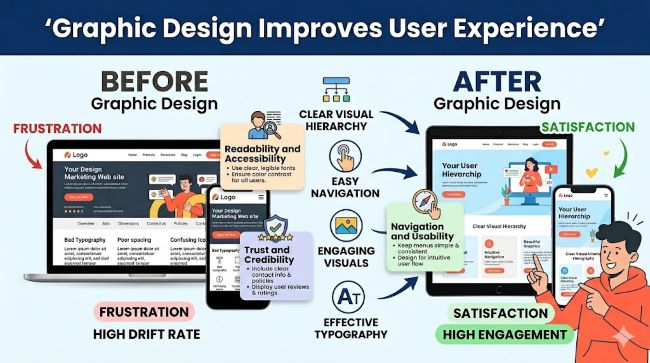
Users want intuitive, clean, and fast websites and applications. The user experience, meanwhile, is determined by how users interact with digital platforms and services, including ease of use, navigation, accessibility, and aesthetics. Poor graphic design can ruin the user experience and negatively impact the site or app performance.
So, modern graphic design affects many aspects of the user experience and should be treated seriously and implemented correctly. Businesses that want to do it correctly typically retain the services of graphic design professionals who understand industry best practices.
Here are five main areas where graphic design improves the user experience.
Increasing Readability and Accessibility
Graphic design is very useful for improving the readability and accessibility of digital content. Poor readability negatively impacts the user experience and prevents users from engaging with your online content. It occurs due to factors such as small font sizes, low color contrast, messy layouts, and inappropriate fonts.
You can use graphic design strategies to effectively organize content. For example, you can opt for proper layout spacing and hierarchy, appropriate fonts, and correct color contrasts.
Building Trust and Credibility
Users often form their first impressions based on how your digital project looks. If you want to convince users of your business’s professionalism and credibility, you need to create clean and aesthetically appealing websites and apps.
In many cases, poorly designed interfaces can negatively impact the perception of users. They may think that you’re unprofessional, incompetent, and unreliable. On the contrary, beautiful designs help to create a positive perception of your brand.
When creating websites or applications, you need to think about the industry your company operates in. The user experience in certain industries requires greater attention to credibility and trust-building when people must provide their credit card details and other sensitive data.
Improving Navigation and Usability
When graphic design is done right, it addresses navigation and usability to enhance the user experience. Well-designed websites and applications always feature clean, clear interfaces, logical content organization, and intuitive navigation tools.
Elements of graphic design that factor into improving navigation and usability, including the following:
- Layout spacing
- Typography hierarchy
- Icons
- Buttons
- Color contrast
- Menus
Using these elements effectively can help you create visual structures and intuitive navigation tools. Users won’t get confused with complex interfaces, which often happen when navigation is complicated. Using graphic design techniques to enhance the navigation and usability of your digital products can help reduce bounce rates and increase time spent on your platforms.
Using design tools, you can create icons, infographics, visual cues, charts, product images, color-coded data, and more to help users quickly and easily understand new information.
Many websites use graphic design to encourage customers to buy more products or to make them more confident in the quality of the products and services that are being offered.
For example, e-commerce websites often use graphics to facilitate customer decision-making. There are many elements that encourage people to make purchases, including prominent call-to-action buttons, product comparison layouts, trust badges, review highlights, and simplified checkout processes.
Graphic design is one of the most important elements of the modern online user experience. It influences navigation, usability, readability, accessibility, credibility, emotions, and decision-making. That is why you should pay attention to graphic design when working on your online projects to improve the user experience and get a competitive advantage.