Surron: The Complete Guide to the Electric Dirt Bike Brand
Surron has become one of the most recognized names in electric off-road motorcycles, known for the Light Bee, a lightweight electric dirt bike that started a new category of recreational e-moto. Since its founding in 2014, Surron has grown from a small Chinese startup into a global brand sold through hundreds of dealers on five continents. This guide covers where Surron came from, how its model lineup developed, what each bike offers, and how Surron stacks up against gas powered dirt bikes and other electric off-road brands.
What Is Surron?
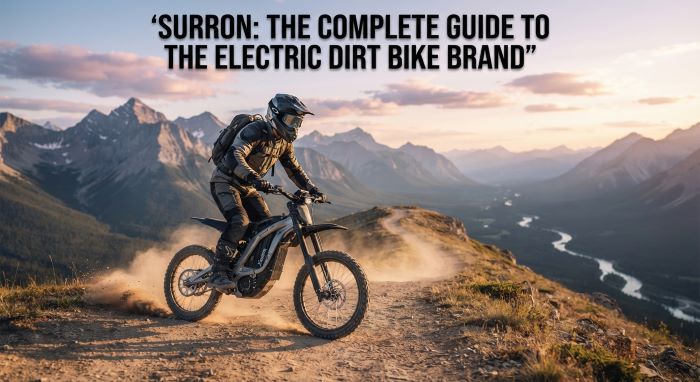
Surron is the brand name used by Chongqing Qiulong Technology Co. Ltd., a Chinese company that designs and manufactures electric off-road motorcycles and electric bicycles. The company is best known for the Light Bee, a small, lightweight electric dirt bike that looks like a cross between a pit bike and a mountain bike but rides more like a full suspension trail motorcycle. Surron bikes are popular with trail riders, backyard racers, and commuters who want a quiet, low maintenance alternative to a gas powered dirt bike.
Unlike a traditional dirt bike, a Surron has no clutch, no gears to shift, and no exhaust note. Power comes from a battery pack and electric motor mounted low in the frame, which gives the bike a low center of gravity and instant torque from a standstill. Riders twist the throttle and go, which has made Surron bikes popular with beginners as well as experienced riders who want a lightweight second bike for casual trail days.
What Does the Name Surron Mean?
Surron is a shortened, brand friendly version of the company’s identity rather than a word with a specific translation. The bikes are built by Chongqing Qiulong Technology, and Surron functions as the consumer facing brand name used on the bikes themselves, in marketing, and across the dealer network, similar to how many manufacturers use a distinct brand name that differs from the parent company’s registered business name.
Who Owns the Surron Brand?
Surron is owned and manufactured by Chongqing Qiulong Technology Co. Ltd., a company headquartered in Chongqing, China. The company’s CEO is Zhuo Liu, who has been associated with the brand since its early years. Surron operates its own factory and research and development operation in Chongqing, and the company has expanded its distribution through regional offices and independent dealers rather than through a single global retail chain.
The History and Founding of Surron
Surron was founded in December 2014 in Chongqing, China. The company set out to build a different kind of off-road vehicle, one that combined the low maintenance and quiet operation of an electric motor with the suspension travel and off-road capability of a real trail bike. At the time, most electric two-wheelers on the market were either slow commuter scooters or heavy, expensive electric motorcycles built for pavement, so Surron’s early engineering work focused on a platform that could handle rough terrain while staying light enough to pick up and load into a truck bed.
The company’s early development years, roughly 2015 and 2016, were spent building and testing prototypes of what would become the Light Bee platform. Chongqing itself has a long history as a manufacturing center for motorcycles and small engine vehicles in China, which gave Surron access to a local supply chain of frame builders, suspension components, and battery manufacturers as it refined its first production design.
Development of the Light Bee
The Light Bee is the bike that put Surron on the map, and its development stretched across several years before it reached international buyers. Surron’s platform work began around 2016, with the first Light Bee X production models entering limited manufacturing around 2017. By 2018, the Light Bee had earned a Red Dot Design Award and an ISPO Award, two recognitions that brought international attention to the brand, and Surron reported around 5,000 global orders for the bike that year. Wikipedia lists the Light Bee’s broader public launch as occurring in March 2018, which lines up with this period of design recognition and the bike’s first wave of serious international sales.
The Light Bee’s defining feature was its battery placement. Rather than mounting the battery high in the frame like many early electric motorcycles, Surron built the Light Bee around a low, centrally mounted battery pack that sat below the rider’s seat. This kept the bike’s center of gravity low and close to the ground, which made it easier to control in the air, on uneven terrain, and at low speeds, three things that matter a lot to trail riders and motocross style riders.
The original Light Bee used a 60V battery system and a mid-drive motor design, giving riders a top speed in the 40s of miles per hour and a range that depended heavily on terrain and riding style. Later revisions, including the Light Bee S and Light Bee X variants, refined the suspension, added full size wheels better suited to trail riding, and improved the battery management system. By 2020, Surron had introduced the Light Bee S alongside the original Light Bee X, giving buyers a choice between a slightly different suspension and ergonomics setup depending on riding style.
Surron’s International Expansion
Surron’s growth from a regional Chinese manufacturer into a global brand happened quickly once the Light Bee started attracting attention. By 2019, Surron bikes were being sold or distributed in around 50 countries, a rapid expansion driven by word of mouth among off-road riding communities and early YouTube and social media coverage of the bike’s unusual combination of light weight and strong torque.
The company continued building out its dealer network through the early 2020s. By 2023, Surron reported that cumulative sales had passed 120,000 units, sold across five continents through roughly 500 dealers. This kind of growth is unusual for an off-road vehicle brand that started with a single model, and it reflects how much interest there has been in electric alternatives to traditional dirt bikes among riders who want something quieter, lower maintenance, and legal to ride in more places where gas powered off-road bikes are restricted due to noise.
Part of Surron’s international strategy has involved building bikes that can be configured for different regional rules. In some European markets, Surron and its distributors offer models with restricted power output so the bikes can be registered under local moped or light motorcycle categories, something that is not generally available for Surron bikes sold in the United States.
Surron Model Lineup
Surron’s lineup has grown from a single model into a family of bikes aimed at different riders, from casual trail use to serious off-road performance. Each model keeps the brand’s core idea, a lightweight frame with a low mounted battery, but the models differ in power output, suspension travel, battery capacity, and intended use.
Light Bee
The Light Bee remains Surron’s entry level and most affordable model, and it is still the bike most new riders associate with the brand. It uses a 60V battery system, weighs significantly less than the brand’s larger bikes, and offers a top speed generally in the 45 to 50 mile per hour range depending on the specific variant and rider weight. The Light Bee’s lighter weight makes it a popular choice for younger riders, smaller riders, and anyone who wants a bike that is easy to load, easy to maneuver at low speed, and easy to store.
Light Bee 2 (2026)
Surron’s newest Light Bee revision brings a slimmer motor and a battery pack repositioned lower in the frame, which further lowers the bike’s center of gravity compared to earlier Light Bee models. The 2026 Light Bee 2 uses a high density battery pack rated at roughly 3.53 kilowatt hours, with peak output around 24 kilowatts in its highest performance mode. Reported figures put its top speed at just under 56 miles per hour, with a claimed range of around 67 miles at a steady cruising pace or close to 100 miles at a slower, more efficient pace. The bike also adds rider assistance features that were not available on earlier Light Bee models, including multi level regenerative braking, traction control, cruise control, and an inertial measurement unit based wheelie assistance system. Riders who want to see these changes in action before buying can check out this Surron Light Bee 2 review, which walks through the bike’s handling and new features on trail.
Storm Bee
The Storm Bee is Surron’s larger, longer range model, introduced in 2020 alongside the Light Bee S. It was built with a bigger battery pack than the original Light Bee, aimed at riders who wanted longer trail rides without needing to stop and recharge as often. The Storm Bee’s larger frame and higher capacity battery make it heavier than the Light Bee, but it offers meaningfully more range, which has made it popular with riders who use their Surron for longer backcountry rides rather than short local trail loops.
Ultra Bee
Surron introduced the Ultra Bee in 2022 as a performance focused addition to the lineup. The Ultra Bee is built around a stronger motor and a battery system tuned for higher sustained power output, giving it quicker acceleration and a higher top speed than the standard Light Bee. It is generally viewed as the brand’s bike for more experienced riders who want motocross style performance, with suspension and chassis tuning aimed at aggressive trail riding and jumping rather than casual cruising.
Is the Surron Ultra Bee Good for Beginners?
The Ultra Bee is generally considered better suited to riders who already have some off-road riding experience. Its stronger motor and higher power output mean the throttle response is more aggressive than the Light Bee’s, which can be harder for a first time rider to manage smoothly. Riders who are new to off-road motorcycles, or who are buying a first bike for a younger or smaller rider, are often better served starting with the Light Bee or Light Bee 2 and moving up to the Ultra Bee once they are comfortable with how an electric dirt bike’s instant torque behaves on loose or uneven terrain.
Hyper Bee
The Hyper Bee rounds out Surron’s current lineup as a smaller, lighter model aimed at younger riders and more casual recreational use. Compared with the Light Bee, Ultra Bee, and Storm Bee, the Hyper Bee is built on a smaller frame with reduced power output, making it a more approachable option for younger teens or smaller adults who want the Surron riding experience without the weight and power of the brand’s full size models.
What Is Surron E-POWER CROSS?
Surron launched the E-POWER CROSS in 2021 as part of its push into more performance oriented electric off-road models. The E-POWER CROSS line represents Surron’s effort to compete more directly in competitive off-road and motocross style riding, with a focus on power delivery and handling characteristics tuned for racing rather than pure trail cruising. It reflects the broader direction Surron has taken since its early years, moving from a single recreational trail bike into a wider range of models aimed at different riding styles and skill levels.
What Is Surron Wheelie Control?
Wheelie control, sometimes referred to by Surron and its dealers as an inertial measurement unit based rider assistance system, is a software feature built into newer Surron models like the Light Bee 2. It uses onboard sensors to detect when the bike’s front wheel is lifting excessively and automatically moderates power delivery to help the rider keep the front wheel from lifting too high or too unpredictably. This is similar in concept to traction control and wheelie control systems found on modern gas powered motorcycles, adapted for the instant torque characteristics of an electric motor. Combined with multi level regenerative braking and traction control, these systems are part of Surron’s effort to make its higher power bikes more manageable for a wider range of riders.
Surron Timeline: 2014 to 2026
| Year | Milestone |
|---|---|
| 2014 | Surron is founded in Chongqing, China, under Chongqing Qiulong Technology Co. Ltd. |
| 2016 | Development of the Light Bee platform begins in earnest |
| 2017 | First Light Bee X production models enter limited manufacturing |
| 2018 | The Light Bee wins a Red Dot Design Award and an ISPO Award; Surron reports around 5,000 global orders; Wikipedia lists this year as the Light Bee’s broader launch |
| 2019 | Surron bikes reach distribution in roughly 50 countries |
| 2020 | Surron launches the Storm Bee and the Light Bee S, with reported global orders surpassing 30,000 units |
| 2021 | Surron introduces the E-POWER CROSS performance model |
| 2022 | The Ultra Bee is introduced as a higher performance addition to the lineup |
| 2023 | Surron reports cumulative sales surpassing 120,000 units across five continents through about 500 dealers |
| 2024 | Surron marks its 10th anniversary as a company |
| 2026 | Surron releases the Light Bee 2, with a slimmer motor, lower mounted battery, and added rider assistance features |
Performance, Range, and Battery Life
Surron’s bikes are built around relatively small but high density battery packs compared with the much larger packs used in electric motorcycles meant for street use. Battery capacity varies by model, with the base Light Bee using a smaller pack than the Storm Bee or newer Light Bee 2, which affects both range and sustained power output.
Real world range depends heavily on terrain, rider weight, and throttle use. A Surron ridden gently on flat, packed trails can often exceed the manufacturer’s optimistic range estimates, while aggressive trail riding with frequent hard acceleration and hill climbing will reduce range significantly. For the 2026 Light Bee 2, Surron and its dealers report a range of roughly 67 miles at a steady 25 mile per hour pace, or closer to 100 miles at a slower, more efficient cruising speed. Charging times for most Surron models run a few hours for a full charge from a standard outlet, with the Light Bee 2’s fast charge capability bringing the battery from 20 percent to 80 percent in around two hours.
Top speed varies by model and by region, since some markets receive speed limited versions for legal reasons. In general, the Light Bee tops out in the mid to high 40s of miles per hour, while the Ultra Bee and newer Light Bee 2 can approach or exceed 55 miles per hour in their highest performance modes. These are electronically limited figures rather than the bike’s absolute mechanical limit, and actual top speed can vary with rider weight and terrain.
Is Surron Street Legal?
No Surron model sold in the United States is currently certified as street legal or road legal under federal motor vehicle safety standards. Surron bikes are generally classified as off-highway vehicles rather than street legal motorcycles, since Sur-Ron has not pursued the National Highway Traffic Safety Administration certification process required to sell a street legal motorcycle in the US. This means Surron bikes typically cannot be registered for use on public roads in most US states, and riders are expected to register them as off-highway vehicles where local law requires registration, such as through a state’s Department of Motor Vehicles off-highway vehicle program.
Legality varies more by region outside the United States. In parts of Europe, some Surron models are offered in power restricted configurations that allow them to be registered under light motorcycle or moped categories, subject to each country’s own vehicle homologation process. Riders considering a Surron for anything beyond private property or designated off-road riding areas should check their own state or country’s specific rules before assuming a bike can be ridden legally on a public road or path, since rules and enforcement vary widely and can change.
Because of this legal status, most Surron owners ride primarily on private land, at off-road parks, or on trails specifically designated for off-highway vehicle use. Some riders do modify or register their bikes for limited road use in jurisdictions that allow it, but this generally requires meeting state specific equipment requirements that go beyond how the bike ships from the factory.
Surron Pricing
Surron does not publish a single official price list for every market, and because the company does not have a conventional franchised dealer network in every country, pricing can vary noticeably between dealers and regions. In the United States, pricing is generally set by individual dealers rather than by Surron directly, since the bikes are typically imported and sold through independent powersports dealers rather than a factory owned retail arm.
Based on dealer listings, a base model Light Bee typically starts in the price range of several thousand US dollars, with the Storm Bee, Ultra Bee, and newer Light Bee 2 priced higher due to their larger batteries and added performance features. In Canada, the 2026 Light Bee 2 has been listed with a manufacturer’s suggested retail price of around 7,499 Canadian dollars before additional costs like shipping, pre delivery inspection, and taxes.
Buyers should expect final out the door pricing to be higher than any single advertised number once dealer fees, shipping from the manufacturer, assembly, and any required off-highway vehicle registration fees are included. Because Surron does not sell directly to consumers in most markets, shopping around between dealers is often worthwhile, since pricing and included accessories can vary from one dealer to the next even for the same model.
Surron vs Traditional Dirt Bikes
Comparing a Surron to a traditional gas powered dirt bike comes down to a few key tradeoffs: weight, noise, maintenance, and power delivery.
| Factor | Surron (Electric) | Traditional Gas Dirt Bike |
|---|---|---|
| Weight | Generally lighter, often under 150 pounds for smaller models | Typically heavier, often 200 pounds or more |
| Noise | Nearly silent operation | Loud exhaust note, often restricted at tracks and trails |
| Maintenance | No oil changes, no air filter cleaning, simpler drivetrain | Regular oil changes, air filter cleaning, valve adjustments |
| Power delivery | Instant torque from a standstill, no clutch or gear shifting | Power builds through the rev range, requires clutch and gear use |
| Range per fill or charge | Limited by battery capacity, often 1 to 2 hours of trail riding | Generally longer per tank, with quick refueling |
| Street legality | Generally not street legal in the US | Some models available in street legal dual sport configurations |
| Learning curve | Simpler for beginners due to no clutch or gears | Steeper learning curve due to clutch, gear shifting, and engine braking |
A traditional dirt bike generally offers longer ride times between refueling, since gas can be added in minutes compared with a battery that can take hours to fully recharge. Gas bikes also have decades of aftermarket support, with wider availability of replacement parts, tuning options, and street legal dual sport variants in some models.
A Surron’s biggest advantages are its near silent operation, which makes it welcome at trails and tracks that restrict noisy gas bikes, and its simplicity, since there is no clutch to learn, no gears to shift, and far less routine maintenance. For riders who live near neighbors, ride at properties with noise restrictions, or simply want a lower maintenance way to get into off-road riding, a Surron can be an appealing alternative to a traditional dirt bike.
Surron vs Other Electric Off-Road Brands
Surron was an early mover in the lightweight electric dirt bike category, but it is no longer the only option. Several other brands have entered the same general space, building bikes with a similar low slung battery design and similar target audience of trail riders looking for a quieter, lower maintenance alternative to gas powered bikes.
Surron vs Talaria
Talaria is probably Surron’s closest direct competitor, building electric dirt bikes with a similar overall concept, a lightweight frame, a low mounted battery, and strong low end torque suited to trail riding. The two brands are often cross shopped by buyers researching electric dirt bikes, and the comparison frequently comes down to specific model specifications, suspension tuning, and dealer availability in a given region rather than one brand being broadly superior to the other. Both brands have their own passionate rider communities, and specific model years and trims from each brand have traded places in reviews depending on suspension updates, motor revisions, and pricing changes over time. Riders comparing the two are generally best served by test riding both where possible, since suspension feel and power delivery are the areas riders report the most noticeable differences between the brands.
Beyond Talaria, other manufacturers have introduced their own electric dirt bikes aimed at the same general market, though Surron and Talaria remain the two names most frequently mentioned together in discussions of this bike category. As the segment has grown, competition has generally pushed all the brands in it toward better suspension components, larger battery options, and added rider assistance features like the traction control and regenerative braking systems now found on newer Surron models. Riders weighing a Surron against the wider field of options can get a sense of how the category has evolved from this broader electric dirt bike overview, which looks at the category beyond just Surron and Talaria.
Surron Model Comparison
Choosing between Surron’s current lineup often comes down to how much power, range, and weight a rider wants to manage. The table below summarizes the general positioning of each model, though exact figures can vary slightly by model year and regional configuration.
| Model | Best For | Relative Weight | Relative Power | Relative Range |
|---|---|---|---|---|
| Hyper Bee | Younger or smaller riders, casual recreational use | Lightest | Lowest | Shortest |
| Light Bee | Beginners and general trail riding | Light | Moderate | Moderate |
| Light Bee 2 | Riders who want the Light Bee experience with added rider assistance tech | Light | Moderate to high | Moderate to high |
| Storm Bee | Longer trail rides and riders who prioritize range | Heaviest | Moderate to high | Longest |
| Ultra Bee | Experienced riders who want the strongest acceleration and top speed | Moderate to heavy | Highest | Moderate |
This kind of lineup spread is similar to how other powersports brands structure their model ranges, with an entry point aimed at new riders, a performance flagship aimed at experienced riders, and at least one model built around maximizing range rather than outright power.
Accessories and Aftermarket Support
As Surron’s popularity has grown, an aftermarket parts and accessories market has developed around the brand, particularly for the Light Bee and Ultra Bee, which have been on the market the longest. Common aftermarket additions include upgraded suspension components, different wheel and tire combinations for riders who want more of a motocross feel, skid plates and frame guards for protecting the battery and motor during rough trail riding, and turn signal or lighting kits for owners who ride in low light conditions on private property.
Because Surron does not manufacture many of these accessories itself, quality and fitment can vary between aftermarket suppliers, so checking recent reviews from other Surron owners before buying parts is generally a good idea. Owners who plan to ride aggressively or in demanding terrain often prioritize upgraded suspension and reinforced plastics early, since these are the components most likely to see wear or damage from repeated hard trail use.
Charging and Battery Care
Surron batteries, like most lithium battery packs used in electric vehicles, last longest when they are not routinely drained to zero or left sitting at a full charge for extended periods. Manufacturers of this type of battery generally recommend storing a bike with the battery at a partial charge, somewhere in the range of 40 to 60 percent, if it will not be ridden for several weeks or months, since storing a lithium battery at either extreme for a long period can shorten its usable lifespan.
Charging times vary by model and battery capacity, with most Surron bikes taking a few hours for a full charge from a standard household outlet. Some newer models, including the Light Bee 2, support faster charging profiles that can bring the battery from a low state of charge to a mostly full one in a shorter window, which matters for riders who want to charge during a lunch break or between riding sessions at a trail day.
Maintenance and Ownership
One of the appeals of owning a Surron is how little routine maintenance it requires compared with a gas powered dirt bike. There is no engine oil to change, no air filter to clean, and no carburetor to tune. Ownership mostly comes down to monitoring tire wear, checking suspension components, keeping the chain or belt drive properly tensioned and lubricated, and following the manufacturer’s guidance on battery care, such as avoiding storing the bike at a fully depleted charge for long periods.
Because Surron does not have the same kind of dense, decades old dealer network that established motorcycle brands have, finding a local shop for service and parts can be more difficult in some areas than it would be for a mainstream gas powered dirt bike. Owners in regions with fewer dealers sometimes rely on online parts suppliers and rider community forums for parts and repair guidance, which is worth factoring in before buying if local dealer support matters to you.
Riding Communities and Where to Learn More
A large part of Surron’s growth has come from online riding communities, including owner forums and social media groups where riders share trail footage, maintenance tips, and advice on regional rules for off-highway vehicle registration. These communities are often a useful resource for new owners, since they tend to be more up to date on dealer specific pricing, common issues with specific model years, and the best aftermarket parts for a given riding style than official manufacturer channels. Local off-road riding clubs and off-highway vehicle parks can also be a good source of guidance for new Surron owners, since members often have hands on experience comparing Surron models against other electric and gas powered bikes on the same trails.
Who Should Consider Buying a Surron?
A Surron tends to appeal most to riders who want a simple, low maintenance way to ride off-road without the noise, fuel, and upkeep that come with a gas powered dirt bike. It is a strong fit for riders with access to private land or designated off-highway vehicle trails, since street legality remains limited in most of the United States. Families with multiple riders of different sizes and skill levels may also find the model lineup appealing, since the Hyper Bee, Light Bee, and Ultra Bee cover a fairly wide range of rider experience and size.
Riders who need long range trail capability for all day backcountry rides, or who want a street legal dual sport motorcycle, may find a traditional gas powered bike or a street legal electric motorcycle a better fit than a Surron, since charging logistics on long remote rides can be more difficult to manage than carrying extra fuel. Riders who like the idea of an electric ride but want a more upright, seated commuting experience rather than a standing dirt bike stance may prefer something like an electric scooter with seat, which trades off-road capability for a more relaxed, street oriented riding position.
Frequently Asked Questions
When was Surron founded? Surron was founded in December 2014 in Chongqing, China, under the company name Chongqing Qiulong Technology Co. Ltd.
Is a Surron street legal in the US? No. Surron models sold in the US are generally classified as off-highway vehicles and are not certified as street legal motorcycles.
What was Surron’s first model? The Light Bee was Surron’s first production model, with development beginning around 2016 and the bike gaining wider recognition and sales starting around 2018.
What is the difference between the Light Bee and the Ultra Bee? The Light Bee is Surron’s lighter, more beginner friendly model, while the Ultra Bee offers a stronger motor and higher sustained power output aimed at more experienced riders.
How fast is a Surron? Top speed varies by model, with the Light Bee generally reaching the mid to high 40s of miles per hour and newer models like the Light Bee 2 approaching or exceeding 55 miles per hour in their highest power mode.
How much does a Surron cost? Pricing varies by dealer and region, since Surron does not sell directly to consumers in most markets. Base models typically start in the low thousands of US dollars, with higher performance models priced noticeably higher.
Who owns Surron? Surron is owned and manufactured by Chongqing Qiulong Technology Co. Ltd., a Chinese company led by CEO Zhuo Liu.
Is Surron the same as Talaria? No. Surron and Talaria are separate, competing brands that both build lightweight electric dirt bikes with a similar overall concept.
Can a Surron be ridden in the rain? Surron bikes are generally built to handle wet trail conditions, since off-road dirt bikes of all kinds are regularly ridden in mud and rain, but riders should still follow the manufacturer’s guidance on avoiding fully submerging the battery or electrical connections and on drying the bike off after a wet ride.
How long does a Surron battery last before needing to be replaced? Lithium battery packs like the ones used in Surron bikes generally degrade gradually over hundreds of charge cycles rather than failing all at once. Actual lifespan depends heavily on how the battery is charged, stored, and ridden, so riders who follow good battery care practices, such as avoiding full discharges and extreme storage temperatures, tend to get more useful life out of their pack before performance noticeably declines.
Final Thoughts
Surron’s rise from a small Chongqing startup in 2014 to a global brand with hundreds of thousands of bikes sold shows how much appetite there has been for a lighter, quieter, lower maintenance alternative to the traditional gas powered dirt bike. The Light Bee started the category, and the Storm Bee, Ultra Bee, Hyper Bee, and newest Light Bee 2 have since built out a lineup that covers a wide range of riders and riding styles. Buyers considering a Surron should weigh its advantages in weight, noise, and maintenance against its current lack of US street legality and its shorter per charge range compared with a tank of gas.
Key Takeaways
- Surron was founded in December 2014 in Chongqing, China, by Chongqing Qiulong Technology Co. Ltd.
- The Light Bee, Surron’s first model, began development around 2016 and gained international recognition and sales starting around 2018.
- Surron’s current lineup includes the Light Bee, Light Bee 2, Storm Bee, Ultra Bee, and Hyper Bee.
- By 2023, Surron reported cumulative sales surpassing 120,000 units across roughly 500 dealers on five continents.
- No Surron model is currently certified as street legal in the United States; the bikes are generally classified as off-highway vehicles.
- Pricing varies by dealer since Surron does not sell directly to consumers in most markets.
- Talaria is Surron’s closest direct competitor in the lightweight electric dirt bike category.
- Compared with traditional gas dirt bikes, a Surron offers less noise and lower maintenance but shorter range per charge.